Two lakeside towns, one long day from Lucerne
Lausanne and Vevey sit on the northern shore of Lake Geneva, about two hours south-west of Lucerne by train. They are not central Switzerland, and the journey shows it — you will pass through Bern and cross into French-speaking territory along the way. That distance is the honest reason most Lucerne-based visitors never make it here: it is a full day commitment, not an afternoon add-on like Mount Rigi or Weggis.
What you get for the trip is a genuinely different Switzerland. Lausanne is a working city built on a steep hillside, with a Gothic cathedral, a compact old town, the headquarters of the International Olympic Committee, and a lakefront quarter, Ouchy, that feels more Mediterranean than alpine. A short train or boat ride further along the shore, Vevey is smaller and quieter, best known for Nestlé’s headquarters, a Charlie Chaplin museum, and the terraced vineyards of Lavaux climbing the slopes behind it. None of it is cheap — Lake Geneva pricing runs a notch above Lucerne’s already high bar — but the sightseeing is real, not manufactured for tourists.
Getting there from Lucerne
There is no direct train. The standard route runs Lucerne–Bern–Lausanne, occasionally with a second change at Fribourg, and takes roughly two hours to two hours fifteen minutes depending on the connection. Trains leave Lucerne every 30 minutes or so through the day, and Swiss trains keep to schedule closely enough that a 15-minute connection window in Bern is normal, not risky. Check how Swiss trains actually work if the connection system is new to you.
| Route | Journey time | Typical change |
|---|---|---|
| Lucerne → Lausanne | ~2h05–2h15 | Bern |
| Lucerne → Vevey | ~2h20–2h35 | Bern, sometimes Lausanne |
| Lausanne → Vevey | ~20 min | None, direct |
| Lausanne → Montreux | ~25 min | None, direct |
If you are combining this with other Lake Geneva stops, Montreux and Gruyères are both short onward hops from Lausanne or Vevey, and a rail-only week that folds in this side of the country is covered in our seven-day rail itinerary. For a wider view of what CHF actually buys on a trip like this, see Lucerne travel costs, and if you are still deciding on visa requirements before booking, check Switzerland visa and ETIAS rules.
Lausanne old town and the cathedral
Lausanne is built on three hills, which means the walk from the station up to the old town is genuinely steep — allow 15–20 minutes on foot, or take the m2 metro line one stop to Bessières and cut the climb short. The reward is Lausanne Cathedral (Cathédrale Notre-Dame), consecrated in 1275 and considered the finest Gothic building in Switzerland. Entry is free. Climb the 224 steps of the tower for CHF 5 and you get a genuine view over the old town roofs to the lake and the French Alps beyond, on a clear day.
Below the cathedral, the Palais de Rumine houses several of the city’s museums, and the Place de la Palud has a small daily market and a mechanical clock that performs on the hour. None of this needs more than two hours if you keep moving, which matters given the day’s travel time.
Ouchy: the lakefront
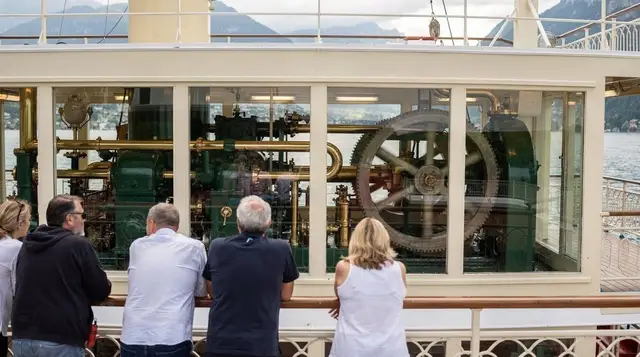
Ouchy is Lausanne’s port district, a five-minute metro ride or a 20-minute downhill walk from the station. It is where the city stops feeling like a hillside and starts feeling like a lake resort — a promenade lined with plane trees, small beaches, the Château d’Ouchy, and piers for the CGN paddle steamers that connect along the shore to Vevey, Montreux and across the water to Évian in France. If your time is tight, Ouchy is the one part of Lausanne worth prioritising over the old town, simply because there is nowhere quite like it back in central Switzerland.
The Olympic Museum sits a short walk east along the lakefront from Ouchy. It is the official museum of the International Olympic Committee, which has been headquartered in Lausanne since 1915 — the city styles itself the Olympic Capital. The museum covers the history of the modern Games with genuine artefacts (torches, medals, athletes’ kit) rather than just screens, set in landscaped gardens that are pleasant to walk even without paying to go inside. Adult entry is around CHF 24, and a proper visit takes two to three hours. It is a strong museum if you have any interest in sport; skip it if you don’t, since the price is not justified by novelty value alone.
For a broader look at getting around this stretch of shoreline once you’re here, our guide to scenic train lines in Switzerland and the practicalities in day trips from Lucerne both cover connecting onward routes.
Vevey and Chaplin’s World
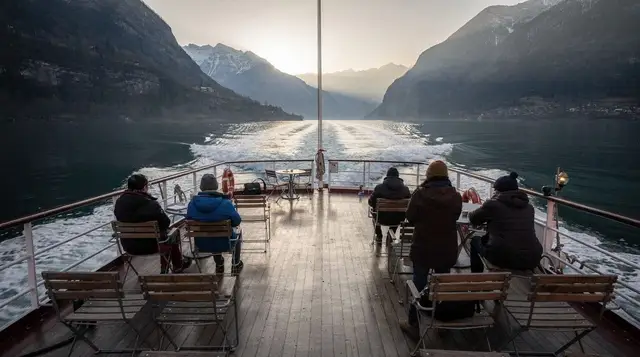
Vevey is 20 minutes from Lausanne by direct train, or a slower and more scenic option along the lake by CGN boat.
a two-hour Riviera cruise from Vevey along the Lake Geneva shoreline covers Montreux and the Château de Chillon in one sitting if you want the water route rather than the train.
The town itself is small — a lakeside promenade, a Wednesday and Saturday market, and Nestlé’s world headquarters on the waterfront, marked by a large fork sculpture standing in the lake that has become an unlikely local landmark.
a guided walk through Vevey’s old town with a local, covering some of the corners visitors miss on their ownis a reasonable way to get oriented in an hour or so if you are only passing through.
The main draw is Chaplin’s World, in Corsier-sur-Vevey, about 3km outside town (a short bus ride or taxi). Charlie Chaplin lived here for the last 25 years of his life, and the museum now occupies his restored manor house and grounds, with a separate studio building recreating sets from his films using animatronics and video. Adult entry runs close to CHF 29, which is high for what is, in the end, a single-site museum — but it is well produced, and unlike many “themed experience” museums it does not feel padded. Plan two to three hours, and book ahead in summer, when timed-entry slots can sell out by early afternoon.
The Lavaux vineyard terraces
Between Lausanne and Vevey/Montreux, the hillside above the lake is covered in vineyard terraces that have been farmed since at least the 11th century, largely by Cistercian and Benedictine monks who built the stone retaining walls still in use today. UNESCO listed the Lavaux terraces as a World Heritage cultural landscape in 2007, and it is one of the few UNESCO sites in Switzerland you can walk through freely, on foot, without a ticket.
The classic walking route runs along the vigneron path between Lutry, Cully, Épesses, Rivaz and St-Saphorin to Chexbres, with lake views on one side and vines climbing the slope on the other. The full route takes around five hours; a one- to two-hour stretch from Lutry to Cully or Épesses is enough to understand what the fuss is about, and both villages have direct trains back to Lausanne. Wine tasting is available at small producers along the way (typically CHF 5–15 for a flight of two or three wines), most notably Chasselas, the region’s signature white grape. Bring water and sun protection — the terraces have almost no shade and the stone walls hold heat.
Where to eat and what it costs
Lake Geneva pricing sits above Lucerne’s, which itself is not cheap. A realistic budget:
| Item | Typical price (CHF) |
|---|---|
| Coffee, café terrace | 4.50–5.50 |
| Lunch menu (plat du jour) | 22–32 |
| Perch fillets (filets de perche), a Lake Geneva speciality | 32–45 |
| Bottle of Chasselas wine, retail | 15–25 |
| Cathedral tower climb | 5 |
| Olympic Museum, adult | ~24 |
| Chaplin’s World, adult | ~29 |
Perch fillets — small, pan-fried fish from the lake, served with lemon and fries — are the regional dish worth ordering at least once, either lakeside in Ouchy or in Vevey. They are not cheap, and increasingly restaurants around the lake serve perch imported from Eastern Europe rather than caught locally; asking whether the fish is “du lac” (from the lake) is a fair question if it matters to you.
If Gruyère cheese and chocolate interest you more than fish,
a day tour from Lausanne to Gruyères with chocolate and cheese tasting includedcovers that side of the region in a single organised trip, and pairs naturally with our Gruyères and chocolate day trip guide.
Making the most of a single day
Given the roughly two-hour train each way, a return day trip from Lucerne leaves about six hours on the ground. Two realistic plans:
Lausanne-focused: old town and cathedral (90 min) → Ouchy waterfront (45 min) → Olympic Museum (2.5 hrs) → back to the station. Skip Vevey entirely.
Lausanne + Vevey, moving fast: cathedral and old town (60 min) → train to Vevey (20 min) → Chaplin’s World or a short Lavaux walk from Vevey towards Rivaz (2–2.5 hrs) → train back via Lausanne. This version means picking one Vevey attraction, not both.
Either plan is tight. If Lake Geneva genuinely interests you, staying one night in Lausanne or Vevey turns a rushed day into a comfortable two, with room for the Lavaux walk in full and both museums without clock-watching. For those extending further into the Alps from here, glacier country is within reach too —
a day trip from Lausanne up to Glacier 3000 on the Diablerets massifruns as a single organised excursion and saves working out the connecting cable cars yourself.
Travellers who prefer the Swiss Travel Pass framework for the rest of their trip should note it covers the Lucerne–Lausanne train and CGN lake boats, but is not worth buying for this leg alone if you are not otherwise using it — see our Swiss Travel Pass guide for the maths.
Lausanne and Vevey: your questions answered
Can Lausanne be done as a day trip from Lucerne?
Yes, but plan for a long day. The train takes around 2 hours each way with a change in Bern, so a return day trip gives you roughly six hours on the ground — enough for Lausanne’s old town and Ouchy, or Lausanne plus a short stop in Vevey, but not both in full.
Is the train from Lucerne to Lausanne direct?
No. Most connections change once in Bern, occasionally twice via Fribourg. Total journey time is usually 2 hours to 2 hours 15 minutes, and trains run roughly every half hour through the day.
How much does a day in Lausanne and Vevey cost?
Budget CHF 120–180 per person for return train tickets, one museum entry, lunch and coffee, without a car. The Olympic Museum and Chaplin’s World are the two big-ticket items; the old town, cathedral and Lavaux walking paths are free.
Is the Lavaux vineyard walk difficult?
No. The main path between Lutry, Grandvaux and Chexbres follows old terrace walls with gentle gradients and frequent benches. A one- to two-hour stretch is enough to see the UNESCO terraces properly; the full route end to end takes around five hours.
What is Chaplin’s World and is it worth the entry price?
It is the former home of Charlie Chaplin in Corsier-sur-Vevey, now a museum with the house, gardens and a studio recreating scenes from his films. Entry runs close to CHF 29 for adults, which is steep for a two- to three-hour visit, but it is genuinely well done and worth it for fans; skip it if you are indifferent to Chaplin.
Do I need the Swiss Travel Pass for this trip?
If you already hold one for a wider Switzerland itinerary, it covers the Lucerne–Lausanne train and the Vevey riviera boat. Buying one solely for a single day trip to Lausanne is not worth it — a normal return ticket or a Saver Day Pass is cheaper.
When do the Lavaux terraces look best?
Late September and October, during and just after harvest, when the vine leaves turn and the lake light is at its clearest. Spring (April–May) is also good, with green new growth and fewer visitors than midsummer.
Is Ouchy worth visiting if I’m short on time?
Yes, if you have even 45 minutes. It is a five-minute walk or short metro ride down from the station and old town, with lake views, the small harbour and boat piers, and Lausanne’s most relaxed café terraces.