Swiss trains explained: timetables, classes, tickets and apps
How does the Swiss train system work?
Trains run on a repeating clockface timetable, usually every 30 or 60 minutes, with connections at hub stations built to a guaranteed few minutes even when a train is a little late. Buy tickets and check live platforms on the SBB Mobile app, and compare a Half Fare Card, a Saver Day Pass or a Swiss Travel Pass before paying full fare.
Why Swiss trains feel different from everywhere else
Switzerland’s rail network is built around one idea: the same train leaves the same platform at the same minute past the hour, every hour, all year. Locals call it the Taktfahrplan, the clockface timetable, and once you understand it, working out how to get anywhere in the country stops being a puzzle. From Lucerne, this matters immediately: nearly every regional and InterCity connection out of Luzern Bahnhof leaves at :00 or :30, and knowing that saves you from ever needing to check a printed schedule twice.
This guide covers the mechanics that actually change how you plan a trip: how the timetable and connections work, what first and second class really buy you, when a seat reservation matters, which app to use, and how to find a ticket cheaper than full fare without gambling on availability.
The clockface timetable, in practice
Most Swiss InterCity (IC) and InterRegio (IR) routes run every 30 or 60 minutes throughout the day, from roughly 05:30 to past midnight on the busiest corridors. Lucerne to Zurich runs every half hour on the fast IR line; Lucerne to Bern runs hourly. Regional S-Bahn trains around Lucerne itself, run by Zentralbahn and SBB, typically add a train every 15-30 minutes on top of that.
The practical upshot: you rarely need to plan around a specific train. If you miss the 09:12 to Interlaken, there is another one at 10:12. Where the clockface matters most is at the far end of a long day trip, when the last useful connection home creeps earlier than people expect, especially on lines that run to a mountain resort or a smaller town.
Sample journey times from Lucerne
| Destination | Typical journey time | Frequency |
|---|---|---|
| Zurich HB | 45 min-1 h | Every 30 min |
| Zurich Airport | ~1 h direct | Every 30-60 min |
| Bern | ~1 h | Every 30-60 min |
| Basel | ~1 h 15 | Hourly |
| Interlaken Ost | ~1 h 50 (via Brünig) | Hourly |
| Engelberg | ~45 min | Hourly |
| Lugano | ~2 h via Gotthard base tunnel | Hourly |
| Zermatt | ~3 h 15, one change | Hourly |
| Geneva | ~2 h 45 | Hourly |
These are scheduled times for a normal service, not the panoramic trains, which run slower on purpose. If you want the same corridors run as a sightseeing experience rather than a commute, that is what the Gotthard Panorama Express and the Luzern-Interlaken Express are for.
Guaranteed connections: the part that actually saves your day
Hub stations such as Zurich HB, Bern and Arth-Goldau are built so that trains from several directions arrive within a few minutes of each other and connecting trains wait inside a defined margin, typically a handful of minutes, for a late arrival. If your incoming train is delayed and a connection is genuinely missed as a result, staff will rebook you free of charge onto the next service without any need to buy a new ticket or file a claim on the spot.
This is not a guarantee that nothing ever goes wrong; snow, engineering works and the odd signal fault do cause disruption, most often at either end of winter when mountain lines briefly close for maintenance. But the system is designed around delay recovery rather than around punishing the passenger for it, which is a genuinely different experience from rail travel in most other countries.
First class versus second class
Second class on a Swiss InterCity train is a 2-2 seating layout, perfectly comfortable, and what most residents use daily. First class is 1-2 seating, quieter carriages, usually a bit more legroom, and costs roughly 60-70% more for the same route. On a short hop, say Lucerne to Zug, the difference in comfort is barely noticeable. On a longer haul with luggage, such as Lucerne to Zermatt or Lucerne to Lugano, some travellers find it worth the premium, particularly midweek when second class can fill up with commuters and school groups.
There is no dining car on most domestic services; a trolley comes through on longer InterCity routes with coffee, snacks and sandwiches at prices you would expect from a captive audience.
Do you need a seat reservation?
On regular domestic trains, no. Seats are unreserved and you simply find one, standard practice even on a three-hour ride. Reservations become relevant on the named panoramic routes, where demand from tourists regularly outstrips supply in July and August:
- The Bernina Express and Bernina panoramic services require a seat reservation.
- The Glacier Express requires a seat reservation and is often sold out weeks ahead in peak summer.
- The GoldenPass Line’s panoramic carriages recommend reservation in high season.
- Regular InterCity trains along the same corridors, without the panoramic branding, need no reservation at all and cost less.
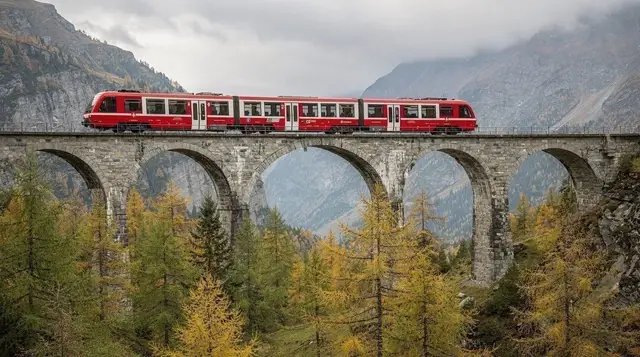
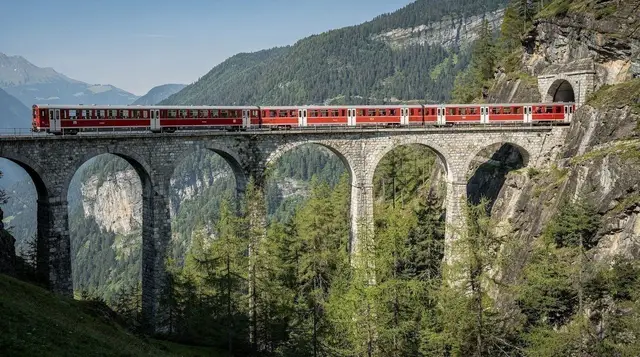
If your goal is simply to get from A to B rather than to ride a specific named train, the regular IC service on the same tracks is usually the better value choice. If the scenic ride itself is the point, book the panoramic seat ahead. For a red-train route through the Bernina and Albula passes without organising the connections yourself, a guided option such as a day out on the Bernina and Albula red trains handles the timing and the reserved seating in one booking.
Tickets, cards and passes: what actually saves money
Full-price point-to-point tickets in Switzerland are expensive by European standards, and almost nobody who travels here more than a couple of times pays them. The four tools worth knowing:
| Option | What it does | Rough cost |
|---|---|---|
| Half Fare Card | 50% off most trains, buses, boats and mountain railways for its validity | ~CHF 190 for one month/one year options, check current SBB pricing |
| Swiss Travel Pass | Unlimited travel on trains, boats, and most city transit for consecutive days, plus discounts on mountain railways | From ~CHF 244 for 3 days, 2nd class |
| Saver Day Pass (Sparbillet Tageskarte) | A fixed day of unlimited 2nd-class travel on a chosen date, bought well ahead | From ~CHF 29, limited quantity per day |
| Tell-Pass | Regional pass for central Switzerland covering boats and mountain railways around Lucerne | Multi-day, priced by duration |
| Supersaver ticket (Sparbillet) | A discounted point-to-point fare tied to one specific train | Varies, lowest 2-3 months ahead |
None of these is automatically the right answer; it depends on the shape of the trip. Someone based in Lucerne for a week, taking one or two mountain excursions and a couple of day trips by train, often does better buying a Half Fare Card plus individual Supersaver tickets than paying for a multi-day Swiss Travel Pass. Someone covering the country end to end in five days, changing base every night, usually comes out ahead with the pass. The full breakdown, with worked examples, is in the separate Swiss Travel Pass guide and the Tell-Pass guide for the Lucerne region specifically.
Prices above move with SBB’s own fare updates; check the current figures on sbb.ch or the app before booking rather than trusting a number printed months earlier.
The apps that matter
SBB Mobile is the one to have installed before you land. It covers the entire national network, including regional buses and lake boats, not just trains, shows live platform numbers and any delay in real time, sells tickets directly, and lets you download a journey for offline use where mobile signal drops in a tunnel or valley. Search any two points, including addresses, and it builds the full door-to-door route with walking legs included.
A second worthwhile install is your destination airport’s own app if you are arriving via Zurich Airport, since the direct train from ZRH to Lucerne runs roughly once an hour and it helps to know the next departure before you clear customs.
Buying at the station versus online
Every station of any size has ticket machines with an English-language option, and most also sell Supersaver fares, though the cheapest slots sometimes sell out online first. Buying on the SBB app ahead of travel is usually simpler and lets you compare fare types side by side. Conductors do check tickets on board, generally within the first few minutes after departure, and a ticket bought after being asked, without a reasonable excuse, comes with a surcharge.
When trains are the wrong choice
For a handful of routes, the train is not obviously the best option. Getting to some smaller villages and trailheads is faster by postbus, which uses the same Half Fare Card and passes. A private transfer or rental car makes more sense for a group of four or more heading somewhere the train requires two changes and a bus leg, and it is the only sensible way to reach a handful of Alpine passes closed to rail entirely; see the car rental guide for when that trade-off is worth it.
And for the lake itself, the paddle steamers and modern boats run on their own published timetable rather than the rail clockface, worth checking separately since the two rarely align to the minute.
Combining trains with an organised day out
Not every excursion needs to be self-planned. If you would rather have someone else handle the timing, changes and reservations on a specific route, a few Lucerne-based day tours are built entirely around rail journeys or pair a scenic drive with a cultural stop.
The Alps crossing on a panoramic bus tour through the Swiss Alps covers ground a direct train route would miss, while a cheese and chocolate day trip from Lucerne bundles the transport with tastings so nobody in the group has to check a timetable at all. Travellers based further along the route sometimes pair Lucerne with a private tour of the Swiss Riviera from Geneva as a bookend to a rail-based itinerary.
Practical notes before you travel
- Platforms are announced a few minutes before departure but almost always match the timetable; check the yellow departure board (Abfahrt) rather than relying on memory of which platform a train used yesterday.
- Trains stop for short dwell times, often under two minutes at smaller stations, so be at the door with luggage ready before arrival.
- Children under 6 travel free; ages 6-15 get significant discounts with a Junior or Children’s Travelcard bought once per family per year.
- Bikes need their own reservation and ticket on most InterCity trains in summer.
- If you are building a full trip plan rather than a single ticket question, the day trips from Lucerne guide and how many days in Lucerne cover which of these journeys are realistic in a day and which need an overnight stop, including options as far as Zermatt, Bern and Basel.
Swiss trains: frequently asked questions
Do I need to reserve a seat on Swiss trains?
No, seat reservations are not required on most domestic Swiss trains, including InterCity and InterRegio services. They are recommended in summer on the panoramic routes such as the Glacier Express and Bernina Express, and mandatory on some of those scenic trains.
What is the difference between first and second class?
First class carriages are quieter, have wider seats and a 1-2 seating layout instead of 2-2, and cost roughly 60-70% more than second class for the same journey. On short regional hops the difference is rarely worth it; on a long ride like Lucerne to Zermatt it can matter.
Is the Half Fare Card worth buying for a short trip?
It pays for itself faster than most visitors expect, because it also discounts mountain railways, cable cars and lake boats, not just trains. On a week that includes one CHF 72 Pilatus round trip and a few CHF 20-30 train legs, the card breaks even in a couple of days.
How do I find cheap Supersaver tickets?
Supersaver (Sparbillet) fares appear on the SBB app and sbb.ch roughly two to three months ahead, priced lowest on off-peak trains and rising as the departure gets closer. They are tied to a specific train and are non-refundable, so only book one once your plans are fixed.
What happens if I miss a connection because my train is late?
Switzerland’s guaranteed connection system means a connecting train at a hub station is meant to hold for late arrivals within a set margin, and staff will rebook you free of charge onto the next available service if a connection is genuinely missed. Keep your ticket; you rarely need to prove anything beyond it.
Is the Swiss Travel Pass better than buying individual tickets?
It depends on how much ground you cover. A pass earns its price on an itinerary with several long train legs plus mountain excursions and boat trips bundled in; for a static week based in Lucerne with day trips paid at Half Fare Card rates, individual tickets often work out cheaper.
Which app should I use for Swiss train times?
SBB Mobile is the one to install before arrival. It covers the entire national timetable including buses and boats, shows live platform numbers and delays, sells tickets, and works offline once a journey is downloaded.
Scenic train tours on GetYourGuide
Verified deep-linked GetYourGuide tours. Book through these links and we earn a small commission at no cost to you.
GetYourGuide does not provide a product photo for this activity — the image shows the meeting point, photographed by us.