Day trips from Lucerne, sorted by travel time
What are the best day trips from Lucerne?
Mount Pilatus and Mount Rigi are under an hour away and fit into a half-day. Interlaken, Bern, Basel and the Rhine Falls take one to two hours each way and work as full but manageable days. Zermatt, Lugano, Gruyères and Jungfraujoch are technically doable in a day but mean ten or more hours on the move, so they suit early starts and clear weather forecasts.
Working out how far is worth it
Lucerne’s position in Central Switzerland is the whole reason day trips work so well here. The station and the boat pier sit next to each other, the trains run on schedule, and within two hours you can reach half the country’s headline sights. But “reachable” and “sensible as a day trip” aren’t the same thing, and the gap between them is mostly about how many hours you’re willing to spend sitting on a train.
This guide sorts everything by travel time rather than by theme, because that’s the constraint that actually decides your day. A trip under an hour leaves you a full day on-site with room for a slow lunch. A trip of one to two hours each way still works, but you’re now trading two to four hours of your day to transport. Anything further needs an early start, a clear plan, and a realistic look at what a delayed connection does to your evening train home.
| Travel time from Lucerne | Destinations | Realistic time on-site |
|---|---|---|
| Under 1 hour | Mount Pilatus, Mount Rigi, Engelberg/Titlis, Stanserhorn, Weggis, Vitznau | 5–7 hours |
| 1–2 hours | Interlaken, Bern, Basel, Zug, Rhine Falls | 4–6 hours |
| Full day (2.5+ hours) | Zermatt, Lugano/Ticino, Gruyères, Jungfraujoch | 3–5 hours |
Under an hour: the easy half-days
These are the trips that don’t need much planning. Trains and boats run frequently, and if you miss one there’s usually another within the hour.
Mount Pilatus is the classic. From Lucerne, take the boat or train to Alpnachstad for the cogwheel railway — the steepest rack railway in the world at a 48% gradient — or the bus to Kriens for the cable car, which runs all year. The railway only operates from May to November depending on snow, and it closes for scheduled maintenance in spring and autumn, so check before booking anything in April or late October. Return fares by the classic “Golden Round Trip” (boat up, cable car down, or vice versa) run somewhere around CHF 100–115 without a rail pass, less with a Swiss Travel Pass discount.
Mount Rigi works from Vitznau, reached by boat or train from Lucerne in under 45 minutes, then the cogwheel railway to the summit, or from Weggis via the cable car. Vitznau’s railway is Europe’s oldest mountain railway, dating to 1871. A return from Lucerne including the boat and railway typically lands around CHF 90–100.
Engelberg and Titlis take about 45 minutes by direct train from Lucerne, then the rotating Titlis Rotair cable car up to the glacier at 3,020 metres. It’s the highest of the lake’s peaks and the only one with year-round snow, but it’s also the priciest — the cable car return alone runs close to CHF 100 on top of the train fare. If a rotating gondola over a glacier and an ice cave sounds worth it, this day tour bundles the Lucerne stop with Engelberg and Titlis so you’re not managing three separate tickets.
Weggis and Vitznau themselves, without going up a mountain, make a quieter half-day: a lake boat there, a walk along the promenade, lunch by the water, boat back. It’s the trip to pick on a day when you’d rather sit still than tick off a summit.
One to two hours: still back for dinner
These need an earlier start but still leave a proper afternoon on-site.
Interlaken is about 1 hour 50 minutes via the Brünig line, one of the most scenic rail routes in the country, running along Lake Brienz’s turquoise water for the last stretch. It’s also the gateway to Grindelwald, Lauterbrunnen and the Jungfrau region if you want to go further, though that pushes the day from long to very long. For a first look at the region without driving or juggling multiple tickets, this guided day trip to Interlaken handles the connections.
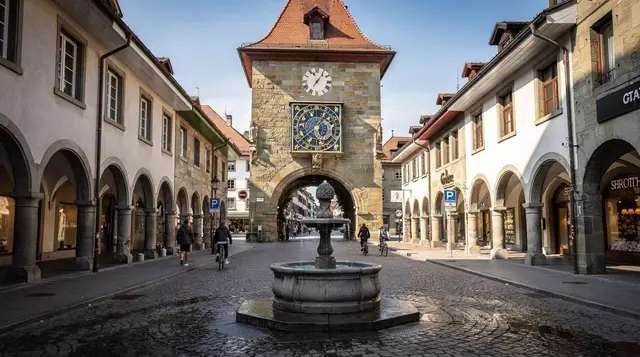
Bern, Switzerland’s capital, is roughly an hour away by direct train. The Old Town is compact and walkable, the arcades give shelter if it rains, and the bears at the BärenPark are free to see. It’s an easy trip to do without a guide — buy a point-to-point ticket and go.
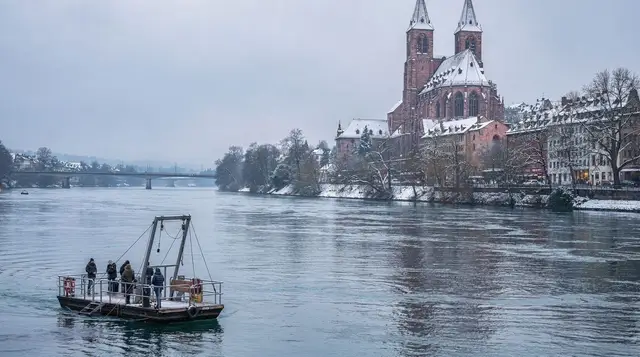
Basel takes about 1 hour 15 minutes, and rewards an art-and-architecture day: the Kunstmuseum, the Rhine promenade, and (if timing allows) a Rhine ferry crossing on one of the small cable-guided boats. It’s also the base for the Rhine Falls if you want to combine both in one long day, though that’s ambitious.
Zug, on its own lake between Lucerne and Zurich, is barely 30 minutes away and is easy to underrate — it has one of the best-preserved lakeside old towns in the region and, notably, Aeschbach’s chocolate factory nearby. Combined with Lucerne, chocolate and cheese make a food-focused day that doesn’t require an early start; this Swiss cheese and chocolate excursion from Lucerne covers both without you needing to plan the route yourself.
Rhine Falls, near Schaffhausen, are about 1 hour 45 minutes by train with a change. Europe’s largest waterfall by volume is genuinely impressive up close, and boat trips run right up to the rock in the middle of the falls in summer. It’s a long way to go for one sight, so it suits travellers who specifically want to see it rather than a general “what’s nearby” day.
A full day, no regrets
These work, but only if you’re honest about the time cost. Expect 10 to 12 hours door to door.
Zermatt is about 3 hours 15 minutes each way via Spiez and Visp, meaning 6.5 hours on trains alone. The Matterhorn view is worth seeing, but a day trip leaves only a few hours in town before the return train. If Zermatt is a priority, an overnight stay is more comfortable than a single day squeezed at both ends.
Lugano and Ticino, reached in about 2 hours through the Gotthard Base Tunnel, feel genuinely different — Italian-speaking, palm-lined, and noticeably warmer than Lucerne most of the year. It’s a striking contrast trip if you want a taste of the south without crossing a border.
Gruyères takes around 2.5–3 hours with a change, usually via Bern or Fribourg, but delivers a proper medieval hill town plus the cheese dairy and (separately) the Cailler chocolate factory nearby. It’s a trip best done with an early train out and a late one back.
Jungfraujoch, “Top of Europe” at 3,454 metres, involves the Brünig line to Interlaken and then two further cogwheel trains. Door to door it’s close to 4 hours each way with connections, so realistically this is a very early departure and a very late return — and one where weather matters more than anywhere else on this list, since a cloudy summit day wastes the whole trip. Check the live webcam before committing to the ticket.
Getting the transport right
| Pass | Covers | Worth it if |
|---|---|---|
| Point-to-point tickets | One route, one day | You’re doing 1–2 day trips total |
| Saver Day Pass | Unlimited 2nd/1st class travel, booked in advance | You want one specific long day trip at a fixed low price |
| Half Fare Card | 50% off most tickets, valid a month | You’re doing 3+ trips and staying flexible |
| Swiss Travel Pass | Trains, buses, lake boats, museum discounts | You’re doing 3–4+ day trips across a week or more |
| Tell-Pass | Central Switzerland only: Pilatus, Rigi, Titlis, Stanserhorn, lake boats | Every trip you’re planning stays within the Lucerne region |
A Saver Day Pass, booked online well ahead of the date, is often the cheapest way to do a single long trip like Zermatt or Jungfraujoch, sometimes under CHF 50 for the day if bought early enough — though prices rise the closer you get to the travel date and availability is limited per train. The Swiss Travel Pass makes more sense once you’re combining several trips, since it also covers city transport and museum entry along the way.
Which day trip suits which traveller
| If you want | Go to |
|---|---|
| A mountain view without much planning | Mount Rigi or Mount Pilatus |
| Snow, even in July | Engelberg/Titlis |
| A capital city on foot | Bern |
| Art, architecture, the Rhine | Basel |
| A dramatic waterfall | Rhine Falls |
| A taste of Italian Switzerland | Lugano and Ticino |
| Chocolate and cheese in one day | Zug and the cheese/chocolate route |
| The country’s most photographed peak | Zermatt (best as an overnight) |
| “Top of Europe,” weather permitting | Jungfraujoch |
Most first-time visitors do best sticking to the under-an-hour and one-to-two-hour columns and saving the full-day trips for a second visit, or for the day they’ve built in specifically for them. If Pilatus and Rigi are both on the list, note that comparing them properly, along with Titlis, is its own decision — worth reading through before booking either.
If mountain excursions from Lucerne generally are still an open question, it’s worth working through the full list of options before locking in a single one, since the boat-and-cable-car combinations vary more than they first appear. And for the two peaks people ask about most, a Rigi day trip that bundles the lake cruise with the cogwheel railway removes the timetable-matching that trips people up on a first attempt, and the same applies on the Zurich side for those routing through Lucerne toward Pilatus via a guided transfer from Zurich.
Day trips from Lucerne: the questions people actually ask
What is the closest day trip from Lucerne?
Mount Rigi and Mount Pilatus are both around 45 minutes to an hour from Lucerne by train, boat or cable car, and either can be done as a half-day if you start by mid-morning.
Can Zermatt be done as a day trip from Lucerne?
Yes, but it’s a long one. The train takes about 3 hours 15 minutes each way via Spiez and Visp, so a day trip means roughly 6.5 hours on trains alone plus changeovers, leaving only a few hours in Zermatt itself. An overnight is more comfortable.
Do I need the Swiss Travel Pass for day trips from Lucerne?
It depends on how many trips you’re taking. A Swiss Travel Pass covers trains, buses and lake boats, plus discounts on mountain railways, and pays off from around 3 to 4 day trips in a week. For one or two trips, point-to-point tickets or a Saver Day Pass booked in advance are usually cheaper.
Is the Tell-Pass worth it for mountain day trips?
The Tell-Pass covers Central Switzerland only — Pilatus, Rigi, Stanserhorn, Titlis, the lake boats and regional trains around Lucerne — for a set number of days. It’s better value than the Swiss Travel Pass if every trip you’re planning stays inside that region.
Which mountain excursion is best for a first visit?
Mount Pilatus for the cable car and cogwheel railway combination and views over the whole lake, or Mount Rigi if you’d rather do the round trip by boat. Both are reachable in under an hour and don’t require an early alarm.
What’s the earliest a mountain railway from Lucerne might be closed?
Pilatus’s cogwheel railway typically runs from May to November and closes for scheduled maintenance in spring and autumn; check the operator’s site before travelling in April, early May, or late October. The Kriens cable car up Pilatus and the Rigi railways run closer to year-round.
Can I do more than one mountain in a day from Lucerne?
It’s possible but tight — Pilatus and Rigi combined, using the classic Golden Round Trip route via Alpnachstad, Kriens or the lake boats, takes most of a day on its own. Doing two separate mountains without that dedicated route usually means rushing one of them.
Best day trips from Lucerne on GetYourGuide
Verified deep-linked GetYourGuide tours. Book through these links and we earn a small commission at no cost to you.
GetYourGuide does not provide a product photo for this activity — the image shows the meeting point, photographed by us.