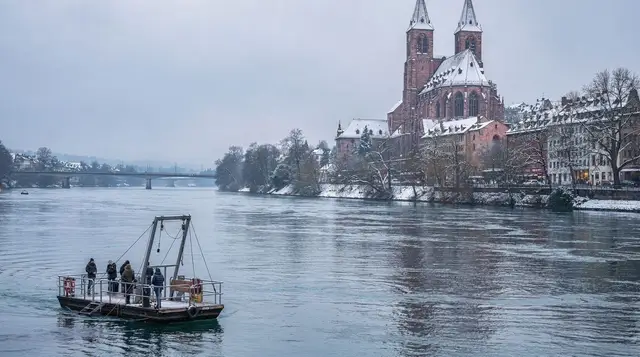
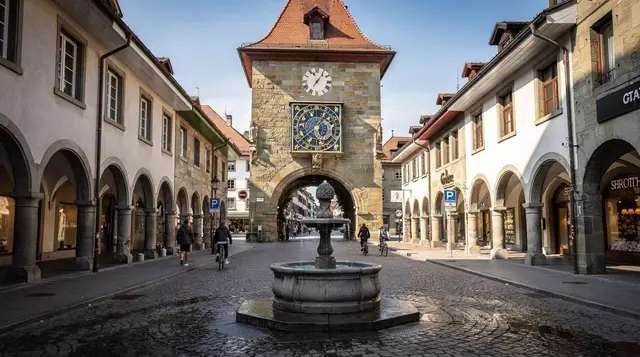
Bern day trip from Lucerne
Is Bern worth a day trip from Lucerne?
Yes: Bern is roughly an hour away by direct train, and the walkable old town, Bärengraben bear pit and Paul Klee Centre fit comfortably into a single day. In summer, add an hour by the Aar river, where locals swim with the current through the city centre.
Bern rarely tops a first-time Switzerland list, which is exactly what makes it a good day trip: the old town is compact enough to see properly in a few hours, the sights are free or cheap, and the train ride there is short enough that you are not sacrificing a full day of your Lucerne itinerary to get there and back.
Why Bern earns a day from Lucerne
Bern is the Swiss federal capital, a UNESCO World Heritage old town, and — for a capital city — surprisingly small: about 6,000 people live within the old town’s Aar-river loop. That means no metro, no real need for buses once you arrive, and no risk of running out of time to walk between sights. The trade-off is that Bern is quieter and more municipal than Lucerne or Zurich; it does not try to dazzle. What it offers instead is sandstone arcades stretching for kilometres, a bear park instead of a zoo enclosure, one of the largest single-artist museum collections in the country, and — for a few months each summer — a river swim through the middle of the city that locals treat as an ordinary commute.
Getting from Lucerne to Bern
The direct IC train from Lucerne to Bern takes around an hour, departing roughly twice per hour through the day. There is no faster or meaningfully cheaper alternative; driving covers similar distance but costs more once parking in central Bern is factored in, and Bern’s old town is largely car-restricted anyway.
| Option | Journey time | Typical cost (2nd class, one-way) | Notes |
|---|---|---|---|
| Direct IC train | ~1 h | CHF 33–39 return, standard fare | No reservation needed; runs from early morning to late evening |
| Half Fare Card | ~1 h | About half standard fare | Worth it if making 2+ train trips during your stay |
| Swiss Travel Pass | ~1 h | Included | Also covers Bern’s city trams and buses |
| Driving | ~1 h 10–1 h 20 | Fuel + parking (CHF 20–30/day in the centre) | Old town largely pedestrian; park at the train station or a park-and-ride |
Fares above are indicative — check the SBB app or sbb.ch before travelling, as prices shift with demand-based Sparbillett pricing. For background on how the ticketing system works, see the Swiss trains explained guide, and for whether a pass pays off over your whole trip, the Swiss Travel Pass guide.
Bern’s train station (Bern Bahnhof) sits directly against the old town — within five minutes’ walk you are under the Zytglogge clock tower. There is no need for a taxi or city bus to start the day.
A loop through the old town
The old town occupies a peninsula formed by a bend in the Aar, which makes it almost impossible to get seriously lost: keep the river roughly to one side and you will loop back to where you started. A reasonable walking order:
- Zytglogge — the medieval clock tower with an astronomical clock and mechanical figures that perform on the hour. Free to view from outside; guided interior tours run a few times daily for a fee.
- Kramgasse and Marktgasse — the two main arcaded streets (Läuben), with sandstone cellars, fountains every hundred metres or so, and shelter from rain under the covered walkways.
- Bundeshaus — the Swiss parliament building, with a terrace behind it overlooking the Aar and the Bernese Alps on a clear day. Free guided tours run when parliament is not in session; check ahead rather than counting on one.
- Bern Münster — the cathedral, and specifically its tower, the tallest in Switzerland. Climbing the 344 steps costs a small entry fee and delivers the best rooftop view of the old town’s red-tiled roofs and the Aar loop below.
- Nydeggbrücke — the bridge where the old town drops away to the river, and the best vantage point for photographing the Aar bend and the bear park on the far bank.
Budget half a day for this loop at an unhurried pace, including a coffee stop. None of it requires tickets or timed entry.
The bear pit and the Rose Garden
Bern’s civic symbol is the bear, and has been since the city’s founding legend. The old stone Bärengraben (bear pits) by the Nydeggbrücke have been retired; bears now live in BearPark Bern, a larger open-air enclosure built into the riverbank on the same site, with access down to the water. Viewing is free at any hour the park is open, and there is no ticket booth to queue at.
From the bear park, a path climbs to the Rosengarten (Rose Garden), a public park with the single best panoramic view of the old town’s skyline — Münster tower, red roofs, the Aar curling around it, and the Alps behind on a clear day. It costs nothing, and the on-site restaurant is a reasonable, unhurried lunch stop if you want to sit rather than picnic.
The Zentrum Paul Klee
The Zentrum Paul Klee sits outside the old town, about 15–20 minutes by bus 12 from the train station, in three wave-shaped structures designed by the architect Renzo Piano. It holds the largest public collection of Paul Klee’s work anywhere — several thousand pieces, rotated in temporary exhibitions since not all can be shown at once. Entry runs around CHF 20 for adults, with reductions for students and under-18s free.
This is the one part of the day that needs a deliberate decision, because it sits apart from everything else: going means a 40-minute round trip on top of viewing time, easily 90 minutes to two hours all told. Worth it if you have any interest in Klee or 20th-century art; skippable without much loss if your day is tighter, since the old town and river cover the “sense of place” part of Bern on their own.
Swimming in the Aar
From roughly June to September, when the water has warmed and the spring snowmelt surge has passed, swimming in the Aar is one of the more genuinely local things a visitor can do in Switzerland. The river runs glacier-fed and fast through the city; swimmers enter upstream — commonly near the Marzili district below the Bundeshaus, reached by the short Marzilibahn funicular — and let the current carry them downstream, exiting at one of several marked steps or lawns.
Practicalities that matter:
- Current, not effort. You are not swimming laps; you are floating with a current that moves faster than most people expect. Know your exit point before entering.
- Temperature. Even at the height of summer the water is glacier-cold by most standards — refreshing rather than warm.
- Flow rate. Bern’s authorities publish current flow data; on high-flow days after rain or heavy snowmelt, swimming is genuinely unsafe and locals sit it out too. If in doubt, watch whether anyone else is in the water before you commit.
- Belongings. A waterproof dry bag (Flussschwumsagg) to float your clothes and phone downstream is the standard local solution, sold cheaply at kiosks and sports shops near the river in season.
- Marzili lawns. The grassy banks near the Marzili outdoor pool function as an informal riverside lido — towel space, a snack kiosk, and a constant stream of people getting in and out of the water.
Outside swimming season, the same Marzili and Aar-bank paths are still worth a walk for the view up at the Bundeshaus terrace from river level, just without getting in.
Where to eat
Bern is not a food-tourism destination in the way Lucerne’s lakeside restaurants or Basel’s markets are, but it does traditional Bernese food honestly and without inflating prices for visitors much beyond what locals pay.
| Type | What to expect | Rough price (CHF) |
|---|---|---|
| Bakery/café lunch | Sandwich or Bernese Zopf bread with coffee | 12–18 |
| Rösti with a topping | The Bernese staple, at almost any casual restaurant | 22–30 |
| Sit-down restaurant meal | Main course, old town restaurant | 30–45 |
| Altes Tramdepot | Brewery-restaurant right by the bear park, own beer | 25–38 |
| Rosengarten restaurant | Terrace with the postcard old-town view | 28–42 |
None of this is cheap by international standards — Switzerland rarely is — but it is broadly in line with Lucerne prices, not inflated for tourists the way some capital-city restaurants can be.
Extending the day beyond Bern
Because Bern sits roughly midway between Lucerne and French-speaking Switzerland, some tour operators bundle it with a further stop rather than treating it as a standalone destination. If a single city feels light for a full day out, a private itinerary that adds Gruyères — the medieval hill town and its chocolate factory — onto the same day covers considerably more ground than doing Bern alone by train, at the cost of a longer day and a set schedule rather than your own pace:
a private minivan day from Lucerne covering Bern’s old town plus Gruyères and the Broc chocolate factoryCloser to Bern itself, the Gurten — the city’s local hill, reached by its own funicular from the southern edge of town — adds a panoramic viewpoint, a summer slide and picnic lawns without needing a car:
a Gurten hill outing above Bern with the funicular, viewpoint and picnic option built inIf your wider Switzerland trip also routes through Zurich or Basel rather than starting and ending in Lucerne, both cities run their own private day trips into Bern, useful if you would rather not manage the train connection yourself on a day with luggage or a tight schedule:
a private door-to-door day trip to Bern departing from Zurich or a private Bern day trip from Basel that includes a Swiss cheese tasting
For most readers based in Lucerne, though, the plain IC train is simpler and cheaper than any of these, and it is the version described throughout this guide.
Planning the rest of your day trips
A Bern day fits naturally alongside the other classic day trips from Lucerne — see the full day trips from Lucerne overview for how it compares to Zurich, Basel and a combined Gruyères and chocolate day trip.
If you are weighing up how many day trips your Lucerne stay can actually absorb, the how many days in Lucerne guide and the Lucerne travel costs breakdown are worth reading first, and if you are travelling with children, Lucerne with kids covers which day trips (Bern’s bear park included) tend to work best for families. Budget travellers should also check Lucerne on a budget for how a train-only, free-sights day like this one compares cost-wise to guided alternatives.
A Bern day trip from Lucerne: your questions answered
How long does the train from Lucerne to Bern take?
Around 1 hour on the direct IC train, which runs roughly twice an hour through the day. No changes are needed, and the ride itself is unremarkable — mostly farmland and the odd glimpse of the Emmental hills.
Do I need to reserve seats for the Lucerne to Bern train?
No. Swiss IC trains use unreserved seating as standard. Turn up, board, sit down. The only reason to book ahead is the optional Sparbillett saver fare, which ties you to a specific train.
Is the Bärengraben free to visit?
Yes, the outdoor bear enclosures along the Aar are open to the public at no charge, at any hour. The adjoining BearPark visitor centre, with information panels and a shop, is also free to enter.
Can visitors swim in the Aar, or is it only for locals?
Anyone can swim in the Aar; it is not a residents-only thing. What locals have that visitors often lack is a waterproof dry bag to float their clothes and phone downstream, and a sense of exactly where to get out. Both are easy to arrange in an afternoon.
Is one day enough for the Zentrum Paul Klee and the old town?
It is enough to do both properly, but not both at a relaxed pace plus much else. Budget 90 minutes for the Klee Centre including the bus ride out and back, and treat the old town, Münster tower and bear pit as the rest of the day.
What does a Bern day trip from Lucerne cost?
Train fare is the main cost, roughly CHF 33 to 39 return in second class at standard fare, less with a Half Fare Card or covered outright by a Swiss Travel Pass. Add museum entry if you visit the Zentrum Paul Klee, and lunch. Walking the old town and the Bärengraben costs nothing beyond the train.
Is Bern’s old town manageable with a buggy or wheelchair?
Mostly, though not effortlessly. The old town is largely flat and the arcaded Läuben shelter from rain, but the cobbles are real cobbles and some side lanes drop steeply toward the Aar. The funicular down to Marzili is the easy route to the river rather than the steps.
When is the best time of year for a Bern day trip from Lucerne?
Late spring through early autumn, if the Aar swim matters to you — the water is too cold and the flow too strong outside roughly June to September. For the old town and museums alone, Bern works year-round, and December adds a Christmas market around the Münster.
Best day trips from Lucerne on GetYourGuide
Verified deep-linked GetYourGuide tours. Book through these links and we earn a small commission at no cost to you.
GetYourGuide does not provide a product photo for this activity — the image shows the meeting point, photographed by us.