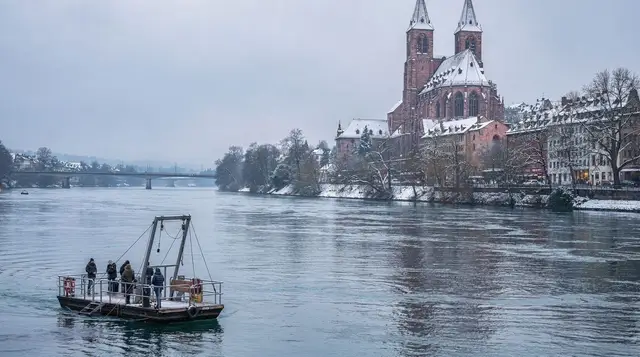
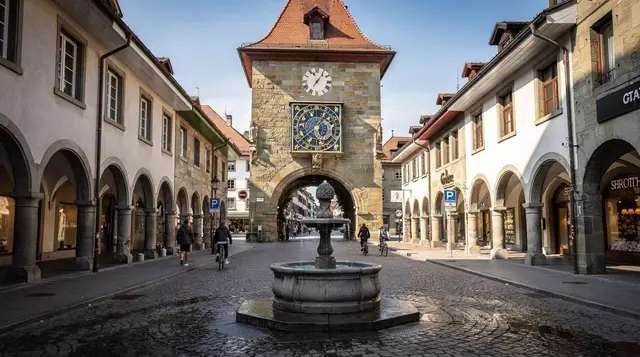
Lake Thun sits one valley over from Lake Lucerne, and it gets treated as an afterthought by travellers who spend all their Bernese Oberland time on Interlaken, Grindelwald and the high peaks above them. That is a mistake. The lake itself has a castle in a proper medieval town, a bay ringed by vineyards, a lakeside château with an English garden, a suspension footbridge over a gorge, a cave system you can walk into, and a summit where wild ibex graze in summer — and none of it requires the queues or the CHF 100-plus price tags of Jungfraujoch.
Why Lake Thun deserves more than a glance from the train
Most Lucerne-based itineraries see Lake Thun for about four minutes, through a train window, on the way to or from Interlaken. That is unfortunate, because the lake’s north shore towns are genuinely different in character from each other: Thun is a working town with a real old town, not a resort; Spiez is quieter and greener, built around wine and sailing; Oberhofen is a single postcard-perfect castle and not much else; and the south shore, reachable mainly by boat or bus, has the Sigriswil bridge, the St Beatus Caves and the Niederhorn cable car within a few kilometres of each other.
The practical catch is that Lake Thun does not fit neatly into a half-day. Thun to Spiez to Oberhofen by boat, with stops, is already three to four hours before you have set foot on a mountain or in a cave. Treat it as a full day from Lucerne, or better, pair it with a night in a Lake Thun cruise that stops at the St Beatus Caves for a picnic so the return journey is not rushed.
Getting to Lake Thun from Lucerne
There is no direct Lucerne–Thun train. The quickest option changes at Bern: Lucerne to Bern is around 55–60 minutes on the IC5, then Bern to Thun is another 20 minutes, giving a total of roughly 1h10 to 1h20 depending on the connection. Spiez adds another 10 minutes beyond Thun on the same line.
The alternative is the Brünig line through the valley toward Interlaken and the Oeschinensee cable car region, which is scenic but slower — closer to two hours to reach Interlaken, from where Thun is a short backtrack by train or, in season, by boat along the full length of the lake. For a first visit, go via Bern and come back via Interlaken (or vice versa), so you see both approaches rather than retracing the same line twice.
| Route | Journey time | Notes |
|---|---|---|
| Lucerne → Bern → Thun | ~1h10–1h20 | Fastest; one change |
| Lucerne → Bern → Spiez | ~1h20–1h30 | Same line, one stop further |
| Lucerne → Interlaken (Brünig) → Thun | ~2h–2h15 | Slower, more scenic; boat option from Interlaken in season |
| Thun ↔ Spiez ↔ Oberhofen by boat | 20–70 min per leg | BLS scheduled services, seasonal timetable |
A Swiss Travel Pass or Saver Day Pass covers the train legs; the regional Tell-Pass, aimed at Central Switzerland, does not extend to Lake Thun’s boats, so check coverage before assuming a pass you bought for the Lucerne region carries you here.
Thun: a working town, not a resort
Thun is where the Aare river leaves Lake Thun, and the old town is built directly over and along it, with an unusual elevated pedestrian walkway running along the rooftops of a row of shops on Obere Hauptgasse — you walk at first-floor level above the traffic, which is a genuinely odd and pleasant way to see a Swiss town centre. In summer, locals float down the Aare on inflatable rings from the upper town to the lake, a habit worth watching even if you skip it yourself.
Above the old town, Thun Castle (Schloss Thun) is a 12th-century Zähringen keep with four corner turrets, now housing the Thun branch of the Bernisches Historisches Museum. Entry runs around CHF 10 for adults and includes a knight’s hall and armoury on the upper floors; the real payoff is the view from the turrets over the old town’s rooftops, the Aare and the lake toward the Stockhorn range. The building itself is free to view and photograph from the street and the castle terrace, so budget travellers can skip the museum without missing the town’s best photo.
Thun makes a sensible first or last stop on a Lake Thun day: it has the best food options of any of these towns, a proper railway connection, and — unlike Spiez or Oberhofen — enough going on to fill an hour without needing the boat at all.
Spiez and its bay
Spiez sits on its own small bay, sheltered enough that it has become the lake’s sailing centre, and the bay itself is ringed by terraced vineyards running down almost to the water — an unusual sight this far from Switzerland’s main wine regions around Lake Geneva. Spiez Castle (Schloss Spiez) occupies the point at the end of the bay, a Romanesque and Baroque mix of tower and manor house that is smaller and less visited than Thun’s, with gardens open to walk through even outside museum hours.
The bay itself is the reason to come: a lakeside promenade wraps around it, vineyard paths climb above it, and the water is calm enough for swimming from the public bathing area near the station in summer. Spiez is a reasonable base for exploring both Lake Thun and, via a short train connection, the Kandersteg and Oeschinensee valley to the south, if you decide to extend a Lake Thun visit into an overnight.
Oberhofen
Oberhofen is essentially one attraction: Oberhofen Castle, a turreted, part-medieval, part-19th-century château built right at the water’s edge, with a Gothic tower rising almost directly out of the lake. The English-style landscaped garden around it, laid out in the 1850s, is one of the more attractive free green spaces on the lake, with mature trees and lake views that most visitors photograph without paying to enter the castle museum itself.
Oberhofen is a boat stop rather than a train station, so it works best as a stop between Thun and Interlaken, or as a short there-and-back from Thun by boat (around 30–40 minutes each way). Give it 45–60 minutes: enough for the garden and the exterior, more only if the castle’s period rooms particularly interest you.
The Sigriswil panoramic bridge
On the lake’s south side, above the villages of Sigriswil and Aeschlen, a 340-metre suspension footbridge crosses the Gummischlucht gorge at a height of around 180 metres. The Sigriswiler Panoramabrücke, opened in 2012, is free to cross, takes roughly 10 minutes each way at a relaxed pace, and gives an open view down a wooded ravine with Lake Thun and the peaks beyond visible from the middle section. It sways, as any bridge this length does, but the decking is solid steel mesh rather than glass, and the railings are high — it reads as more dramatic in photographs than it feels underfoot.
The bridge sits on a signed circular walking route from Sigriswil, reachable by postbus from Thun or Interlaken; there is no train station nearer than Thun, so factor in the bus connection. Pair it, if you have the legs for it, with a guided route toward the Rothorn ridge above — a guided hike from Sigriswil up to the Rothorn summit covers this ground with a local guide setting the pace, which is a reasonable option if you would rather not navigate the postbus timetable and trail markers solo.
St Beatus Caves
Near Sundlauenen on the lake’s south shore, the St Beatus Caves (St.-Beatus-Höhlen) are named for a legendary 6th-century hermit said to have driven a dragon from them. The show cave runs on a fixed seasonal calendar — broadly April to October or November, weather and water levels permitting — and closes over winter, unlike most of the other stops on this page. A lit, level walkway leads roughly a kilometre into the illuminated chambers on a 45–60 minute self-paced route; a small museum and a waterfall sit at the entrance, both viewable without a ticket.
Adult entry runs in the region of CHF 20–22; the caves are a boat stop on the Thun–Interlaken line in season, and also reachable by road. Several boat operators combine the crossing with the caves directly, which removes the need to coordinate timetables yourself — a Lake Thun cruise with a stop at the caves and a picnic, for instance, or a full day from further afield: a day tour from Basel taking in Thun, the caves and a lake cruise with local cheese covers the same ground for visitors starting further away.
The Niederhorn and its ibex
Above Beatenbucht, a cable car climbs to the Niederhorn summit at 1,963 metres, one of the more reliable places in the Bernese Oberland to see wild Alpine ibex (steinbock) at close range, generally from around June to September when a resident herd grazes near the top station. The summit also gives an open panorama across Lake Thun to the Stockhorn range and, on a clear day, north toward the Eiger, Mönch and Jungfrau — a wide view for a relatively modest, non-glacier mountain.
The cable car base station at Beatenbucht is a boat or bus stop, not a train station, so this is one to combine with the St Beatus Caves nearby rather than visit in isolation. A return ticket runs roughly CHF 45–55 depending on season; the Swiss Travel Pass typically gives a discount rather than free travel on this line, so check current terms before assuming full coverage.
What a day actually looks like
Trying to fit Thun, Spiez, Oberhofen, the bridge, the caves and the Niederhorn into one day from Lucerne is not realistic once train time in both directions is counted. Two workable versions:
Castles and town (achievable in a long day from Lucerne): train to Thun, walk the old town and castle, boat to Oberhofen for the garden, boat back to Thun or on to Spiez, train home.
Nature and views (better as an overnight, or a very early start): train to Interlaken or Beatenbucht, St Beatus Caves in the morning, Niederhorn cable car and ibex-spotting in the afternoon, or swap the Niederhorn for the Sigriswil bridge and a short gorge walk.
Combination tours that bundle transport, a cruise and one or two stops remove most of the timetable-juggling: a route through the Interlaken lakes region by e-bike, taking in viewpoints and ruins along the way is one option for travellers who would rather cover ground on two wheels than by boat and bus.
Costs at a glance
| Item | Typical price (CHF) |
|---|---|
| Thun Castle entry (adult) | ~10 |
| Oberhofen Castle garden (free) / museum entry | 0 / ~12 |
| St Beatus Caves entry (adult) | ~20–22 |
| Niederhorn cable car return | ~45–55 |
| Sigriswil panoramic bridge | Free |
| Thun–Interlaken boat, 2nd class one-way | ~35–40 (covered by Swiss Travel Pass) |
| Lunch, mid-range | ~25–35 |
Prices move year to year; treat these as a planning range, not a quote, and check current fares before booking.
Lake Thun and Lake Lucerne, briefly compared
Both lakes have boats, mountains and lakeside towns, but the character differs. Lake Lucerne’s shoreline is dominated by big-name mountain excursions — Pilatus, Rigi, Titlis — reachable directly from Lucerne itself. Lake Thun’s appeal is more spread out and low-key: smaller castles, a gorge bridge, a cave, and one solid ibex-viewing summit, none of them requiring the crowds or the booking pressure of Lucerne’s marquee peaks. If you have already done Pilatus or Rigi from Lucerne and want a different kind of day without the queues, Lake Thun is the better second choice over adding a third Lake Lucerne mountain to the list.
Frequently asked questions about visiting Lake Thun
Is Lake Thun worth a day trip from Lucerne?
Yes, if you pick two or three stops rather than trying all of them. Thun’s old town and castle, a boat across the bay to Spiez or Oberhofen, and either the Sigriswil bridge or the Niederhorn make a full but manageable day. Doing all five in one visit means rushing every one of them.
How do I get from Lucerne to Lake Thun by train?
There is no single direct train. The fastest routing changes at Bern, taking roughly 1h10 to Thun and a little longer to Spiez or Interlaken. A slower alternative runs via the Brünig line to Interlaken, then a short hop back to Thun or Spiez by train or boat.
Is Thun Castle worth the entry fee?
For most visitors, yes, but only for the museum inside, not the building itself, which you can photograph well from the street for free. The Zähringen keep houses the Bernisches Historisches Museum’s Thun branch, with a knight’s hall and a genuinely good view over the old town and the Aare from its corner turrets.
Are boats on Lake Thun covered by the Swiss Travel Pass?
Regular BLS scheduled boat services on Lake Thun are covered by the Swiss Travel Pass and by Eurail/Interrail passes with a Swiss add-on. The Half Fare Card gives 50% off tickets and does not cover the boats free of charge. Themed evening cruises and some special sailings are extra even with a pass.
Can I see ibex on the Niederhorn without hiking?
Yes. The Niederhorn cable car from Beatenbucht (on the lake, reachable by boat or bus from Interlaken) goes straight to the summit station at 1,963 metres, and the resident ibex colony grazes near the top from roughly June to September. No hike is required, though a short walk improves the odds of a close sighting.
Is the Sigriswil panoramic bridge scary or dangerous?
It sways gently, as suspension footbridges do, but it has solid steel decking, high railings and no glass sections, so it is not as exposed as it looks in photos. It is free to cross and takes about ten minutes each way. Children generally enjoy it more than they fear it.
How much time do the St Beatus Caves actually take?
Budget 45–60 minutes for the lit, guided walking route through the accessible section of the cave, plus another 20–30 minutes for the approach path and the small cave museum at the entrance. The caves run on a fixed spring-to-autumn season and close for winter, so check dates before planning around them.
Related reading: Lake Thun and Brienz cruises explained, more day trips from Lucerne, an Interlaken day trip, the Swiss Travel Pass guide, what the Tell-Pass does and doesn’t cover, hikes near Lucerne, Oeschinensee and Blausee, Swiss trains explained, reading Swiss boat timetables, Interlaken, Bern, Lake Brienz, Adelboden and Kandersteg, and the five-day summer Alps itinerary that has room for a Lake Thun day.