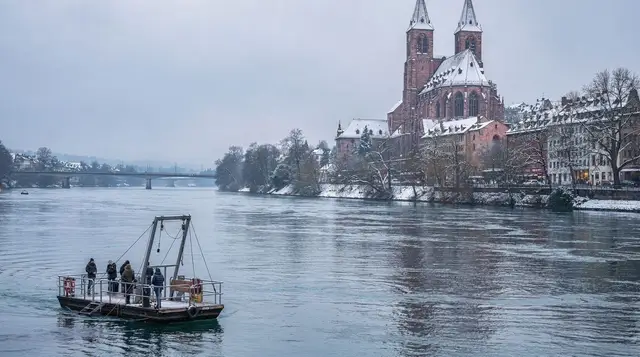
Most visitors doing eastern Switzerland from Lucerne head straight for the Rhine Falls and stop there. The Walensee gets skipped, which is a mistake — it’s a nine-kilometre alpine lake wedged between limestone walls with a village that has no road, a waterfall that drops further than most people expect, and Heidi’s actual village twenty minutes down the line. None of it is secret exactly, but it doesn’t get the tour-bus treatment either, and prices are noticeably lower than Lucerne or Interlaken.
Why the Walensee gets overlooked
The Walensee sits between Lake Zürich and Chur, in the canton border zone between St Gallen and Glarus, which puts it slightly off the main Lucerne–Zürich–Basel axis most itineraries follow. It has none of Lake Lucerne’s paddle-steamer romance and none of the Jungfrau region’s marketing budget. What it does have is genuinely dramatic scenery — the Churfirsten ridge rises almost straight out of the water on the north shore — and a car-free village that few destinations in the Alps can match.
The trade-off is time. From Lucerne it’s roughly two hours each way by train, via Zürich HB and Ziegelbrücke, so this isn’t a lunchtime add-on the way Rhine Falls can be from Zürich. Treat it as a proper day out, or better, an overnight stop between Lucerne and Chur or St Gallen.
Quinten: the village with no road
Quinten is the reason most people come. Around 90 people live here full-time, and the village has never had a road connection — not because one was never built, but because the cliffs behind it made it impractical, and locals now largely prefer it that way. Everything arrives by boat: groceries, building materials, the post, and you.
The passenger boat from Murg, Weesen or Walenstadt takes 20–40 minutes depending on departure point, and runs a reduced winter timetable with far fewer sailings from November to March — check the current timetable before planning a cold-season trip, since gaps of several hours between boats are normal off-season. Return fares run roughly CHF 20–28 and are covered by the Swiss Travel Pass. Once ashore, Quinten is a fifteen-minute walk end to end: a couple of restaurants with lake terraces, small vineyards on the slope above (this is one of Switzerland’s northernmost wine-growing spots, largely Räuschling and Blauburgunder), and no cars, ever.
Swimming here is the other draw. The Walensee’s water along the Quinten and Betlis shore climbs into the low-20s Celsius through July and August, warmer than most alpine lakes at this latitude, and there are free public bathing spots with no entry fee, though facilities amount to little more than a ladder and a patch of grass.
The Seerenbach waterfalls
Above Quinten, the Seerenbach falls drop around 585 metres in three stages down the cliff face, making them among the highest waterfalls in Switzerland — taller than the far more visited Rhine Falls, even if they carry a fraction of the water volume and never get anywhere near the same recognition. The trail up from Quinten climbs steeply through forest to a viewing point roughly 45 minutes each way; sturdy shoes matter, as the path is uneven limestone scree in places.
Flow varies enormously by season. After heavy rain or spring snowmelt the falls are dramatic; by late summer in a dry year they can shrink to a trickle, so this is one case where checking recent weather before committing to the climb genuinely changes whether the trip is worth it.
Amden and the Flumserberg
On the opposite side of the lake from Quinten, the villages of Amden and the Flumserberg plateau sit up at 900–1,300 metres, reached by road or cable car from Unterterzen and Flums. This is hiking and, in winter, modest skiing terrain — the Flumserberg ski area is small compared with the Bernese Oberland resorts but sees far fewer international visitors and correspondingly lower prices.
Summer here means ridge walks along the Mattstock and Leistchamm with views straight down onto the Walensee’s turquoise water, plus a growing network of e-bike trails around Unterterzen. It’s a legitimate alternative to the best hikes near Lucerne if you want a change of scenery without travelling all the way to Zermatt or Appenzell.
a guided e-bike day around the Flumserberg above the Walensee covers the steeper climbs without the legwork, which matters here since the plateau access roads gain height fast.
Maienfeld and the world of Heidi
Maienfeld is a real small town — vineyards, a walled old centre, about 3,000 residents — that happens to be the setting Johanna Spyri used for her 1880 novel Heidi. The tourist infrastructure built around that fact is modest by international standards: Heididorf, a reconstructed farmstead with goats, a period farmhouse interior and a short themed walking trail up toward the Alp Öschapeel, where the fictional grandfather’s hut supposedly stood.
Entry to Heididorf runs under CHF 10, and most visits take 45 minutes to an hour. It’s worth being honest about who this suits: young children who know the story get real value from it; teenagers and adults without that nostalgia will likely find it thin. The walk up to the Heidi-Alp viewpoint is free and arguably better than the farmstead itself, with genuine views over the Rhine valley toward Liechtenstein.
Maienfeld’s actual old town — largely ignored by Heidi day-trippers — has some of the better small-town architecture in the region and a handful of wine cellars open for tastings, since this is one of the Bündner Herrschaft’s serious wine-producing corners.
a private car tour that combines Heididorf with Vaduz across the border in Liechtenstein is the efficient way to do both without juggling regional bus timetables.
Bad Ragaz: thermal baths and the Tamina Gorge
Bad Ragaz is the most polished stop in the region, built around thermal springs discovered in the Tamina Gorge in the 12th century and piped down to the town since 1840. Today it’s split between the public Tamina Therme (CHF 35–40 for a half-day) and the considerably more expensive Grand Resort Bad Ragaz spa wing, which is a genuine five-star operation and priced like one.
The Tamina Gorge itself, a narrow limestone canyon a short walk or drive from town, is worth doing before or instead of the baths — a wooden walkway leads into the gorge to the original spring source, roughly 45 minutes round trip, and it’s dramatically cooler and darker than the open lake scenery elsewhere in the region. It’s covered in more depth in the dedicated guide to Bad Ragaz and the Tamina Gorge.
Bad Ragaz also sits on the Chur–Sargans rail line, which makes it easy to fold into a longer day that includes Chur, Vaduz in Liechtenstein, or St Gallen.
Getting there and getting around
None of this region is a quick hop from Lucerne the way Zug or Zurich are. Realistic journey times:
| From Lucerne to | Duration | Notes |
|---|---|---|
| Ziegelbrücke (Walensee gateway) | ~1h 45min | Change at Zürich HB |
| Walenstadt (east end, Quinten boat) | ~2h | Change at Zürich HB and Ziegelbrücke |
| Bad Ragaz | ~2h 15min | Change at Zürich HB and Sargans |
| Maienfeld | ~2h 10min | Change at Zürich HB and Sargans |
| Chur (regional hub) | ~2h 20min | Change at Zürich HB |
Within the region itself, trains run along both shores of the lake (Ziegelbrücke–Walenstadt–Sargans on the south side connects to most stops), and the passenger boats link the lakeside villages, including Quinten, from roughly April to October. Buses and the Flumserberg cable cars handle the climb up to Amden and the plateau. A car helps for combining Maienfeld, Bad Ragaz and the Flumserberg in one day, but isn’t necessary for Quinten, which has no road regardless.
a combined train, cable car and Walensee boat day trip from Zürich is a reasonable shortcut if starting from Zürich rather than Lucerne, and it removes the timetable-juggling that independent travel through this region otherwise requires.
Costs at a glance
| Item | Typical cost |
|---|---|
| Boat return, Murg/Walenstadt to Quinten | CHF 20–28 |
| Lunch on a Quinten terrace | CHF 25–35 |
| Heididorf entry | Under CHF 10 |
| Tamina Therme half-day | CHF 35–40 |
| Grand Resort Bad Ragaz spa day | CHF 90+ |
| Train, Lucerne to Ziegelbrücke, one way | Roughly CHF 45 without a pass |
The Swiss Travel Pass covers all the trains and the scheduled Walensee boats used above, which makes it worth doing the maths against single tickets if this trip is part of a longer eastern Switzerland loop. The regional Tell-Pass does not extend this far east and won’t help here.
Fitting Walensee and Heidiland into a longer trip
Given the travel time from Lucerne, this region works best in one of three ways: a long single day focused on either Quinten or Bad Ragaz (not comfortably both), an overnight stop on the way between Lucerne and Chur or St Gallen, or a half-day add-on if you’re already passing through on the Rhine Falls or Appenzell side of the country. Combining it with Zürich as a base cuts the travel time roughly in half compared with starting in Lucerne.
a Chur-based day trip covering the Flumserberg and a Walensee boat crossing is a sensible option if Chur rather than Lucerne is your overnight base, since it cuts out the longest leg of the journey.
For general guidance on how these day trips fit against everything else reachable from Lucerne, see day trips from Lucerne and, for the hiking-focused visitor, the best hikes near Lucerne for how the Walensee compares to closer options. Travellers weighing a wellness-focused day should also read the thermal baths near Lucerne guide before committing to the longer trip out to Bad Ragaz.
Hikers who enjoy the Churfirsten ridge above Amden may also want the Seealpsee and Appenzell hikes guide, since Appenzell is a natural onward stop from this region. For the wider transport picture, Swiss trains explained covers how the connecting S-Bahn and regional lines fit together.
Walensee and Heidiland FAQ
Is Quinten really only reachable by boat or on foot?
Yes. Quinten has no road connection at all — the only ways in are the passenger boat across the Walensee or a lakeside hiking trail from Murg or Betlis. It’s the only village of its size in Switzerland with this arrangement, and it’s the main reason to come.
How much does the Walensee boat to Quinten cost?
A return trip from Murg or Walenstadt to Quinten runs roughly CHF 20–28 depending on the departure point, and the boats are covered by the Swiss Travel Pass. Buy tickets at the jetty kiosk or from the boat crew; there’s no need to book ahead outside August weekends.
Can you swim in the Walensee?
Yes, and it’s genuinely one of the better swimming lakes in Switzerland — the water off Quinten and the Betlis shore warms into the low-20s Celsius by July and August. There are free public bathing spots along the north shore; bring your own towel, as facilities are basic.
Is Heididorf in Maienfeld worth visiting with kids?
For children under about ten who know the Heidi story, yes — it’s a small reconstructed farmstead with goats, a farmhouse to explore and a short themed trail, and entry is under CHF 10. Older kids and adults without the nostalgia attachment will find it thin; budget under an hour.
How long does Bad Ragaz’s thermal bath take, and what does it cost?
The public Tamina Therme runs CHF 35–40 for a half-day entry, more for the Grand Resort Bad Ragaz spa side. Most visitors spend two to three hours; it pairs well with the short Tamina Gorge walk beforehand, which takes about 45 minutes round trip from the gorge entrance.
What’s the easiest day trip from Lucerne to the Walensee?
Train to Ziegelbrücke (change at Zürich HB), then the local S-Bahn on to Walenstadt or Weesen for the boat to Quinten. Door to door it’s about 2 hours from Lucerne each way, so a Quinten-focused day trip means a long day; combining Bad Ragaz alone as a spa day is more relaxed.
Is the Walensee covered by the Swiss Travel Pass?
The trains are fully covered, and the scheduled passenger boats to Quinten are included as part of the regular Swiss Travel Pass network. The Flumserberg cable car and the Tamina Therme entry are not covered and are paid separately, usually with a modest pass-holder discount.