Car rental in Switzerland: is it worth it from Lucerne?
Is it worth renting a car in Switzerland if you're based in Lucerne?
Rarely, for a Lucerne-based trip. You need a CHF 40 motorway vignette on top of the rental, mountain passes close for roughly six months a year, and parking in Lucerne runs CHF 3-4.50 an hour. Trains from Lucerne to Zurich, Bern, Interlaken and most day-trip destinations are as fast as driving once you add parking and fuel, and considerably less stressful.
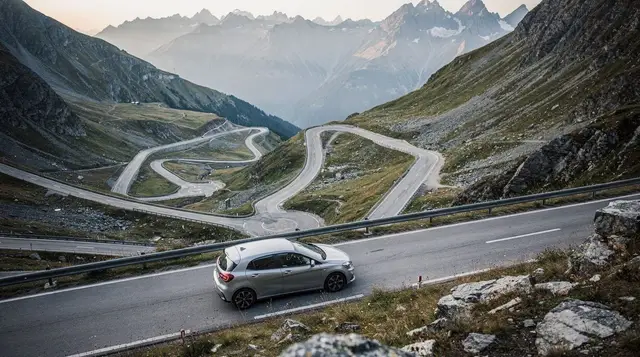
Most visitors who ask about car rental in Switzerland are picturing an open alpine road with no traffic and a view around every bend. That road exists. What the brochure doesn’t mention is the CHF 40 sticker you need before you can drive on it, the pass that might be shut for the season, and the fact that the train to the same viewpoint often takes less time door to door. This guide covers what actually changes the maths: the vignette, pass closures, Lucerne parking, and a straight comparison with the train.
The motorway vignette: what it costs and who needs it
Switzerland doesn’t charge motorway tolls per kilometre. Instead, every vehicle using the national motorway network (the green signs, marked autoroute, Autobahn or autostrada depending on the region) needs a vignette — a single annual charge, currently CHF 40, valid from 1 December of the previous year to 31 January of the following year. So a vignette bought in March 2026 is valid until the end of January 2027, not for twelve months from purchase.
Since 2023 there’s also an e-vignette, registered against your number plate rather than stuck to the windscreen, sold through the official portal or at border crossings and post offices. Most rental cars picked up in Switzerland already carry a valid vignette for the current period — ask at the counter and get it confirmed in writing, because driving without one carries a CHF 200 fine on top of having to buy the vignette anyway. If you’re picking up a car in Germany, France or Italy and driving into Switzerland, you’ll need to buy your own.
You don’t need the vignette for ordinary roads — a loop through villages on cantonal roads (the ones marked with a number, not the green motorway signs) is free of it. It only applies the moment you join a green-signed motorway, which in the Lucerne area means the A2 north to Basel, south through the Gotthard, or the A14/A4 toward Zug and Zurich.
| Item | Cost (CHF) | Notes |
|---|---|---|
| Motorway vignette | 40 | Valid Dec–Jan, 14-month window |
| Fine for no vignette | 200 | Plus you still need to buy one |
| E-vignette admin fee | ~5 | Charged on top when bought online |
Mountain passes: when they’re actually open
This is the detail that catches out the most drivers, because the passes are exactly what people rent a car to see. Switzerland’s high alpine passes are seasonal roads, closed by snow for roughly half the year, and the opening and closing dates shift with the winter — there’s no fixed calendar date, only a typical window.
| Pass | Typical opening | Typical closing | Notes |
|---|---|---|---|
| Susten | Late May–early June | Late October | Links Uri and Bern, no toll |
| Grimsel | Late May–early June | Late October | Connects to the Furka |
| Furka | Late May–June | Mid-October | Steep hairpins, car-carrying train alternative via Realp–Oberwald |
| Klausen | Late May–June | Late October | Narrow, popular with cyclists |
| San Bernardino | Year-round via tunnel; pass road seasonal | — | The pass itself closes, the tunnel doesn’t |
| Great St Bernard | Early June | Mid-October | Tunnel alternative stays open |
| Brünig | Year-round | — | Main Lucerne–Interlaken road route, may need chains in snow |
The practical upshot: if you’re planning a trip in April, early May, or November, treat the high passes as closed and check current status before building an itinerary around one. Roads.ch and the cantonal traffic authorities publish live status; rental desks in Lucerne will usually know off the top of their head whether the passes near you are open, since it’s the question they field most often between April and June.
Chain requirements are separate from full closure — some passes open earlier than the table above but require snow chains or winter tyres for a few extra weeks either side of the main season. If your rental doesn’t come with winter tyres already fitted (most do, October to April), ask specifically, because a fine for inadequate winter equipment after an accident is far more expensive than the tyre upgrade would have been.
Parking in Lucerne
Lucerne’s old town is compact and mostly car-free by design, which is good for walking and bad for anyone who’s just driven in. There is no free parking near the centre. The realistic options:
| Car park | Location | Approx. cost |
|---|---|---|
| Bahnhof (station) | Under Luzern Bahnhof, steps from the lake | CHF 4.50/hour, ~CHF 38/24h |
| Musegg | North edge of old town, near the wall | Similar hourly rate, slightly cheaper daily cap |
| Tribschen/Verkehrshaus | Near the Swiss Museum of Transport | Cheaper, 15–20 min walk to centre |
| Blue zone (street) | Residential streets outside the core | Free with a paper disc, but capped at 1–2 hours — not useful for a full day |
| Hotel parking | Varies by hotel | CHF 25–45/night, book ahead in summer |
If your hotel doesn’t include parking, expect it to be one of your larger daily costs — a week’s stay can add CHF 200-300 in parking alone, on top of the rental and vignette. This is the single biggest reason a car makes less sense for a Lucerne-based stay than for a rural base: you’re paying city-centre parking rates for a car you’ll mostly use on day trips out, not around town.
For the day trips themselves, park-and-ride happens naturally at destination — Engelberg, Interlaken and most mountain villages have far cheaper parking than Lucerne itself, often CHF 10-15 for the day right at the cable car base station.
Where a car genuinely helps
There are trips from Lucerne where a car saves real time or opens up places the rail network doesn’t reach directly:
- Emmental villages and farm dairies off the main line, where connections by public transport mean long waits between buses.
- A loop through several small Alpine villages in one day — Engelberg, then over to Sarnen, then back via Alpnach — which the train can’t string together without backtracking.
- Early starts before public transport begins, useful for sunrise photography at a viewpoint.
- Travelling with a lot of luggage or mobility equipment, where changing trains with cases is more hassle than it’s worth — see our guide to luggage and left-luggage in Lucerne if you’d rather solve this without a car at all.
- A one-way trip that ends far from a station, like some of the smaller villages around Lake Thun and Lake Brienz.
If your plan fits one of these, renting for two or three days of a longer trip — rather than the whole stay — is usually the better balance. Pick the car up the morning you need it and drop it back the same evening; Lucerne has rental desks at the station and at the airport transfer points, and one-day hire is completely normal here.
Where the train wins
For the classic Lucerne day trips — the ones most visitors actually want — the train is faster once you count the walk from a Lucerne car park to your actual seat, and it’s the only way to reach several of the best viewpoints at all, since the final stretch is by cogwheel railway or cable car, not road.
| Route | By train | By car (drive + park) | Verdict |
|---|---|---|---|
| Lucerne–Zurich | 45 min–1 hr, direct | ~50 min drive + city parking search | Train, no contest |
| Lucerne–Interlaken | ~1 hr 50 via Brünig, scenic | ~1 hr 45, Brünig pass road | Similar, train has the view without the driving |
| Lucerne–Engelberg | ~45 min, direct | ~50 min, then Titlis parking | Train, then straight onto the cable car |
| Lucerne–Mount Pilatus | Cogwheel train from Alpnachstad | No road to the summit | Train/cable car only |
| Lucerne–Rigi | Boat + cogwheel or gondola | Drive to Vitznau or Weggis, then rail | Combined trip either way |
| Lucerne–Zermatt | ~3 hr 15, no car change needed | Not possible — Zermatt is car-free | Train only |
Zermatt is the clearest example: it’s a car-free resort, so driving gets you as far as Täsch, where you still have to park and take a shuttle train the last few kilometres. The Swiss rail network is genuinely built around these mountain destinations in a way road access often isn’t — see our guides on the Swiss Travel Pass and the Tell-Pass for the passes that make repeated day trips affordable without a rental at all.
If you do want a slower, self-directed way to see the countryside without committing to a full rental, look at a day trip to Interlaken or the Rhine Falls day trip, both straightforward by train from Lucerne with no parking to think about at either end. For something with a car-adjacent feel but none of the admin, a half-day rental such as the Lausanne vintage car rental with a picnic included gives you the open-road experience for an afternoon without the vignette, insurance paperwork or Lucerne parking bill.
Practical alternatives if you decide against renting
Skipping the car doesn’t mean skipping the mountains. Cable cars, cogwheel trains and boats reach almost everywhere a road would, and several activities let you cover ground independently without driving:
- An e-bike rental in Interlaken for exploring the lakes at your own pace on the day you’re there.
- A gravel bike rental in Zurich if your loop starts or ends at the airport.
- The glacier excursion on Mount Titlis, reached entirely by train and cable car from Engelberg with no road access to the summit at all.
- For a genuinely different way to see the alpine terrain, a hot air balloon flight over Switzerland skips the road question entirely.
Booking basics: age, deposit and insurance
Most Swiss rental companies require drivers to be at least 20-21 with at least one year’s licence held, and under-25s often pay a young-driver surcharge of CHF 15-25 a day. A credit card in the driver’s name is standard for the deposit — debit cards are frequently refused. Basic insurance (collision damage waiver) is usually included in the quoted price, but the excess can be CHF 1,000-2,500 unless you pay extra to reduce it; check this figure specifically rather than assuming “insurance included” means fully covered.
Fuel is expensive by comparison with neighbouring countries — expect roughly CHF 1.80-2.00 a litre for petrol — and most rentals are returned full-to-full, so budget the last fill-up into your total cost rather than treating the daily rental rate as the whole picture.
Putting it together
A car rented for a single day to reach one mountain, added to a Lucerne-based stay, rarely beats the train once you total the vignette pro-rated across the trip, fuel, and CHF 30-40 of parking at both ends. Where it earns its cost is a multi-day loop through villages the railway doesn’t serve directly, or genuine flexibility for an early start. For a first stay in the region, working out how to get around Lucerne without a car, then adding a rental only for a specific rural stretch, tends to be the cheaper and less stressful order of operations.
Our overview of day trips from Lucerne and the rundown of how Swiss trains work cover the rail-first version of most of the itineraries above, including the ones that go through Andermatt and the Gotthard, Interlaken, or south to Lugano and Ticino.
If you’re flying in, our Zurich airport to Lucerne guide also settles the train-versus-transfer question for the first leg, and the roundup of the best mountain excursions from Lucerne and a dedicated look at the Zermatt day trip both make the case, route by route, for why the car often stays parked.
Transport passes & transfers on GetYourGuide
Verified deep-linked GetYourGuide tours. Book through these links and we earn a small commission at no cost to you.
GetYourGuide does not provide a product photo for this activity — the image shows the meeting point, photographed by us.