Best mountain excursions from Lucerne
Which mountain should I visit on a day trip from Lucerne?
Rigi is the easiest half-day out and the best value if you only do one. Pilatus is more dramatic and includes the world's steepest cogwheel railway, but costs more and needs a full day. Titlis is the only one with a glacier and year-round snow, but it means a train to Engelberg first. Stanserhorn and Stoos are cheaper, quieter alternatives with their own engineering claims to fame.
Lucerne sits at the foot of more accessible mountains than almost anywhere else in Switzerland, which is exactly why first-time visitors find the choice paralysing. Every brochure at the station shows a cable car against blue sky, but the seven excursions worth your time differ enormously in price, length and what you actually get at the top. This guide sorts them by what matters when you’re planning a real day: how long you’re gone, what it costs in CHF, and how demanding it is if mobility or a fear of exposed platforms is a factor.
Comparing the seven mountains at a glance
| Mountain | Round trip from Lucerne | Approx. price (CHF) | Difficulty | Best for |
|---|---|---|---|---|
| Rigi | 3.5-5 hours | 75-85 | Easy | First-timers, best value |
| Pilatus | 5-6 hours | 100-115 | Easy-moderate | The signature “golden round trip” |
| Titlis | 5-6 hours | 90-100 | Easy | Glacier snow, year-round |
| Stanserhorn | 3-4 hours | 65-75 | Easy | Quiet, open-top cable car |
| Stoos | 3-4 hours | 30-40 | Easy | Budget option, engineering novelty |
| Bürgenstock | 2-3 hours | 30-40 | Easy | Short trip, lake views without a summit push |
| Jungfraujoch | 10-12 hours | 200+ | Easy but long | Once, in good weather, with an early start |
Prices move year to year and with Half Fare Card or Swiss Travel Pass discounts, so treat these as a planning baseline rather than a quote. All seven are reachable without a car; the whole point of basing yourself in Lucerne is that trains, boats and cable cars connect directly from the Bahnhof at the edge of the old town.
Mount Pilatus: the world’s steepest cogwheel railway
Pilatus is the excursion most people picture when they think of Lucerne’s mountains, and it delivers on the drama: the Alpnachstad-Pilatus Kulm cogwheel railway climbs at a gradient of 48%, officially the steepest rack railway on earth. The classic “golden round trip” runs boat from Lucerne to Alpnachstad, cogwheel railway up, then descent by cable car and gondola to Kriens on the other side (or the reverse), and takes most of a day once you include the lake crossing.
The cogwheel line only runs from May to November, weather and snow depending; outside that window, or if you’d rather skip the boat, the Kriens-side aerial cableway and gondola run year-round and get you up in under half an hour. The summit has several short walking trails, a hotel-restaurant with a terrace, and on a clear day views stretching to the Bernese Alps. It’s the most expensive of the classic three, and the boat leg alone takes 70-80 minutes each way, so build a full day around it rather than trying to combine it with anything else. Full route options, current fares and the golden round trip timetable are in the Pilatus guide.
Mount Rigi: two railways, a boat, and the best value of the three
Rigi is Europe’s oldest mountain railway and, for most visitors, the easiest single decision. Boats from Lucerne run to either Vitznau or Weggis; from Vitznau, Europe’s first mountain cogwheel railway (opened 1871) climbs to the summit, while from Weggis a cable car does the same job. Either way the whole loop, including the lake crossing, fits inside half a day, which is why it’s the excursion most Lucerne guides default to for anyone with limited time.
The summit itself is broader and gentler than Pilatus’s, with an easy circular path, a small hotel, and views over Lake Lucerne, Lake Zug and, on a clear day, as far as the Alps of central Switzerland. It’s also noticeably cheaper: a Rigi round trip typically runs CHF 75-85 against Pilatus’s CHF 100-115. If you’re deciding between the two and only have one day, Rigi is the pragmatic answer; the full comparison, including which one photographs better and which is less crowded, is in our Pilatus vs Rigi vs Titlis breakdown. Timetables, fare tiers and the boat-versus-train-only options are in the Rigi guide.
Mount Titlis: the only one with a real glacier
Titlis is the odd one out on this list because it isn’t reachable directly from Lucerne by boat: you take a train (roughly 45 minutes) to Engelberg first, then the Titlis cable car system, including the rotating Titlis Rotair car, up to 3,020m. That extra leg makes it a longer day than Rigi, but it’s the only excursion here with permanent snow and glacier ice at the top, plus a glacier cave and a suspension bridge (the Titlis Cliff Walk) at altitude.
It’s worth knowing that Titlis is popular with tour groups from Lucerne and Zurich alike, so mid-morning queues at the valley station can run long in July and August; an early departure from Lucerne avoids most of it. Warm layers are non-negotiable even in summer, since the summit sits well below freezing most of the year. Full transport options, cable car pricing and what the glacier cave actually involves are covered in the Titlis guide.
Stanserhorn: the open-top CabriO cable car
Stanserhorn is one of the lesser-known excursions from Lucerne, and that’s part of its appeal: fewer crowds, a shorter trip, and a genuinely unusual cable car. The upper section uses the CabriO, the world’s first cable car with an open-air upper deck, giving unobstructed views on the way up rather than through glass. The base station at Stans is a roughly 20-minute train ride from Lucerne, followed by a funicular and then the CabriO itself.
The summit is smaller and quieter than Rigi or Pilatus, with a restaurant terrace and short walking paths, and the whole round trip from Lucerne fits comfortably into three to four hours. It’s a sound choice if you want a mountain view without committing a full day, or if you’re travelling with people who find crowded summit platforms unpleasant. Full fares and the CabriO schedule are in the Stanserhorn guide.
Stoos: the world’s steepest funicular, on a budget
Stoos is the cheapest mountain excursion on this list and one of the most talked-about, thanks to the Stoosbahn funicular, which climbs a maximum gradient of 110% in rotating cabins so passengers stay level throughout the ascent. It’s a genuine engineering curiosity rather than a marketing line, and the ride itself is reason enough to go.
Getting there from Lucerne involves a train to Schwyz and a short bus or taxi to the funicular’s base at Schlattli, adding roughly 45-50 minutes each side of the actual mountain visit. The car-free village of Stoos at the top has walking trails and, in winter, skiing; it’s a lower-key destination than Rigi or Pilatus, better suited to a shorter, cheaper half-day than a full alpine spectacle. Transport connections and funicular timings are in the Stoos and Fronalpstock guide.
Bürgenstock: lake views without a real summit push
Bürgenstock isn’t a high mountain excursion in the same sense as the others; it’s a wooded ridge above Lake Lucerne’s southern shore, reached by boat to Kehrsiten and then a funicular that’s been running since 1888. At the top, the resort’s Hammetschwand Lift, Europe’s highest exterior elevator, adds another 153m in under a minute for those who want it.
It’s the shortest outing on this list, doable in two to three hours including the boat crossing, and it works well as an afternoon add-on rather than a full-day plan. The panorama walkway along the cliff edge gives lake views without the altitude or the queues of Pilatus or Titlis, and it’s noticeably cheaper. Full route and pricing detail is in the Bürgenstock and Hammetschwand guide.
Jungfraujoch: is it worth the day from Lucerne?
Jungfraujoch, the “Top of Europe” at 3,454m, is the most famous mountain excursion in Switzerland, but it isn’t in central Switzerland at all — it sits above Interlaken, reached via Interlaken and then Grindelwald or Lauterbrunnen. Doing it from Lucerne means a train journey of around 1 hour 50 minutes each way to Interlaken alone, before the mountain railways up even start, which puts the full round trip at 10-12 hours if attempted in a single day.
It’s genuinely spectacular when the weather cooperates: glacier views, the Sphinx observation deck, and the Aletsch Glacier stretching out below. But cloud cover at altitude is common and unpredictable, and a poor-visibility day at the top wastes one of the more expensive tickets in the country. If Jungfraujoch is a priority, an overnight stay in Interlaken or Grindelwald, rather than a rushed day trip from Lucerne, gives you a weather backup day. The full route, ticket tiers and what to do if you’re clouded out are in the Jungfraujoch guide.
Passes that actually save money on these routes
The Swiss Travel Pass covers scheduled boats on Lake Lucerne in full and gives roughly 50% off most of the mountain railways above, rather than free travel to the summits — worth knowing before you assume a multi-day pass pays for a mountain day outright.
If your trip is centred on central Switzerland specifically, the regional Tell-Pass bundles boats and several of these mountains (Rigi, Stanserhorn, Titlis among them) more cheaply than buying each leg separately, and it’s often the better call if you’re not travelling far beyond Lucerne. Either way, check which of Rigi, Pilatus or Titlis your specific pass discounts before buying tickets at the station, since coverage varies between them.
Booking a guided option instead of doing it solo
Public transport connections to all of these mountains are frequent and easy to figure out alone, so a guided tour mostly buys you convenience rather than access. If you’d rather not plan connections yourself, or want the boat and cable car combined into one booking, a Rigi day trip from Lucerne with cruise and cable car covers the lake crossing and both ascent options in a single ticket.
For a longer alpine day that pairs mountain scenery with a cable car ride further into the Bernese Oberland, a day trip from Lucerne to Grindelwald First is worth considering as an alternative to Jungfraujoch on a day when the summit forecast looks poor. And if you’d simply rather sit on a coach than manage train changes, a classic Rigi round trip from Lucerne handles the whole logistics chain for you.
When closures catch people out
Every rack railway and cable car on this list closes for scheduled maintenance at some point, most commonly a window in spring (typically March-April) and sometimes again in autumn. These closures aren’t always advertised prominently outside the operator’s own site, and they’re the single most common reason a planned mountain day falls through. If you’re travelling in the shoulder season, check the specific railway’s operating calendar before booking accommodation around it, not just before buying the ticket itself. Snow can also close the Pilatus cogwheel line outside its May-November season entirely, in which case the Kriens-side cableway is the only way up.
Building a mountain day into a longer itinerary
None of these excursions need more than a day each, which makes them easy to slot into a longer Lucerne stay without over-planning. A five-day summer itinerary built around the Alps typically has room for two of these mountains plus a lake day; our broader guide to day trips from Lucerne covers where these excursions sit alongside non-mountain options like Zurich or Bern. If you’re short on time, decide early which one or two mountains matter most rather than trying to squeeze in all seven — the boat and train connections are efficient, but they still add up across a short trip.
Frequently asked questions about mountain excursions from Lucerne
Which mountain is best for first-time visitors to Lucerne?
Rigi, if you only have time for one. It combines a boat ride, two different cogwheel railways and a summit with a genuine 360-degree panorama, and the whole round trip fits into half a day. Pilatus is more spectacular but costs more and takes longer; save it for a second visit or a full free day.
How much does it cost to go up Pilatus, Rigi or Titlis?
Expect roughly CHF 100-115 for the classic Pilatus golden round trip (boat plus both railways), CHF 75-85 for Rigi return from Vitznau or Weggis, and CHF 90-100 for Titlis return from Engelberg. Half Fare Card and Swiss Travel Pass holders pay significantly less on all three; check current prices before you go, as mountain railways revise fares yearly.
Can I visit two mountains in one day from Lucerne?
Technically yes if you start early, but it makes for a rushed day with little time at either summit. Rigi and Stoos sit close enough together in central Switzerland that a determined early start can work; pairing Pilatus with anything else the same day is unrealistic once you factor in queues and connection times.
Do I need the Swiss Travel Pass for these excursions?
The Swiss Travel Pass covers the boat crossings and gives 50% off most of these mountain railways rather than free travel, so it pays for itself fastest if you’re already using it for onward rail travel. The regional Tell-Pass is usually better value if central Switzerland’s mountains and boats are your main focus and you’re not travelling far beyond it.
When do the mountain railways close for maintenance?
Most of these lines shut for a few weeks in spring and again in autumn for scheduled revision work, timing that varies year to year and isn’t always well publicised in advance. Always check the specific railway’s operating calendar before booking anything for March-April or November, which is when closures most often land.
Is Jungfraujoch really doable as a day trip from Lucerne?
It’s possible but long: figure on a 6am start and an 11-12 hour round trip once you add the train changes through Interlaken and Grindelwald or Lauterbrunnen. It works better as an overnight stop in the Bernese Oberland than a rushed single day, and bad weather at 3,454m can waste the whole ticket with no view at the top.
What should I wear on a mountain excursion from Lucerne?
Layers, always. Lucerne itself might be 22°C while the summit of Titlis or Jungfraujoch sits well below freezing with wind chill, even in summer. A windproof jacket, decent shoes and sunglasses are worth carrying year-round; in winter add gloves and a hat, since exposed summit platforms get genuinely cold.
Best day trips from Lucerne on GetYourGuide
Verified deep-linked GetYourGuide tours. Book through these links and we earn a small commission at no cost to you.
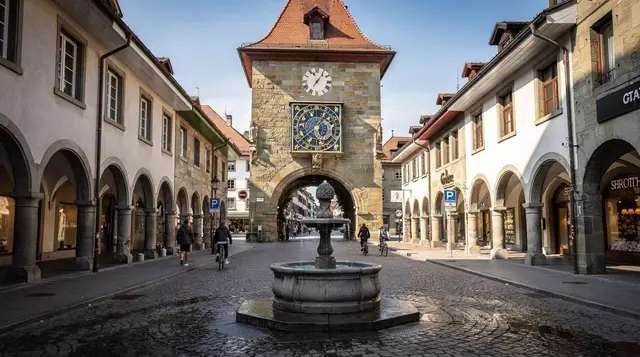
GetYourGuide does not provide a product photo for this activity — the image shows the meeting point, photographed by us.