A day on Pilatus in November
The railway was already shut for the season
I’d planned this trip around the cogwheel train — the one that claims the steepest rack gradient in the world, 48 percent, grinding up from Alpnachstad on a track that looks more like a wall than a railway. I got the timing wrong. By the second week of November it had already closed for the season, and the Alpnachstad platform was empty except for a laminated sign giving a reopening date in May.
So I went the other way up, the way that runs all year: the cable car from Kriens, a short bus ride from Lucerne’s train station. It turned out to be the better story anyway.
Three cabins, one mountain
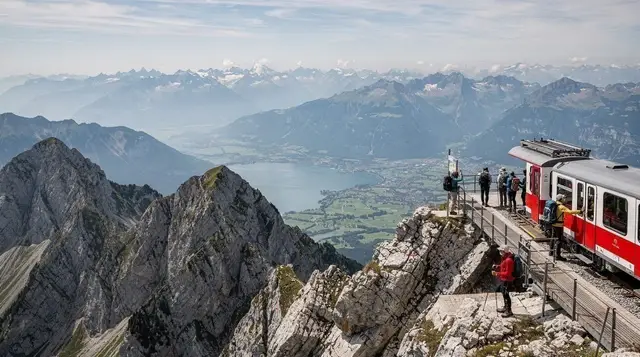
The Kriens route to Mount Pilatus isn’t one cable car, it’s three linked together. A small gondola climbs from Kriens to Krienseregg through the trees. At Krienseregg you switch to a larger cable car up to Fräkmüntegg, where the Alpine slide operates in summer and sits dormant and roped off in November. From Fräkmüntegg a third cabin, the actual aerial cableway, makes the final steep pull up to Pilatus Kulm at just over 2,100 metres.
The whole thing takes about 30 minutes gate to gate if the connections line up, and each change is a short walk across a platform rather than a scramble. I didn’t need the Golden Round Trip — boat up, train down, or the reverse — because half of that loop wasn’t running. In November the choice isn’t really a choice: you go up and down by cable car, and you plan the day around that fact rather than fighting it.
Above the fog line
What I hadn’t planned for was the cloud sea. Lucerne that morning was grey — not raining, just flat, low, colourless cloud sitting over the lake and the rooftops, the kind of morning that makes you wonder why you’re going up a mountain at all. Somewhere around the Fräkmüntegg stage, the cabin punched through the top of it.
Below the cable car, the cloud sat like a solid white floor over the whole Central Switzerland basin, with only the tips of Rigi and the ridges around Stanserhorn breaking the surface like islands. Above it, flat winter sun, a hard blue sky, and cold, still air. This is a known phenomenon here — locals call it Nebelmeer — and November is one of the more reliable months to catch it, because the valley cools and holds moisture while the peaks stay in clear high pressure. It isn’t guaranteed. I got lucky with the pressure system that week, and I’d check a forecast for temperature inversion rather than just “sunny” before making the trip specifically for this.
Nobody else was up there
I counted eleven other people at the summit across the two hours I stayed, most of them staff. No queue at the cableway, no queue for the ridge path, no one waiting to take a photo at the viewpoint by the hotel. In August this same spot has a steady stream of coaches from Lucerne and a line for the summit restaurant terrace. In November the terrace tables were stacked and covered, one indoor restaurant was running a short lunch menu, and the gift shop had one member of staff reading a book behind the till.
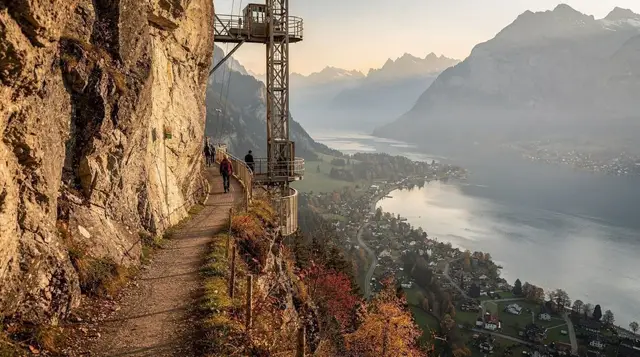
The short ridge walk from Pilatus Kulm out toward Esel and Oberhaupt was open, icy in patches on the shaded side, fine in boots with some grip. I wouldn’t take it lightly in trainers — a couple of sections have a real drop to one side, and there’s no one nearby to help if you go over on an ankle. The exposed sections are the same ones that make guided routes like a private guided cliff path outing worth considering later in the season, when ice is more of a factor and having someone who knows the current conditions is worth the fee.
The practical cost of going up in November
| Item | Detail |
|---|---|
| Alpnachstad cogwheel railway | Closed roughly November to April/May |
| Kriens aerial cableway (3 stages) | Runs year-round, weather permitting |
| Return fare, no discount | Around CHF 90 |
| With Half Fare Card or Swiss Travel Pass | Roughly half price |
| Summit temperature vs. Lucerne | Typically 10–15°C colder |
| Summit restaurant | One venue open, shorter hours |
If you’re using a Swiss Travel Pass, it covers the bus out to Kriens and gives the standard discount on the cableway itself, which took a meaningful chunk off the fare. Anyone weighing which pass to buy for a longer stay should read the pass comparison before committing to one over the Tell-Pass regional option, since the two suit different itineraries.
Was it worth it without the railway
Yes, and I’d go further: I’d now recommend the November trip over a crowded August one to anyone who’s already done Lucerne’s obvious sights and wants the mountain without the theatre of it. You lose the cogwheel train’s novelty and the option to loop up one way and down the other. You gain an empty summit, a real chance at the cloud sea, and a fare that’s the same whether the car park below is full or, as it was that day, nearly empty.
If cable cars aren’t your thing, the operators also run day trips that combine the mountain with a lake element — a Pilatus and lake cruise combined outing pairs the cable car with a boat leg on Lake Lucerne, and there’s a version routed from Lucerne as the classic golden round trip for the months when the railway is running both ways. Neither replaces just turning up at Kriens with a ticket, which is what I’d do again.
Getting the timing right
Before you go, check the current best time to visit Lucerne notes and the month-by-month weather patterns, because the railway’s exact closing date moves a week or two each year depending on snowfall. Read up on Lucerne in winter generally if you’re building a longer stay around the cold months, and compare Pilatus against Rigi and Titlis if you’re only doing one mountain and want to pick the right one for a cloud-sea morning.
For the wider list of options when the cable cars are running but the cogwheel trains aren’t, the roundup of mountain excursions from Lucerne covers what else stays open. If you’d rather build a full week around the season, the five-day winter itinerary sequences Pilatus alongside the other things that still work once the snow starts.
I still think about that white floor of cloud sitting over the lake, and the ten minutes I had the ridge path entirely to myself. I’ve since read what a Rigi morning like this looks like from someone who caught the same inversion from the other side of the valley, and I’m already planning to chase the first proper snow of the season back up there before the year is out. For anyone weighing up getting around Lucerne without a car, the Kriens bus and cableway combination is about as simple as mountain travel here gets — you don’t need to plan much beyond checking that the top station is actually open before you leave the flat.
Mountain excursions on GetYourGuide
Verified deep-linked GetYourGuide tours. Book through these links and we earn a small commission at no cost to you.
GetYourGuide does not provide a product photo for this activity — the image shows the meeting point, photographed by us.