Best time to visit Lucerne
When is the best time to visit Lucerne?
Late May to early October gives the most reliable weather and full mountain lift operation, with June and the second half of September avoiding the July–August crowds and peak hotel prices. Late April and November are the weakest months, since several lifts close for one to three weeks of annual maintenance. Winter brings snow and Christmas markets but shorter daylight and a smaller boat timetable on the lake.
Why the calendar matters more here than in most cities
Lucerne’s old town is pleasant in any weather, but the reason people come — the lake and the surrounding peaks — is seasonal in a way a flat European city is not. A cogwheel railway that is closed for maintenance, a paddle steamer running a winter skeleton timetable, or a cloud-filled valley in July can undo a day you planned around a single view. This guide sets out what actually changes month to month: temperature, rainfall, crowd levels, hotel prices, and — the detail that catches most first-time visitors out — when the mountain lifts themselves are running at all. For a fuller seasonal breakdown of temperatures and rain days, see the month-by-month weather guide.
| Season | Weather | Crowds | Hotel prices | Mountain lifts |
|---|---|---|---|---|
| March–April | Cool, changeable, late snow possible above 1,500m | Low, rising at Easter | Low to moderate | Partial — spring maintenance closures |
| May | Mild, green, occasional storms | High around Ascension and Whit weekends | Moderate, spikes on bridge weekends | Reopening through the month |
| June | Warm, some rain | Moderate | Moderate to high | Fully open |
| July–August | Warm to hot, afternoon storms | Highest of the year | Highest of the year | Fully open |
| September | Warm days, cool nights, drier | Moderate, easing after mid-month | Moderate to high | Fully open |
| October–November | Cool, foggy valleys, clear peaks | Low | Low, dropping through November | Partial — autumn maintenance closures |
| December | Cold, short days, possible snow | Moderate around Christmas markets | Moderate, spikes over Christmas/New Year | Winter lifts open, summer trails shut |
| January–February | Cold, reliable snow above 1,000m | Low outside Fasnacht | Lowest of the year | Winter lifts open |
Spring (March to May): thaw, mud and one very busy fortnight
March in Lucerne is still properly cold, with a real chance of a late snow flurry in the old town and plenty of snow lingering above 1,500 metres. It is a good month for museums — the Swiss Museum of Transport and the Rosengart Collection are both indoor options that do not depend on the weather — and hotel rates are close to their annual low outside the Fasnacht carnival week in February, which sometimes spills into early March.
April warms up gradually and is when several mountain operators bring their lifts back online after winter maintenance, but not all at once and not on a fixed date. This is the least reliable month for a mountain day trip: check the Pilatus and Rigi operator websites before committing a whole day to one summit, because a cabin can still be down for servicing into late April.
By May the city is genuinely pleasant — chestnut trees in leaf along the lake promenade, terrace season starting on the Reuss — but May is also when Switzerland’s spring bank holidays land, and they change the character of the month more than the weather does.
The May bridge weekends everyone in Switzerland books at once
Ascension Day (Auffahrt) always falls on a Thursday in May, and the great majority of Swiss employees take the following Friday as well, turning it into a four-day weekend. Ten days or so later comes Whit Monday (Pfingstmontag), adding a second long weekend the same month. Both are national holidays, not just a Lucerne quirk, and both send domestic travellers to exactly the places this guide covers: lake boats, the old town, and the mountain lifts.
Practically, that means two things. First, trains from Zurich and Basel into Lucerne, and the lake boats themselves, get noticeably fuller on these specific dates — book a Swiss Travel Pass or Saver Day Pass in advance rather than assuming you can walk up. Second, restaurants in the old town and around the Chapel Bridge fill early in the evening on these weekends specifically, in a way they do not on an ordinary May Tuesday. If your trip lands on either bridge weekend, book the excursion you most want to do — Pilatus, Rigi, or a lake cruise — a few days ahead rather than deciding on the morning.
Outside those two specific weekends, May itself is one of the better months to visit: green, mild, and before the July–August crowds arrive.
Summer (June to August): the warmest lake, the fullest lifts, the highest prices
June through August is when Lake Lucerne is genuinely swimmable — surface temperatures typically sit in the low-to-mid 20s Celsius from mid-July into early September — and every mountain lift, boat, and attraction is running on its full timetable. It is also, unsurprisingly, the busiest and most expensive stretch of the year. Hotel rates in the old town commonly run 30 to 50 percent above the January baseline, and the Chapel Bridge and lakefront promenade are genuinely crowded by mid-morning through August.
July and August also bring the year’s heaviest rainfall by volume, mostly as short, intense afternoon thunderstorms rather than all-day drizzle — plan mountain excursions for the morning where you can, since cloud tends to build over the peaks by early afternoon. Pilatus and Rigi are at their most crowded in these two months too; arriving at the Alpnachstad or Vitznau station for the first departure of the day is the most reliable way to avoid a queue for the cogwheel train.
June itself is a genuinely good compromise: closer to full daylight and warmth than May, but ahead of the July school-holiday surge across German-speaking Europe that fills the trains from late June onward.
Autumn (September to November): the best light, the cloud sea, and the shutdown
September, particularly its second half, is arguably the best all-round month to visit. The lake is still warm enough to swim in early on, rainfall drops noticeably from the summer peak, days are long enough for a full mountain excursion, and the crowds thin out once European school holidays end. Prices ease from their August peak without collapsing.
October and November are where autumn splits in two. Weather-wise, this is the season for the Alpine cloud sea (Nebelmeer): on still, high-pressure mornings, mist pools in the valley and around the lake while the summits of Rigi and Pilatus sit in clear sunshine above it, a genuinely striking effect that photographers travel for specifically. It is not guaranteed on any given day — check the forecast for a clear, calm morning after a foggy evening — but October is statistically the best month to try for it.
Set against that, late October into November is also when several lifts pause for their autumn maintenance window, mirroring the spring closures, and this is the detail that most disappoints visitors who did not check ahead. Pilatus in particular has historically shut its cogwheel railway for several weeks in this period. If a specific summit is the point of your trip, confirm its operating dates directly with the operator before booking accommodation around it — do not assume a lift that ran in August is still running in mid-November.
Winter (December to February): snow, markets and short days
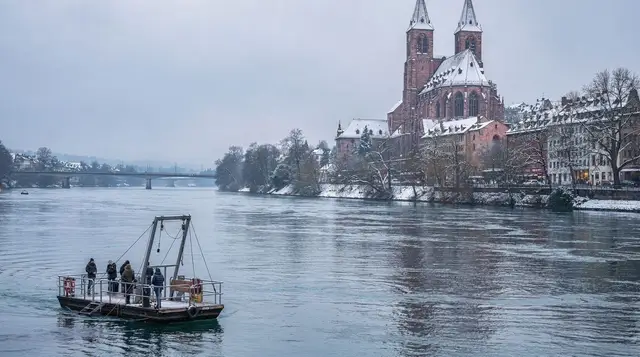
Lucerne in December centres on its Christmas market around Franziskanerplatz and the old town’s decorated arcades — see the Christmas markets guide for dates and stalls — with a real chance of snow dusting the rooftops by the lake. Daylight is short, roughly 8am to 4:30pm at the winter solstice, which compresses how much you can fit into a mountain day trip. The lake’s paddle steamers run a reduced winter timetable rather than the full summer schedule, so check departure times before planning a cruise.
January and February are the quietest, cheapest months of the year outside the week of Fasnacht carnival, which is genuinely loud, genuinely crowded, and worth timing a visit around or deliberately avoiding depending on your taste for it. This is also ski season: Titlis above Engelberg and the Stoos ridge both run through the winter, and a first-timer’s ski day from Lucerne is realistic without your own equipment. See skiing day trips from Lucerne and sledding and snowshoeing near Lucerne for options that do not require experience.
Snow at lake level is not reliable — Lucerne sits at only around 435 metres — so a white Christmas in the city itself is a possibility, not a promise; the mountains above 1,000 metres are the dependable snow.
Matching a tour to the season
The right booked activity changes with the month more than most guides admit. In the shoulder months of May, June and September, when the light is soft and the old town is calm before or after the peak crowds, a slower-paced outing makes more sense than a big-ticket excursion — the guided photography walk through the old town is built for exactly that kind of light, and a private sunset cycling route along the lakeshore works best on the long, mild evenings of June.
In July and August, when the lake is at its warmest and the mountain lifts are all running, a private boat cruise on the lake makes more sense than fighting the crowds on a summit cable car. In the cloud-sea window of October and early November, a day trip to Rigi with a lake crossing included gives you the best odds of catching the effect from above the mist rather than stuck inside it. Once the snow settles in, a first-timer ski experience on Titlis is a realistic way to ski for a day without owning any gear.
Whatever the season, cross-check operating dates for any lift directly rather than relying on a booking platform’s general description, since maintenance windows shift by a week or two from year to year.
Building the rest of the trip around the season
How many days you need changes with the season too — a winter visit with short daylight and a reduced boat timetable fits less into a day than a long June one does. See how many days in Lucerne for a season-adjusted answer, and the winter five-day itinerary or summer Alps five-day itinerary for a structured plan built around each season’s strengths.
For getting the transport logistics right whichever month you land in, the Swiss Travel Pass guide and the regional Tell-Pass guide cover which pass suits a short trip versus a longer one, and the Lucerne events and festivals calendar flags the specific dates — Fasnacht, Ascension, the summer festival season — worth planning around rather than accidentally landing in the middle of.
FAQ: picking the right month for Lucerne
When is the best time to visit Lucerne?
June and the second half of September are the sweet spot: warm enough for the lake and the mountains, without the peak crowds or prices of July and August. Both months usually have every cable car and cogwheel railway running.
What is the cheapest time to visit Lucerne?
Late January to March, outside the Fasnacht carnival week, has the lowest hotel rates. Late October to early December is also relatively cheap, though several mountain lifts are closed for maintenance during parts of that window.
When do the Pilatus and Rigi lifts close for maintenance?
Operators publish exact dates each year, but the pattern repeats: the Pilatus cogwheel railway typically pauses in late autumn and reopens for the spring season around mid to late May, and individual Rigi and Titlis cabins get shorter service breaks in April and November. Always check the operator’s site before building a trip around one summit.
Is Lucerne worth visiting in winter?
Yes, for snow-dusted old town streets, the Christmas market, and skiing at Titlis or Stoos, but daylight runs from around 8am to 4:30pm in December, the paddle steamers run a reduced timetable, and some hiking trails above the snow line are icy without proper boots.
When are the May bank holiday weekends in Switzerland?
Ascension Day (Auffahrt) falls on a Thursday in May and most Swiss employees take the Friday too, creating a four-day weekend that fills trains and hotels across central Switzerland. Whit Monday (Pfingstmontag), roughly ten days later, adds a second long weekend the same month.
What is the autumn cloud sea and when can I see it?
On still, high-pressure mornings from September to November, mist and low cloud fill the valley floor around Lake Lucerne while the mountain tops stay in bright sunshine, so summits like Rigi and Pilatus poke above a white sea of cloud. It is weather-dependent and never guaranteed, but a clear cold morning after a foggy evening is the best sign.
Does it rain a lot in Lucerne?
Lucerne gets rain in most months, with June to August the wettest by volume because of afternoon thunderstorms, and a noticeably drier, more stable stretch typically from late September into October. Bring a proper rain layer whatever month you travel.
Which month has the best weather for lake swimming?
Lake Lucerne is usually warm enough for a comfortable swim from July through early September, when surface temperatures often sit in the low-to-mid 20s Celsius; June and late September can still be swum in but feel noticeably colder.
Seasonal experiences on GetYourGuide
Verified deep-linked GetYourGuide tours. Book through these links and we earn a small commission at no cost to you.
GetYourGuide does not provide a product photo for this activity — the image shows the meeting point, photographed by us.