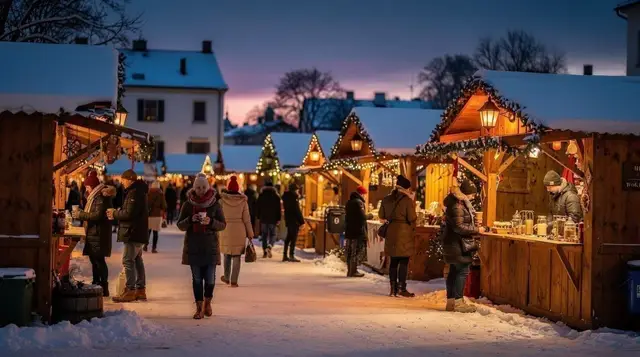
Lucerne in winter
Is Lucerne worth visiting in winter?
Yes, but plan around two different climates. The valley floor sits under grey fog (Nebel) for days at a time between November and February, while the Rigi, Pilatus and Titlis often sit above it in full sun. Some lifts close for maintenance in November and again in spring, and the Fasnacht carnival in February brings noise, crowds and a Thursday shutdown of most shops and offices.
Two different winters, one cable car ride apart
Lucerne in winter is really two climates stacked on top of each other. Down on the lakeshore, at 436 metres, the city sits inside a layer of grey cloud called Nebel that can hang over the Swiss plateau for a week or more without breaking. Temperatures hover a couple of degrees either side of freezing, the light stays flat, and the old town photographs a lot better in autumn or spring. That is the winter most visitors who never leave the valley floor actually experience.
Ride a cable car or cogwheel train up past roughly 1,000 to 1,200 metres, and the picture changes completely. The Rigi, Pilatus and Titlis frequently sit above the fog layer in full winter sun, looking down on a white sea of cloud with only the highest peaks of the Alps poking through. Locals call this an inversion, and on the right day it is the single best reason to visit Lucerne between November and February. The catch is that it is not guaranteed on any given day — check a live webcam before committing to the fare.
What actually closes, and when
The maintenance closures are the thing that ruins the most winter itineraries, mostly because visitors assume every lift runs all year like the ones back home.
| Lift | Winter status |
|---|---|
| Mount Pilatus cogwheel (Alpnachstad) | Closed for winter, reopens roughly May |
| Kriens–Pilatus cable car and gondola | Runs year-round, main winter access |
| Rigi cogwheel (Vitznau and Arth-Goldau) | Runs year-round, occasional short closures for maintenance |
| Weggis–Rigi cable car | Runs year-round |
| Titlis cable car (Engelberg) | Runs year-round, this is a ski resort in winter |
| Stanserhorn CabriO | Typically closed roughly December to March |
| Bürgenstock Hammetschwand lift | Weather-dependent, can close in ice or high wind |
Beyond the lifts themselves, the five historic paddle steamers on Lake Lucerne mostly lay up for winter, though the regular diesel boats keep running on a thinner timetable — see the boat timetables guide before you plan a day around a specific sailing. Some smaller museums and seasonal cafés around the lake also shorten their hours or close entirely between November and March.
None of this is announced loudly, and schedules shift slightly year to year, so always check the specific website for the Rigi, Pilatus or Titlis the morning you plan to go, not the week before.
What stays open — and gets better
The old town itself does not shut down. Chapel Bridge and the Musegg Wall towers are open year-round, and with fewer tour groups than July or August, the lanes around Kapellplatz are genuinely more pleasant to walk in December than in high summer. The Swiss Museum of Transport, Rosengart Collection and Glacier Garden all run their normal hours, and are an obvious answer to a fog-bound afternoon when the mountains are out of the question.
Late November through Christmas also brings the Christmas markets to Franziskanerplatz and the old town squares, with mulled wine stalls and a covered market that runs into late December. It is one of the busier stretches of the whole year for hotel prices, alongside Fasnacht, so book ahead if your dates overlap either one.
Fasnacht: five days that reshape the city
Lucerne’s Fasnacht (carnival) runs for roughly a week in February, tied to the church calendar so its exact dates shift each year. It starts at 5am on Schmutziger Donnerstag (“Dirty Thursday”) with a cannon shot and brass bands (Guggenmusik) marching through the streets, and most shops, banks and offices close for the day. Restaurants, bakeries and the tourist office generally stay open and do good business.
The days that follow bring costumed parades, masked processions and continuous music through the old town, loudest on the Monday and Tuesday (Güdismontag and Güdisdienstag) before it winds down on Ash Wednesday. Hotel rooms fill up and prices climb, so this is not a quiet weekend to expect a peaceful old-town stroll — go in expecting noise and crowds, or plan around it if that is not what you are after. The full Fasnacht guide covers the parade route and timings in more detail.
Getting above the fog
If you take one mountain trip in winter, make it whichever peak has the clearest forecast that day, not whichever one has the prettiest brochure photo. The Rigi is the easiest to reach on a fog-check morning: a train or cable car from Vitznau, Weggis or Arth-Goldau, then a short walk to Rigi Kulm for the view back down over the cloud layer.
a Rigi day trip from Lucerne that combines the lake cruise with the cable car up is a practical way to do the whole loop without juggling separate tickets, and it leaves the boat timetable to someone else on a day when you would rather be watching the clouds.
Titlis, above Engelberg, sits high enough (3,020 metres) that it is effectively a ski resort from December through April, with a rotating cable car (the Rotair) up the final stretch. Pilatus stays reachable via the Kriens gondola even though its steep cogwheel line shuts for the season. Whichever you pick, dress for temperatures 10 to 15 degrees colder than the lakeshore, and expect icy sections on any path away from the groomed viewing terraces.
On a genuinely clear day, the view from up top is also one of the few times of year when paragliding tandem flights run in proper visibility rather than through haze —
a tandem paragliding flight over the Alps and Lake Lucerne from Engelberg or the lakeside launch points, weather permitting.
A quieter lake, and indoor options for a fog day
Winter thins out the lake traffic considerably, which makes for a different kind of outing than the summer crowds allow.
a private cruise on Lake Lucerne in the cold months means the deck to yourselves and clear views of the shoreline villages without the July queues, though wrap up — the water keeps the air noticeably colder than the streets a few hundred metres inland.
For the days when the fog simply will not lift and the mountains are a lost cause, Lucerne has enough indoor options to fill an afternoon without feeling like a consolation prize.
a chocolate-making workshop is a straightforward way to spend two warm hours indoors, alongside the transport museum, the Rosengart’s Picasso and Klee collection, or simply working through the café and bakery scene one hot chocolate at a time.
Snow activities beyond the viewing platforms
Winter in the region is not only about looking at snow from a heated gondola. Sledding and snowshoeing trails run on the Rigi, Titlis and several smaller slopes within an hour of the city, generally cheaper and less crowded than the big resorts further into the Alps.
If you want proper skiing, day trips to Engelberg-Titlis or further afield are workable without a car, using the same rail network that runs everything else in this country on time — see the Swiss trains guide if the ticket system is new to you, and the Swiss Travel Pass guide if you are covering several of these trips in one visit.
Prices in winter versus other seasons
| Item | Winter (Nov–Feb) | Summer (Jun–Aug) |
|---|---|---|
| 3-star double room, old town | CHF 160–230 | CHF 220–320 |
| Rigi Kulm return (Vitznau) | CHF 76 | CHF 76 |
| Titlis return cable car | CHF 96 | CHF 96 |
| Coffee, old town café | CHF 4.50–5.50 | CHF 4.50–5.50 |
| Fondue for two, restaurant | CHF 60–75 | Less common on menus |
Lift prices barely move with the season, but hotel rates do — outside Christmas market weeks and Fasnacht, they can run 20 to 30 percent below summer peak. Fondue and raclette, oddly, are easier to find on menus in winter than summer; see the fondue and raclette guide for where locals actually go rather than the tourist-menu versions.
Planning around the fog
Because the inversion is not guaranteed, the most reliable approach is to keep your mountain day flexible and check a live webcam or forecast the morning of, rather than booking a fixed date weeks out and hoping. A five-day winter itinerary built around Lucerne gives enough slack to swap a foggy day for a museum and a clear day for the Rigi, which is really the only sane way to plan this season. For a broader read on when to come at all, the best time to visit guide and the month-by-month weather breakdown both cover how winter compares with Lucerne’s other three seasons.
Frequently asked questions about Lucerne in winter
Does it snow in Lucerne itself?
Rarely settles for long. Lucerne sits at 436 metres, and snow that falls in the old town usually melts within a day or two. For reliable snow, go up: Rigi Kulm sits at 1,798 metres, Titlis at 3,020 metres, and both hold snow from December into April.
What is the fog everyone mentions?
Nebel is a stable layer of low cloud that sits over the Swiss plateau, including Lucerne, from roughly November to February. It can last for days without lifting. Above around 1,000 to 1,200 metres, the same days are often clear and sunny, which is why locals go up the Rigi or Pilatus specifically to see the sun.
What closes in Lucerne over winter?
Some cable cars and cogwheel railways shut for scheduled maintenance, typically for one to three weeks in November before the winter season starts. Mount Pilatus’s Alpnachstad cogwheel railway does not run in winter at all; the Kriens cable car and gondola keep it accessible year-round instead. Always check the specific lift’s website before building a day around it.
Is Lucerne open on Fasnacht Thursday?
Most shops, banks and many offices close for Schmutziger Donnerstag, the Thursday that opens Fasnacht in late February. Restaurants, cafés and the tourist office generally stay open, but expect brass bands, costumed processions and a much louder city centre from early morning until late at night.
Do the lake boats still run in winter?
Yes, on a reduced timetable. Lake Lucerne’s regular boats run through winter, though with fewer daily departures than the April to October schedule, and the five historic paddle steamers mostly rest for the season. Check the current timetable before planning a trip that depends on a specific sailing.
Is Lucerne cheaper in winter?
Hotel rates drop outside the Christmas market weeks and Fasnacht, sometimes by 20 to 30 percent compared with summer. Tours and lift tickets stay at list price year-round, though some mountain railways offer combined winter rates when a slope is only partly open.
What should I pack for Lucerne in winter?
Layers and a proper waterproof coat for the valley, where damp cold and drizzle are more common than deep snow. Add proper winter boots, gloves and a hat if you are heading up the Rigi, Pilatus or Titlis, where temperatures run 10 to 15 degrees colder than the lakeshore and paths can be icy.
Skiing & winter experiences on GetYourGuide
Verified deep-linked GetYourGuide tours. Book through these links and we earn a small commission at no cost to you.
GetYourGuide does not provide a product photo for this activity — the image shows the meeting point, photographed by us.