Fasnacht: the loudest week of the year
I moved to Lucerne thinking I understood carnival. I did not. Basel has its famous Morgestraich, Rio has samba, but Lucerne’s Fasnacht is its own animal: six days where a tidy, quiet lakeside city turns into something closer to organised chaos, and everyone over the age of six seems to know exactly what to do except me.
Five in the morning on Kapellplatz
The Urknall is the reason I now own earplugs I did not previously need. At 5am on Schmutziger Donnerstag (“Dirty Thursday”, the opening day), a single blast goes off on Kapellplatz, and within seconds every Guggenmusik band within earshot starts playing at once, unrehearsed together, in front of a square packed with people who have clearly done this before. I had assumed I could wander down at a civilised hour and catch the atmosphere. I was wrong. By 5:15am the old town around the Chapel Bridge is already three-deep with costumed guild members, and the noise does not really stop again until well past midnight.
What nobody tells you in advance is how physical it feels. Guggenmusik is not background music. It is brass and drums played deliberately out of tune, at volume, in stone lanes that amplify everything, by bands that walk right up to you and play a few feet from your face before moving on. The first time a group cornered me outside a café near Hirschenplatz, I genuinely felt the sound in my chest rather than just heard it.
The guilds and the masks
Fasnacht in Lucerne is organised, even if it does not look it. It runs through a set of guilds (Zünfte), each with its own costumes, masks and Guggenmusik band, and the whole thing is nominally led by Fritschi, the legendary figure who is said to have taught the guilds their trades and who “arrives” by boat to open proceedings. The masks range from beautiful hand-carved wooden faces worth genuinely serious money to cheap, deliberately grotesque ones bought for a season and thrown away. Nobody explained the etiquette to me and I still do not fully understand it, but I have learned not to touch a mask without asking, and not to assume a friendly-looking costume belongs to a friendly-tempered person underneath it after their fourth drink.
The big set-piece processions happen on the Thursday, the Saturday, and again on Güdismontag and Güdisdienstag, the Monday and Tuesday before Ash Wednesday, when the guilds march through the old town in full costume with their bands. Between the big parades, smaller groups of Guggenmusiker simply roam the lanes, stopping wherever there is a crowd, playing two or three songs, and moving on. If you are trying to have dinner near the Rathaus during Fasnacht week, assume your conversation will be interrupted by a brass band at least once.
Confetti everywhere, for weeks
The paper confetti, Räppli, deserves its own warning. It is thrown by the fistful, stuffed down collars, and generally treated as fair game on anyone within reach, costumed or not. I found it in my coat pockets in April. Shopkeepers along the main shopping streets tape up their windows and stock rooms every year because otherwise it works its way into everything, and the city’s cleaning crews are out from dawn most mornings sweeping metric tonnes of it off the cobblestones before the next day’s crowds arrive.
If you are visiting for the markets and street food as much as the parades, know that Fasnacht food stalls lean heavily into deep-fried classics: Fasnachtschüechli (thin, crisp pastry dusted with sugar) and mulled wine by the litre. It is not the moment to expect anything light.
Six days is genuinely a lot
By the Saturday, I understood why some Lucerne residents I know simply leave town for the week. The noise, the crowds squeezing through lanes built for a fraction of the people now in them, and the general unpredictability of costumed strangers with confetti and brass instruments is not for everyone, and it is fair to say the city stops being restful for its duration. If you need a quiet counterpoint mid-week, the lake itself barely changes: a private cruise out on Lake Lucerne gets you away from the noise entirely, and the water is calm even when the old town is not.
I also started using the mountains as an escape valve. A round trip up the Rigi on the Wednesday before Fasnacht Thursday gave me a last quiet day before the Urknall, and doing the same trip again as a Rigi day trip that combines the cruise and cable car after Ash Wednesday felt like decompressing. If you plan your day trips around Fasnacht rather than during it, you get the best of both: full immersion in the noise, and somewhere silent to recover.
Practical notes from someone who got this wrong once
Book accommodation early. Rooms near the old town sell out weeks ahead and prices climb accordingly; if you are still deciding where to stay in Lucerne, Fasnacht week is not the week to leave it late. Public transport, run by VBL, keeps running but gets crowded and occasionally rerouted around parade streets, so build in extra time. If you are prone to sensory overload, plan your exposure in blocks rather than trying to do all six days at full intensity; I regretted not doing this on my first year.
Watch your belongings, too. Any dense crowd in a Swiss city is unusually safe by international standards, but Fasnacht draws exactly the kind of packed, distracted crowd that opportunists like, so the usual precautions still apply. And if six days of brass bands is not your idea of a good time, Lucerne in February outside Fasnacht week is a genuinely calm, cold, beautiful place to visit, covered in more detail in our guide to Lucerne in winter.
By my third Fasnacht I had stopped fighting it. I bought proper earplugs, picked my favourite Guggenmusik corner near Kapellplatz, and stopped planning anything important for those six days. The city genuinely is unrecognisable, and once you accept that, it is one of the better arguments for visiting Lucerne in the dead of winter rather than waiting for June.
tours.Festivals
Verified deep-linked GetYourGuide tours. Book through these links and we earn a small commission at no cost to you.
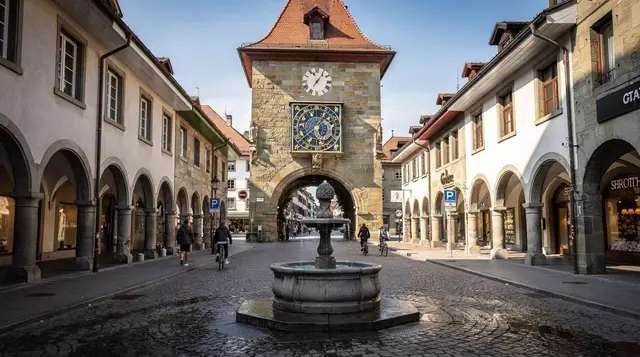
GetYourGuide does not provide a product photo for this activity — the image shows the meeting point, photographed by us.