Lucerne's markets and street food: what's actually there
Is there a market in Lucerne, and can you eat cheaply there?
Lucerne runs a produce and food market along the Reuss on Tuesday and Saturday mornings, plus a smaller flea market on selected Saturdays. A bratwurst in a bun, a bag of fruit, or a wedge of cheese from a stall costs CHF 6 to 9, which is about as cheap as eating in this city gets.
The Reuss riverside market, day by day
Switzerland has a reputation for being expensive to eat in, and in Lucerne that reputation is mostly earned. A sit-down lunch in the old town regularly runs CHF 25 to 35 for a main course alone. The market is the one place in the city where that stops being true, twice a week, for a few hours in the morning.
The Lucerne market sets up along both banks of the Reuss, roughly between the Rathaus and the Chapel Bridge, on Unter der Egg and the Rathausquai. It is a produce and food market first, not a tourist market: farmers from the canton and neighbouring Obwalden and Nidwalden bring vegetables, fruit, cheese, bread, cut flowers and cured meat, and a smaller number of hot-food stalls sell bratwurst, raclette and pasta to eat on the spot. It runs on Tuesday and Saturday mornings, roughly from 6am until early afternoon. Tuesday trade is thinner and tends to wind down by around 1pm; Saturday is the bigger of the two, busier with locals doing a weekly shop, and stalls stay open a little later.
None of this is styled for visitors. There are no English menus, no card-only stalls pretending otherwise, and no stallholder is going to slow down and explain the cheese selection unless you ask. That is exactly why it is worth a look: it is one of the few parts of central Lucerne that runs on local rhythm rather than tour-bus timing.
Getting there
The market is a five to eight-minute walk from Luzern Bahnhof, on the same side of the river as the old town walking route. If you are staying anywhere in the historic centre, you will pass through or alongside it without detouring. There is no reason to take a bus for this; Lucerne’s core is compact enough that VBL buses barely save time over walking for anything within the old town.
What is actually for sale
The stalls fall into a few predictable categories, and knowing which is which saves time if you are there for breakfast rather than a browse.
| Stall type | What you’ll find | Typical price |
|---|---|---|
| Produce | Seasonal vegetables, stone fruit, berries, potatoes | CHF 3–6 per kg |
| Bakery | Fresh bread, zopf, pastries | CHF 3–7 per item |
| Cheese and dairy | Alpine cheese by the wedge, fresh butter, sometimes yoghurt | CHF 4–12 per piece |
| Cured meat | Air-dried beef, sausage, salami | CHF 6–15 per pack |
| Flowers | Cut bunches, seasonal | CHF 8–15 per bunch |
| Hot food | Bratwurst, raclette, fresh pasta, occasionally crêpes | CHF 6–16 per portion |
Cheese and cured meat stalls are the ones worth lingering at even if you are not buying a full meal. A wedge of a local alpine cheese, cut to order, is a fair way to try something you will not find pre-packaged in a supermarket, and most stallholders will let you taste before you commit. If you want a more structured introduction to Swiss cheese rather than a market guess, the dairy day trip guide covers producers you can visit directly.
Bread is genuinely good and genuinely cheap by Lucerne standards. A large loaf for CHF 4 to 5 will outlast a day of sightseeing and works as a base for a market picnic. If bakeries interest you beyond the market stalls, the coffee and bakeries guide has the standing shops that trade every day of the week, not just Tuesday and Saturday.
The flea market, and why it’s a different thing
Lucerne’s flea market is a separate event from the produce market, and conflating the two is the most common mistake visitors make when planning around it. Where the produce market is weekly and food-focused, the flea market is occasional, seasonal, and deals in secondhand goods: books, records, watches, household items, the odd genuinely old piece of local ephemera mixed in with ordinary car-boot-sale stock.
It runs on selected Saturdays, mostly outside the depths of winter, and the exact dates shift from year to year, so check a current local listing the week before rather than assuming it coincides with your visit. If it does line up, it is worth twenty minutes, mainly because secondhand Swiss watches and vintage postcards of the lake turn up at prices well below what the souvenir shops in the old town charge for new versions of the same idea. For a broader look at what is worth buying in Lucerne and what is markup dressed as souvenir, see the souvenirs guide and the shopping guide.
Don’t build a day around the flea market. Build a day around the produce market, which runs reliably twice a week, and treat the flea market as a bonus if the dates happen to align.
What ten francs actually buys
This is the practical question, and it has a genuine answer rather than a marketing one. Lucerne does not have cheap eating in the way that, say, a market town in southern Europe does — CHF 10 will not buy a sit-down meal with a drink anywhere in the old town. But it goes further at the market than it does anywhere else in the city centre.
| Combination | Approx. cost |
|---|---|
| Bratwurst in a bun + apple | CHF 8–9 |
| Fresh pasta portion (no sauce extras) | CHF 8–10 |
| Bread + wedge of cheese + fruit | CHF 9–11 |
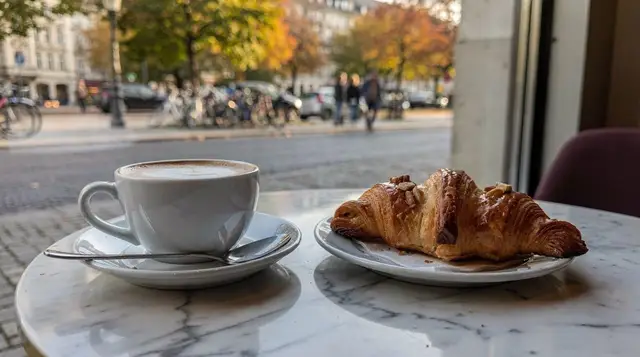
| Pastry + coffee from a stall | CHF 7–9 |
| Small raclette portion | CHF 12–14 |
The bratwurst-and-fruit combination is the most reliable way to land under CHF 10, and it is what most Lucerne locals grabbing a quick breakfast on their way through actually order. Raclette, when a stall is running it, tends to sit just over the ten-franc mark once you account for a reasonable portion, but it is still roughly half what raclette costs as a restaurant dish. For a wider view of what a full day of eating costs in this city, including where the market does and doesn’t help, the Lucerne travel costs guide and the budget guide break the numbers down meal by meal.
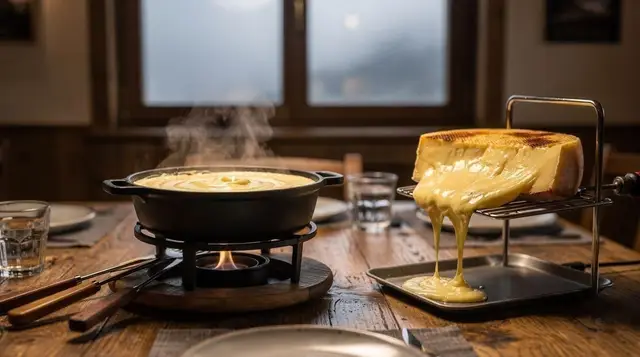
If you want the raclette-and-fondue version of Swiss food done properly, as a sit-down dish rather than a market snack, that is a separate outing — see the fondue and raclette guide for where to get it without paying tourist-menu prices.
Beyond the stalls: a guided way in
If picking through unfamiliar cheese and cured meat on your own feels like a gamble, a guided food walk removes the guesswork and adds context the stallholders themselves won’t volunteer to a passer-by. The Z’Vieri Swiss afternoon tea food tour works through several small producers and tasting stops around the old town in a couple of hours, which is a reasonable way to taste more than you’d manage alone in the same amount of time.
For chocolate specifically, which the market stalls don’t really cover, the chocolate bar creation tour is hands-on rather than a straight tasting, and it fills a gap that market browsing leaves open — Lucerne’s chocolate culture is shop-based, not stall-based. If wine interests you more than sweets, the Lake Lucerne region wine tasting covers producers from the wider region that never show up as market stalls at all.
None of these replace the market. They’re a different, paid way of tasting Lucerne’s food scene on the days the market isn’t running, or when you want someone explaining what you’re eating rather than pointing and hoping.
Practical notes that actually matter
Bring cash, but not only cash. Most stalls now take Twint or cards, but a meaningful minority of the smaller producer stands are still cash-only, and there is no ATM directly on the market strip. Carry CHF 20 to 30 in small notes and coins so a CHF 6 bratwurst doesn’t turn into a ten-minute detour to find a card reader.
Go early on Saturday, late-ish on Tuesday. Saturday morning gets busy with locals doing a proper weekly shop, and the best cheese and bread sells out by mid-morning. Tuesday is quieter throughout, which makes it the easier day for slow browsing, but fewer stalls turn up at all.
Don’t expect it to double as a sit-down meal. There are a couple of benches nearby and the Reuss embankment itself, but this is a stand-and-eat or walk-and-eat market, not a food-court setup. If you want to sit, buy at the market and carry your food the short distance to the lakefront near the old town.
It closes for public holidays. Like most Swiss weekly markets, it does not run on public holidays that fall on a market day, and trade thins out around Christmas and New Year. If your visit coincides with a holiday week, check locally rather than assuming the usual Tuesday/Saturday pattern holds.
It’s not a replacement for a real meal. Treat the market as breakfast, a snack, or a way to assemble a cheap picnic lunch to eat by the lake — not as your one proper meal of the day in Lucerne. For that, you’re back to restaurant prices, which the budget guide covers honestly rather than optimistically.
Where the market fits in a Lucerne itinerary
If you’re only in the city for a short stay, the market is worth timing around rather than chasing. It sits directly between the station and the old town’s main sights, so a Tuesday or Saturday visit costs you nothing extra in walking time — you’ll pass it on the way to the Chapel Bridge regardless. For anyone working from a set number of days, the how many days in Lucerne guide and the budget three-day itinerary both assume a market morning as one of the free, low-cost slots in an otherwise pricey city.
If your visit falls on a Sunday, Monday, Wednesday, Thursday or Friday, don’t restructure your trip to catch it — the getting around Lucerne guide and the standing bakeries and cafés covered in the coffee and bakeries guide will get you a decent, if pricier, breakfast on any day of the week.
The honest summary: Lucerne’s market is small by the standards of larger European cities, it runs only twice a week, and it will not turn Switzerland into a cheap country to eat in. What it does well is give you one reliable, low-cost, unstaged hour in a city that otherwise charges tourist prices for almost everything. For that alone, if the days line up, it’s worth the detour.
Lucerne food & drink tours on GetYourGuide
Verified deep-linked GetYourGuide tours. Book through these links and we earn a small commission at no cost to you.
GetYourGuide does not provide a product photo for this activity — the image shows the meeting point, photographed by us.