Shopping in Lucerne: Old Town, Watches and Opening Hours
What are the best places to shop in Lucerne?
Schwanenplatz and the old town's Kapellgasse and Hertensteinstrasse hold Lucerne's watch and jewellery boutiques, while Löwenstrasse and the Pilatusstrasse area have department stores and everyday shops. Most shops close by 6 or 7pm on weekdays and by 5pm on Saturdays, and almost everything is shut on Sundays.
Lucerne’s shopping streets, in plain terms
Lucerne is not a shopping destination in the way Milan or Paris is, but the old town and the lakefront pack in a genuine cluster of watch boutiques, jewellers, chocolate shops and department stores within a fifteen-minute walk of Luzern Bahnhof. Most visitors end up shopping here almost by accident, on the walk between the Chapel Bridge and the Lion Monument, rather than as a planned outing. That’s fine — it works well that way, because everything of interest sits on three or four streets.
The short version: Schwanenplatz for watches and jewellery, Kapellgasse and Hertensteinstrasse for the old town’s mid-range boutiques, Löwenstrasse and the area around Pilatusstrasse for department stores and everyday shopping, and the railway station concourse for the only shops reliably open on a Sunday. What trips people up is not finding these streets — they’re impossible to miss on a walk through the old town — but the opening hours, which are stricter than most visitors expect from a wealthy tourist city.
Schwanenplatz and the watch trade
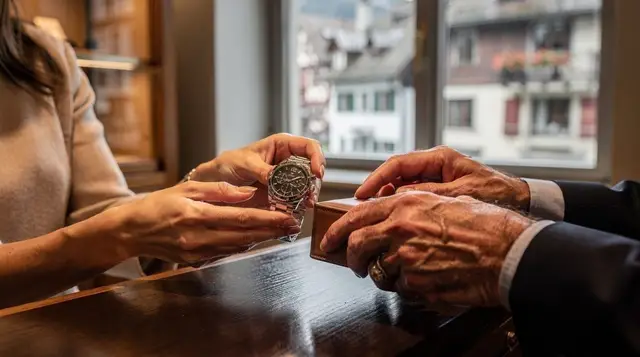
Schwanenplatz, the small square where the lake promenade meets the old town, is Lucerne’s watch district. Within a hundred metres you’ll find authorised boutiques for Rolex, Patek Philippe, Audemars Piguet, Omega, Bucherer and several smaller independent dealers. This concentration exists because Lucerne has long been a stop on the coach-tour circuit from Zurich and Milan, and the watch trade followed the tour buses.
A few things worth knowing before you go in. Prices are set close to the brand’s official list price in Swiss francs; the exchange-rate advantage for non-euro visitors is modest and moves with the franc, not something to bank on. Popular steel-cased models from the largest brands are frequently out of stock or on a waiting list even here — walking in expecting to buy a specific reference on the day is often unrealistic. Staff are used to browsers and won’t pressure a sale, but they also won’t haggle; Swiss retail prices are fixed. If a shop away from Schwanenplatz offers a steep discount on a supposedly authentic luxury watch, that is a strong warning sign, not a bargain.
For a lower-stakes way to see the boutiques and the square itself without a sales pitch, a guided walk through this part of town works well, since Schwanenplatz sits directly on most old-town routes.
a private guided walk through the old town and lakefront, which passes directly through SchwanenplatzWatch shopping by price bracket
| Bracket | What you’ll find | Typical shops |
|---|---|---|
| Under 500 CHF | Swiss quartz brands (Swatch, Mondaine, Victorinox) | Department stores, Bahnhofstrasse-style chains |
| 500–3,000 CHF | Entry mechanical Swiss watches (Tissot, Longines) | Kapellgasse and Hertensteinstrasse jewellers |
| 3,000–15,000 CHF | Mid-tier luxury (Omega, TAG Heuer, Longines Heritage) | Schwanenplatz boutiques |
| 15,000 CHF+ | Rolex, Patek Philippe, Audemars Piguet | Authorised Schwanenplatz boutiques only |
Buying at an authorised dealer matters for warranty and resale; independent “grey market” sellers exist in Lucerne but carry real risk for anything above a few hundred francs.
The old town: Kapellgasse, Hertensteinstrasse, Weinmarkt
Past Schwanenplatz, Kapellgasse runs alongside the Chapel Bridge and is Lucerne’s densest shopping street for jewellery, leather goods, Swiss-made textiles and mid-range watches. It’s narrow, arcaded and genuinely pretty to walk even without buying anything — worth combining with a look at the frescoed building fronts around Weinmarkt, one of the best-preserved medieval squares in the city.
Hertensteinstrasse, running from Schwanenplatz away from the lake, has a similar mix plus several chocolate and confectionery shops, including outlets connected to Lucerne’s own chocolatiers rather than the national supermarket brands. If chocolate is on your list, this street and the shop windows around it are worth ten minutes even if you’ve already bought your souvenirs elsewhere. For a more structured introduction to Swiss chocolate, including tasting and a hands-on element rather than just window shopping, a small-group chocolate workshop covers the making side that a shop visit can’t.
a hands-on chocolate-making workshop that goes beyond simply buying a barAlso in this stretch: independent Swiss design shops selling textiles, wood carving and ceramics rather than mass-produced keyrings. These are more expensive than the souvenir kiosks but the goods are actually made in Switzerland, which is worth checking on the label before paying a premium for the assumption. Our souvenir guide breaks down which items are genuinely local and which are imported regardless of the shop.
If you’d rather see these streets through a camera than a shopping bag, a photography-led walk covers the same old-town lanes at a slower pace, timed for better light than midday.
a guided photography walk through the same old-town lanes and squaresDepartment stores and everyday shopping
For clothing, cosmetics, homeware and everyday essentials rather than souvenirs, head to Löwenstrasse and Pilatusstrasse, a short walk from the station and away from the lakefront tourist strip. Manor, Lucerne’s main department store, sits on Weggisgasse near Schwanenplatz and covers clothing, cosmetics, a supermarket floor and a café. Coop and Migros — Switzerland’s two big supermarket chains, both worth knowing regardless of shopping plans — have branches near the station and along Pilatusstrasse, useful for picnic supplies, toiletries or a phone charger at normal Swiss prices rather than tourist-area markups.
This is also the more realistic area for clothing shopping: international chains (H&M, Zara, COS) sit along Pilatusstrasse and around the station, at prices similar to elsewhere in western Europe once converted, sometimes a little higher.
| Need | Where | Notes |
|---|---|---|
| Groceries, picnic food | Coop or Migros near the station | Cheaper than kiosks near the lake |
| Clothing, basics | Pilatusstrasse chains | Normal European chain pricing |
| Department store, one stop | Manor, Weggisgasse | Clothing, cosmetics, food hall, café |
| Pharmacy items | Bahnhofplatz pharmacies | Longer hours than most shops |
| Sunday, anything | Luzern Bahnhof concourse | The only reliable option |
Swiss opening hours: what actually catches people out
This is the part of Lucerne shopping that causes the most frustration, and it has nothing to do with the shops themselves — it’s Swiss retail law. Cantonal rules set maximum opening hours, and Lucerne’s are fairly typical for a mid-sized Swiss city.
- Weekdays: most shops open around 9am and close between 6.30pm and 7pm. A late evening (8pm or 9pm) on Thursday is common for larger stores but not guaranteed everywhere.
- Saturday: closing moves earlier, usually 4pm or 5pm, sometimes as early as 4pm for smaller independent shops.
- Sunday: almost everything is closed. This is a legal restriction, not a local habit, and applies even in high season. The exceptions are the shops inside Luzern Bahnhof, which operate under different rules because it’s a transport hub, plus a scattering of small kiosks and bakeries.
- Public holidays: Swiss national and cantonal holidays close shops the same way Sundays do. Check the date against the Lucerne cantonal calendar if your trip includes a holiday.
The practical fix is simple: if buying a watch, souvenirs or anything specific matters to your trip, do it on a weekday afternoon, not a Saturday evening or a Sunday morning. Visitors coming in on a Sunday train from Zurich or Interlaken sometimes plan a shopping afternoon that simply isn’t possible outside the station itself — worth checking against your itinerary before you arrive.
Tax-free shopping and VAT refunds
Switzerland charges 8.1 percent VAT on most goods (as of 2026). Visitors who are resident outside Switzerland and Liechtenstein can reclaim this on purchases over 300 CHF from a single receipt at a participating shop, provided the goods are exported unused within 30 days.
The process: ask for a tax-free form at the till when you buy (bring your passport), keep the goods unused and the receipt, then get the form stamped by Swiss customs when you leave the country — at the airport, at a land border crossing, or at Zurich or Basel station if you’re leaving by train. Refunds are typically paid by card or bank transfer through the tax-free operator’s counter or postbox at the exit point; budget extra time at the airport for this, since the counters queue up in the last hour before flights. Refunds are not available retroactively once you’ve left without the stamp.
Souvenirs worth buying, and ones to skip
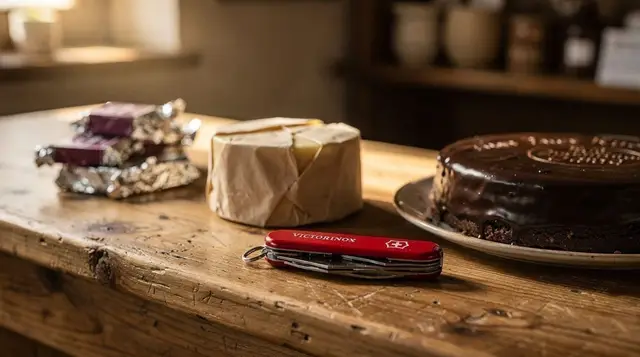
Genuine Swiss-made souvenirs are more expensive than the printed-in-Asia alternatives sold from the same kiosks, and telling them apart takes a moment of label-reading. Worth buying: a real Victorinox Swiss Army knife (made in Ibach, canton Schwyz, an hour from Lucerne), a block of Emmental or Gruyère from a cheese shop rather than a souvenir stand, and chocolate from a Swiss chocolatier rather than a supermarket multipack, if the aim is something distinctly local rather than just cheap. Worth skipping: printed cowbells and alpine-horn keyrings marked “Switzerland” with no origin stated, which are almost always imported despite the packaging.
A cotton or linen tea towel printed with the old town skyline, sold in most Kapellgasse shops for 12–18 CHF, packs flat and is one of the few souvenirs that’s genuinely useful rather than decorative. Our full souvenir guide has a longer list with price ranges for each category.
The Tuesday and Saturday market
The market along the Reuss embankment, roughly opposite the old town, runs Tuesday and Saturday mornings and is worth knowing about, though it’s aimed at residents buying produce rather than tourists buying souvenirs. Stalls sell fruit, vegetables, cheese, bread, flowers and occasionally crafts; it’s a good stop for picnic supplies before a lake cruise or a trip up Mount Pilatus, less useful if souvenirs are the goal. Full details, including exact stall locations and what’s seasonal, are in our markets guide.
Getting to the shopping streets
Everything described above is within a ten-minute walk of Luzern Bahnhof, which makes Lucerne shopping easy to slot into a wider day even if it isn’t the main plan. Coming from Zurich or Bern by train, you’ll walk straight out of the station concourse and across the Seebrücke bridge to reach Schwanenplatz in under ten minutes. If shopping is one stop on a longer day that also includes the lake, a private half-day tour from Zurich covers Lucerne’s old town with time built in for browsing.
a private half-day tour from Zurich that includes free time in the old town for shoppingFor those staying longer, the where to stay in Lucerne guide flags which neighbourhoods put you within walking distance of Schwanenplatz and the old town streets covered here, useful if shopping access matters to where you book. Budget travellers comparing costs across a trip should also see our Lucerne on a budget guide and the wider Lucerne travel costs breakdown, both of which put shopping spend in context against food, transport and lodging.
Shopping in Lucerne compared with other Swiss cities
Lucerne’s watch and jewellery offering rivals Zurich’s Bahnhofstrasse in density if not in sheer scale, and it’s considerably more walkable — everything sits within a compact old town rather than spread along a kilometre-long avenue. What Lucerne lacks compared with Zurich or Geneva is the very top tier of international fashion flagships; for those, Zurich remains the better stop. For chocolate, cheese and classic Swiss souvenirs bought at source rather than at an airport, Lucerne holds up well against any other Swiss city on this trip.
Frequently asked questions about shopping in Lucerne
What time do shops close in Lucerne?
Most shops run from around 9am to 6.30pm on weekdays, sometimes staying open later on Thursday or Friday. Saturday closing is earlier, usually 4pm or 5pm.
Are shops open on Sundays in Lucerne?
No, almost all regular shops close on Sundays under Swiss cantonal law. The shops inside Luzern Bahnhof are the reliable exception, open daily, along with a few bakeries and kiosks near Schwanenplatz.
Where do I buy a Swiss watch in Lucerne?
Schwanenplatz has the highest concentration of authorised dealers for major brands, while Kapellgasse and Hertensteinstrasse in the old town have more independent and mid-range options.
Can tourists get a VAT refund on shopping in Lucerne?
Yes, non-residents spending at least 300 CHF on a single receipt at a participating shop can reclaim the 8.1 percent VAT, as long as the goods leave Switzerland unused within 30 days and the export form gets stamped at the border or airport.
Is Lucerne expensive for shopping compared to other Swiss cities?
Watches, chocolate and souvenirs are priced similarly across Swiss cities, since brand and national pricing applies. Everyday goods cost about the same as the rest of urban Switzerland, which is expensive relative to most of Europe regardless of which city you’re in.
What are typical souvenir prices in Lucerne?
Chocolate bars run 4–8 CHF, cowbell keyrings 8–15 CHF, printed tea towels 12–18 CHF, cheese 10–20 CHF depending on weight, and a genuine Swiss Army knife starts around 30 CHF.
Is there a market in Lucerne worth visiting for shopping?
The Tuesday and Saturday morning market on the Reuss embankment is aimed at produce and picnic supplies rather than souvenirs. For souvenir shopping, the fixed old-town shops are the better use of time.
Shopping & market tours on GetYourGuide
Verified deep-linked GetYourGuide tours. Book through these links and we earn a small commission at no cost to you.
GetYourGuide does not provide a product photo for this activity — the image shows the meeting point, photographed by us.