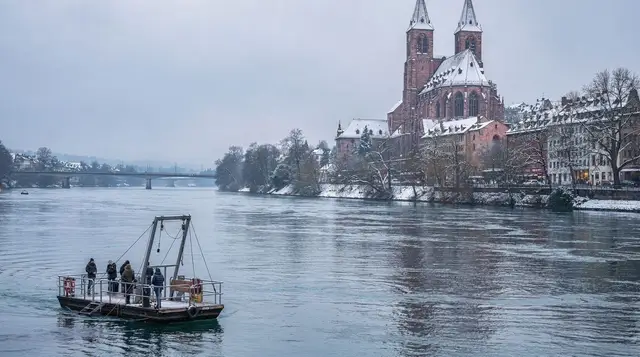
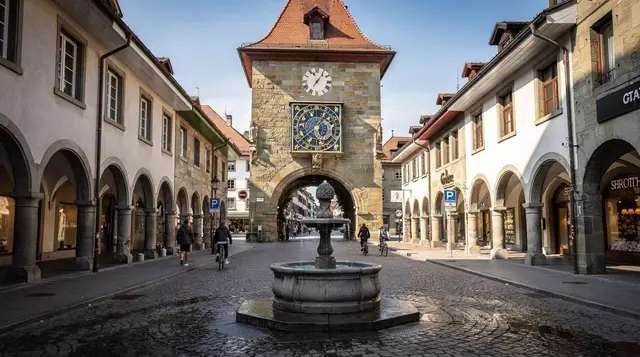
Chur doesn’t get much attention on a Lucerne-based itinerary, and that’s mostly a scheduling problem rather than a quality one: it sits roughly two hours away by train with a change, in a part of Switzerland that most Lucerne visitors never point their itinerary towards. That’s a shame, because Chur does two things well.
It’s a genuinely old town with a walkable, largely traffic-free centre built around a working cathedral and bishop’s court — and it’s the operational home of the Rhaetian Railway, the metre-gauge network behind the Glacier Express and Bernina Express. Above the town, cable cars and postbuses reach Arosa, Lenzerheide, and the Flims-Laax plateau; below it, the Rhine carves through the Ruinaulta gorge that locals half-jokingly call Switzerland’s Grand Canyon.
Why add Chur to a Lucerne trip
The honest case for Chur is that it rewards a single, well-chosen day rather than being a must-see in its own right. The old town is small — you can walk from one end to the other in fifteen minutes — so it won’t fill a full day on its own. What extends a visit is what surrounds it: Arosa an hour up the valley by rail, Lenzerheide thirty minutes away by postbus, Flims-Laax and the Rhine Gorge in the other direction. Chur works as a hub for people who want a day of trains and mountains without committing to a multi-day base in Graubünden, and it works as a stopover for anyone riding the Glacier Express or Bernina Express, both of which start or can be joined here.
What it isn’t is a nightlife or shopping destination on the scale of Zürich or Lucerne itself. Restaurants and shops in the old town largely close by early evening outside the main season, and this is a town of roughly 40,000 people, not a city break in its own right.
Getting to Chur from Lucerne
There’s no single direct train from Lucerne to Chur, so budget for one change and roughly two hours door to door.
| Route | Approx. time | Notes |
|---|---|---|
| Via Zürich HB | ~2 hours | Lucerne–Zürich (45 min–1 hr) + hourly IC5/IR to Chur (~1 hr 15 min) |
| Via Arth-Goldau and Zug | ~2 hours | Similar overall time; useful if your outbound leg is already routed that way |
| Via Zürich Airport | ~2 hours 15 min | Only worth it if you’re combining Chur with an airport connection |
None of these routes require a reservation, and all run on Switzerland’s standard hourly clockface schedule, so if you miss a connection you’re rarely waiting more than 30–60 minutes for the next one. See how Swiss trains actually run if the change-of-train logistics feel unfamiliar.
Switzerland’s oldest town: the episcopal old quarter
Chur’s claim to be Switzerland’s oldest continuously settled town rests on archaeological finds going back roughly 5,000 years, and on its documented role as the Roman settlement of Curia Raetorum. What survives today isn’t Roman, though — it’s a compact medieval and early-modern old town, still centred on the Hof, the fortified bishop’s court that made Chur an episcopal city and a real power base for the Bishop of Chur for centuries.
The old town splits fairly cleanly into two moods. The Hof quarter, up on its own rise at the eastern edge, is quieter and more solemn: Chur Cathedral (Kathedrale St. Mariä Himmelfahrt) dates largely from the 12th and 13th centuries, with a Romanesque core and later Gothic additions, and it’s still an active place of worship rather than a museum piece — check opening hours before visiting if you want to see the choir screen and crypt rather than just the nave. The lower old town, around Poststrasse, Reichsgasse and the market square, is livelier and more commercial, with café terraces, small independent shops and the kind of narrow lanes that reward wandering without a fixed plan.
The Rätisches Museum, housed in a former patrician residence, covers the region’s history from prehistory through the Roman and medieval periods and is a sensible first stop if you want context before walking the rest of the old town cold.
The Rhaetian Railway starts here
Chur’s other identity is as a railway town, and this is where it earns a place on a rail-focused itinerary. Chur station is the western terminus and operational hub of the Rhaetian Railway (Rhätische Bahn, RhB), the narrow-gauge network that built and still runs the Glacier Express to Zermatt and the Bernina Express to Tirano in Italy, along with the Albula and Bernina lines that UNESCO has recognised as a World Heritage route.
You don’t need to be riding either flagship train to notice this. RhB platforms sit right alongside the SBB mainline ones at Chur Bahnhof, and the narrow-gauge trains heading out to Arosa, Davos, St. Moritz and Disentis all start from the same station concourse — a useful thing to know if you’re changing between a mainline SBB train and a regional RhB service, since the walk between them is short but the platforms aren’t always obviously signed for first-time visitors.
a guided walk through the old town that ties the cathedral, the Hof and the railway history together in about 90 minutes is a reasonable way to get oriented quickly if you’re only in Chur for a few hours before catching a connecting train onward.
Above the city: Arosa
The Arosa line is a Rhaetian Railway branch that climbs from Chur to the resort of Arosa in about an hour, gaining more than 1,100 metres of altitude over 26 kilometres, through 42 bridges and tunnels and — notably — along a stretch that runs through the middle of Chur’s own streets before it leaves town, which is a mildly odd sight the first time you see a train sharing a road with cars and pedestrians.
Arosa itself sits at just under 1,800 metres around two lakes, Obersee and Untersee, and functions as a proper mountain resort rather than a day-trip viewpoint: hiking trails fan out in summer, and it’s a recognised ski area in winter with its own lift network connected to Lenzerheide. As a day trip from Chur, expect the round trip on the train alone to take up around two hours, leaving a reasonable stretch of the day for a lakeside walk or a shorter hike depending on season.
a private day trip that combines Arosa with the turquoise waters of Caumasee near Flims is a way to see both without working out the separate rail and postbus connections yourself, which is worth the premium if your day in the region is a one-off rather than something you’ll repeat.
Above the city: Lenzerheide
Lenzerheide sits on the other side of the valley from Arosa, reached by postbus from Chur in around 30 minutes rather than by rail, which makes it the quicker of the two if time is tight. It’s a lower, gentler resort than Arosa — around 1,500 metres, built around its own lake, the Heidsee — and it’s better suited to an easy afternoon than a full hiking day: lakeside paths, a handful of viewpoints reachable by cable car, and in winter a ski area linked to Arosa by the Urdenbahn cable car, one of the more striking pieces of lift infrastructure in the region.
a guided photography walk around Lenzerheide’s lake and viewpoints, with edited photos included afterwards suits travellers who want a slower-paced outing with a tangible result, rather than a summit-focused hike.
Flims, Laax and the Rhine Gorge
West of Chur, the Flims-Laax-Falera plateau is best known in winter as one of Graubünden’s larger ski areas, but the same terrain works in summer for hiking and biking, and it sits directly above the Ruinaulta — the Rhine Gorge, formed around 10,000 years ago by a massive rockslide (the Flims Rockslide, one of the largest known post-glacial landslides in the Alps) that dammed and then rerouted the Rhine.
This is not the Rhine Falls near Schaffhausen, and the two get confused often enough that it’s worth stating plainly: the Rhine Falls are a waterfall over two hours from Chur; the Rhine Gorge here is a canyon, reached by regional train towards Trin or Versam-Safien-Platz in around 20–30 minutes from Chur, with riverside paths and a seasonal open-carriage train that runs through the gorge itself roughly May to October. Rafting and canyoning operators run trips through sections of the gorge in summer for those who want to be on the water rather than looking down at it.
a day trip out of Chur combining an alpine coaster with kayaking and a boat cruise is one way to cover several of the area’s outdoor activities in a single organised outing rather than piecing together transport and bookings separately.
Where to eat and what a day costs
Chur isn’t a budget destination — nowhere in Graubünden really is — but it’s noticeably cheaper than Zürich or Lucerne’s old town for a simple meal, since it sees far fewer tourists relative to its size. A bakery lunch or a bowl of Bündner Gerstensuppe (barley soup, the regional staple, usually with dried meat and vegetables) runs somewhere around CHF 18–25; a sit-down dinner with a main course and a drink is more typically CHF 35–55 per person. Bündnerfleisch, the air-dried beef the canton is known for, is worth trying here rather than as a supermarket packet elsewhere — a small plate as a starter is a reasonable way to taste it without committing to a full meal built around it.
For a single day trip from Lucerne — train there and back, lunch, one paid attraction or short excursion above the town — CHF 100–170 per person is a realistic range, with the train fare itself typically the largest single cost unless you already hold a Swiss Travel Pass or Half Fare Card.
Practical tips for visiting Chur
A few things are easy to get wrong on a first visit:
- Don’t confuse the Rhine Gorge with the Rhine Falls. They’re in different parts of the country and the confusion causes more than a few ruined itineraries. If you specifically want the waterfall, that’s the Rhine Falls near Schaffhausen, not this trip.
- Check RhB and postbus timetables the same way you would SBB ones — Chur’s regional connections to Arosa and Lenzerheide run on their own schedules, and while they’re reliable, they’re not as frequent as mainline SBB services, so plan around the departure times rather than assuming a train every 15 minutes.
- The Hof quarter and the cathedral have their own opening hours, separate from the shops in the lower old town, and the cathedral can close for services with little visible notice — worth checking ahead if seeing the interior is a priority.
- Lift and mountain-railway closures for maintenance happen in spring and autumn here just as they do around Lucerne, so if a specific viewpoint or lift is the reason for your trip, confirm it’s running before you commit the day.
- A Half Fare Card or Swiss Travel Pass changes the maths meaningfully on a route this train-heavy — see the Swiss Travel Pass guide and the regional Tell-Pass if you’re spending several days moving around Central Switzerland and Graubünden together.
Booking a tour in Chur
Chur’s compact old town is straightforward to explore independently with a map, but a guided option is useful if your time is short or you want the historical context that a plaque or a self-guided walk won’t give you.
a day trip pairing Chur with Flumserberg and a boat ride on Walensee is a reasonable option if you’d rather combine Chur with a different lake and mountain area than the ones directly above the town, particularly if you’re arriving from the Zürich or Walensee side rather than from Lucerne.
Chur day trips and timing: frequently asked questions
How do you get from Lucerne to Chur?
There’s no single direct train. The fastest routing is usually Lucerne to Zürich HB (45 minutes to 1 hour), then the hourly IC5 or IR to Chur (about 1 hour 15 minutes), for a total of roughly 2 hours including the change. An alternative via Arth-Goldau and Zug can work out similar in total time depending on the connection.
Is Chur the same as Curia Raetorum from the Roman period?
Yes. Chur sits on the site of the Roman settlement of Curia, and archaeological finds point to continuous settlement stretching back roughly 5,000 years, which is the basis for its claim to be Switzerland’s oldest town.
Can you visit Arosa as a day trip from Chur?
Yes. The Arosa line, a Rhaetian Railway branch, climbs from Chur to Arosa in about an hour, gaining over 1,100 metres through 42 tunnels and bridges. It’s a scenic ride in its own right, not just transport.
Is the Rhine Gorge near Chur the same as the Rhine Falls?
No, these are two different things and travellers regularly mix them up. The Rhine Falls (Rheinfall) are near Schaffhausen, over 2 hours from Chur. The Rhine Gorge near Chur is the Ruinaulta, a canyon carved by a prehistoric rockslide, reached by train towards Trin or Versam-Safien in 20–30 minutes.
Do you need a Swiss Travel Pass to visit Chur and the Rhaetian Railway?
Not strictly, but it helps if you’re already planning several train- and boat-heavy days elsewhere in Switzerland, since it covers regular Rhaetian Railway trains around Chur along with SBB trains and lake boats. For a single day trip to Chur alone, point-to-point tickets or a Saver Day Pass are usually cheaper.
What’s the best month to see the Rhine Gorge near Chur?
May to October, when the seasonal open-carriage Rhine Gorge trains and the riverside path are running normally. Outside that window the gorge is still visitable, but some seasonal services and viewing platforms scale back.
Is one day enough for Chur, or should you stay overnight?
One day covers the old town comfortably with time left for a single side trip, such as Arosa or the Rhine Gorge. If you want both a mountain excursion and the gorge, or you’re using Chur as a base for the Bernina Express, an overnight stay makes the logistics far less rushed.
If Chur is one stop on a longer loop through Graubünden and beyond, it connects reasonably well onward to Davos and Klosters, St. Moritz via the Albula line, Walensee, Appenzell, and — for those approaching from the Gotthard side — Andermatt and Vaduz in neighbouring Liechtenstein.
For a Lucerne-based visitor without a multi-day rail pass, though, the realistic version of this trip is a single well-planned day: one train up, one focus above the town, and the same route back down the valley in the evening. Check visa and ETIAS requirements before travelling if this is part of a longer Central European itinerary, and see the Gotthard Panorama Express guide if you’re weighing a scenic-rail day trip from Lucerne against continuing further into Graubünden by rail on a rail-only week.