Swiss wine and breweries near Lucerne
Where can you taste real Swiss wine and beer near Lucerne?
Switzerland exports under 2% of its wine, so most of it is only findable here. The nearest tasting regions reachable by train are the Zürichsee vineyards near Zurich (under an hour), the Bündner Herrschaft near Chur (around 1 hour 45), and Ticino's Merlot country near Lugano and Bellinzona (about 2 hours). For beer, Lucerne's own Eichhof brewery site and the Appenzeller Bier tour near St Gallen are both realistic day trips.
Switzerland makes more wine than most visitors realise, and sends almost none of it abroad. The country exports something like 1-2% of its annual production, which means the Chasselas on a Lucerne wine list or the Pinot noir in a Chur cellar is, for practical purposes, something you can only drink here. Lucerne itself sits outside any wine region, so this is a guide to what is reachable by train, what it actually costs, and where Central Switzerland’s brewing tradition fits alongside it. See our broader day trips from Lucerne for how to fold a wine or beer stop into a longer itinerary, and Swiss trains explained if you have not used the network before.
Why so little Swiss wine leaves the country
The numbers explain the obscurity. Switzerland has around 14,700 hectares under vine, spread across more than 15,000 mostly small growers, versus hundreds of thousands of hectares in France or Italy. Labour is expensive, many vineyards are steep and hand-harvested, and the domestic market absorbs nearly everything that is made. A Fendant from Valais or a Merlot del Ticino simply never needs to compete on a supermarket shelf in London or New York, so it doesn’t. The upside for a visitor is that these wines are genuinely regional: what you drink in a Ticino grotto tastes like nowhere else, because it was never designed to travel.
The wine regions you can reach from Lucerne by train
None of them are close in the way a Tuscan hill town is close to Florence. Lucerne canton has a handful of hobby-scale vineyards but nothing you would organise a trip around. These four are the realistic options, ranked by how little of your day a return train journey eats up.
| Region | Nearest hub | Train time from Lucerne | Grape to try | Best for |
|---|---|---|---|---|
| Zürichsee vineyards | Zurich, then local train/bus | 45 min–1 h to Zurich, +20-30 min | Räuschling, Pinot noir | A half-day add-on, not a dedicated trip |
| Bündner Herrschaft | Chur, then Maienfeld/Fläsch | ~1 h 45 | Pinot noir (Blauburgunder), Completer | Switzerland’s most serious reds |
| Ticino | Lugano or Bellinzona | ~2 h via the Gotthard base tunnel | Merlot del Ticino | A full day, best combined with lakeside towns |
| Lavaux (Lake Geneva) | Montreux or Lausanne | ~2 h 45 (change in Bern or Zurich) | Chasselas | UNESCO terraces, best as an overnight |
Zürichsee: the vineyards nobody mentions
The shores of Lake Zurich carry small, steep vineyards that most visitors to Zurich never notice, tucked into villages like Erlenbach and Stäfa on the lake’s southern side. Räuschling, an old, low-yield white grape now grown almost nowhere else, is the local curiosity; Zürichsee Pinot noir is lighter and more acidic than its Bündner cousin. This only works as an add-on: you are already in Zurich for other reasons (see our Zurich day trip guide), and a cellar visit is a two-hour detour by S-Bahn and a short walk, not a trip of its own.
Bündner Herrschaft: Switzerland’s best Pinot noir, near Chur
If you make one wine trip from Lucerne, this is the one worth the 1 hour 45 minutes to Chur. The Bündner Herrschaft — the villages of Maienfeld, Fläsch, Jenins and Malans, strung along the foot of the mountains between Chur and the Liechtenstein border — produces what most Swiss sommeliers consider the country’s best red wine, made from Blauburgunder (Pinot noir) on steep, sheltered, south-facing slopes. Maienfeld is also, incidentally, Heidi country, which makes it an easy sell to a travel companion who isn’t there for the wine.
A short local train from Chur gets you to Maienfeld or Bad Ragaz in under fifteen minutes; from the station, most producers are a 10-20 minute walk. Expect to pay CHF 25-45 for a bottle at the cellar door, more for the top single-vineyard bottlings, and budget CHF 15-25 for a guided tasting flight if the producer offers one. Many of the smaller family estates work by appointment only outside the autumn open-cellar weekends, so email or call ahead.
Ticino: Merlot country south of the Alps
Merlot arrived in Ticino after phylloxera wiped out the native vines in the early 1900s, and it has since become the canton’s defining grape — full-bodied, often barrel-aged, and noticeably different from Bordeaux Merlot. The Gotthard base tunnel puts Lugano about two hours from Lucerne, with Bellinzona slightly closer and Locarno and Ascona a further twenty minutes beyond Bellinzona.
Ticino’s grotti — rustic, often family-run taverns built into old wine cellars — are the natural place to taste it alongside local charcuterie and formaggini, rather than in a formal tasting room. This is comfortably a full day from Lucerne once you account for the train there and back, so it pairs best with an overnight; our Lugano and Ticino day trip guide covers the logistics of doing it in one day if you start early.
Lavaux and the Lake Geneva vineyards
The Lavaux terraces between Lausanne and Montreux are Switzerland’s most photographed vineyards and a UNESCO World Heritage site, built up in stone terraces above the lake since the 11th century. The grape here is Chasselas, a neutral, food-friendly white that Swiss producers argue is unfairly dismissed abroad — it takes on the minerality of whichever slope it grows on, which is the whole point of tasting it in place.
This is a genuine overnight trip from Lucerne (around 2 hours 45 by train, usually with one change), so it makes more sense as a stop within a longer western Switzerland loop than a there-and-back day. Montreux and Lausanne both sit at either end of the Lavaux path, which you can walk in sections between villages like Rivaz and Saint-Saphorin. If you’re already routing through the region, our Gruyères and chocolate day trip guide covers a nearby stop that combines well with it.
What to actually order: a short glossary
Swiss wine lists rarely explain themselves, and the grape names won’t be familiar even to people who drink wine regularly elsewhere.
| Grape | Region | Style | Bottle price (CHF, retail) |
|---|---|---|---|
| Chasselas | Vaud (Lavaux), Valais (as Fendant) | Light, dry, mineral white | 15-30 |
| Blauburgunder / Pinot noir | Graubünden (Bündner Herrschaft) | Structured, age-worthy red | 25-60 |
| Merlot del Ticino | Ticino | Full-bodied, often oaked red | 18-40 |
| Completer | Graubünden | Rare, honeyed, high-acid white | 35-70 |
| Räuschling | Zürichsee | Crisp, high-acid white | 20-35 |
| Cornalin | Valais | Deep, spicy red | 25-50 |
A restaurant glass typically runs CHF 8-14 depending on the grape and the town; Zurich and Lucerne both sit at the upper end of that range.
Central Switzerland’s brewery scene
Wine gets the attention, but Central Switzerland’s beer tradition is older than most visitors assume. Eichhof, founded in Lucerne in 1834, brewed independently for over 180 years before being absorbed into the Heineken Switzerland group in 2016; the historic brewery building still stands near the Reuss but no longer runs public tours, so it’s a piece of Lucerne history to spot rather than a place to book. For an actual visit, the country’s oldest brewery, Schützengarten in St Gallen (founded 1779), and the Appenzeller Bier visitor experience run by the Locher family in Appenzell both take bookable tours, roughly 1 hour 15 to 1 hour 30 from Lucerne by train.
Locally, Lucerne’s craft beer scene is smaller and newer — a handful of microbreweries and taprooms have opened in the old town over the past decade, worth asking about at any of the bars around Kapellplatz. If you’re building out a food-focused day in the city rather than a day trip, our guides to Lucerne’s markets and street food and coffee and bakeries cover where else to eat and drink without leaving town.
Tasting logistics: passes, cost and timing
None of the standard rail passes include cellar-door tastings, but they do cover getting there. A Swiss Travel Pass covers the train legs to Chur, Zurich, Lugano, Bellinzona or Lausanne outright, which matters given a Lucerne–Chur or Lucerne–Lugano return would otherwise run CHF 100-140 at full second-class fare. Without a pass, book at least the outbound leg in advance through SBB for the cheaper Supersaver fares.
Harvest season (mid-September to late October) is the liveliest time to visit any of these regions, with open-cellar weekends in the Bündner Herrschaft and Lavaux, but it’s also when small producers are busiest and least likely to take walk-ins — book ahead rather than turning up. Outside harvest, expect quieter cellars and a better chance of a producer actually having time to talk you through what you’re drinking.
Guided tastings worth booking
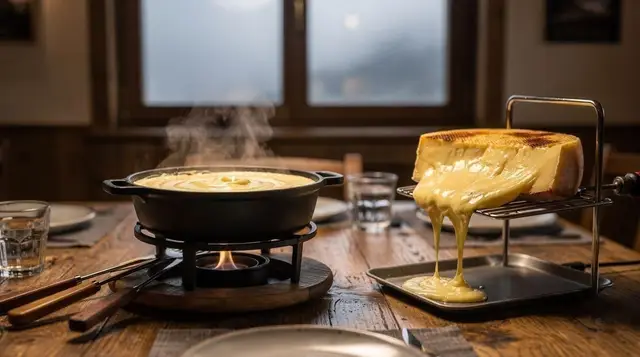
If organising cellar visits yourself feels like more admin than the day is worth, a guided tour removes the guesswork and usually includes food alongside the drink. a Zurich tuk-tuk tour pairing cheese fondue with local wine covers the Zürichsee option in a few compact hours without needing to plan a cellar visit yourself. In Lucerne itself, a Z’Vieri-style afternoon food tour with wine pairings works well as a low-effort evening that doesn’t require leaving the city.
For the Lake Geneva side, a private Swiss Riviera tour from Geneva runs along the Lavaux terraces and can be adapted around a wine stop if you ask in advance. And if wine isn’t the focus but you want a comparable regional-produce outing, the Swiss Chocolate Safari covers similar small-producer territory with chocolate instead of grapes — see also our guide to Swiss chocolate experiences from Lucerne.
For a broader food-and-drink day in Lucerne beyond wine and beer specifically, start with our Lucerne food tour guide and fondue and raclette guide, and see eating well in Lucerne without going broke for what a realistic daily food budget looks like. If you’re planning a longer stay that leaves room for one of these day trips, our 4-day luxury Lucerne itinerary already builds in a day outside the city.
Common questions about Swiss wine and Central Switzerland’s breweries
Why is Swiss wine so hard to find outside Switzerland?
Switzerland exports roughly 1-2% of what it produces. The vineyards are small, labour costs are high, and domestic demand is strong enough that most producers never need an export market. What you drink here mostly stays here.
What is the closest wine region to Lucerne?
There is no significant wine region in Lucerne canton itself. The nearest worthwhile ones are the Zürichsee vineyards around Zurich, under an hour by train, and the Bündner Herrschaft near Chur, about 1 hour 45 minutes.
Can you do a wine day trip from Lucerne by train without a car?
Yes. Zurich, Chur, Lugano, Bellinzona and Locarno are all direct or one-change train journeys from Lucerne, and the villages with tasting rooms in each region are a short local bus or a walkable distance from the station.
What Swiss wines are worth trying?
Chasselas from Lavaux for a crisp, mineral white, Completer or Pinot noir from the Bündner Herrschaft, and Merlot del Ticino from the south. All three are made in quantities small enough that you are unlikely to see them again once you leave.
Is there a brewery you can actually visit near Lucerne?
Eichhof in Lucerne has brewed on the same site since 1834, though it is now part of the Heineken Switzerland group and does not run public tours. For a proper brewery visit, Schützengarten in St Gallen and Locher’s Appenzeller Bier in Appenzell both welcome visitors, roughly 1 hour 15 to 1 hour 30 away.
Is Swiss wine expensive?
Yes. A modest bottle in a shop starts around CHF 18-22, and a glass in a restaurant rarely comes in under CHF 9-10. Prices reflect small-scale, often hillside, hand-harvested production rather than any premium marketing.
Do you need to book tastings in advance?
Small producers in the Bündner Herrschaft and Lavaux often work by appointment only, especially outside the September-October harvest weekends. Larger cellars and brewery visitor centres usually take walk-ins on weekday afternoons, but booking ahead avoids a wasted trip.
Lucerne food & drink tours on GetYourGuide
Verified deep-linked GetYourGuide tours. Book through these links and we earn a small commission at no cost to you.
GetYourGuide does not provide a product photo for this activity — the image shows the meeting point, photographed by us.