Eating in Lucerne: local specialities, markets and food tours
What should you actually eat in Lucerne?
Try Chügelipastete (a veal and mushroom vol-au-vent, Lucerne's signature dish) and Birnweggen (a dense pear-and-nut pastry loaf). The Tuesday and Saturday morning markets on the Reuss embankments are the best place to see local produce, and a guided food walk is worth it mainly for context and access, not for the food being otherwise unreachable.
Lucerne’s own dishes, not just Swiss ones in general
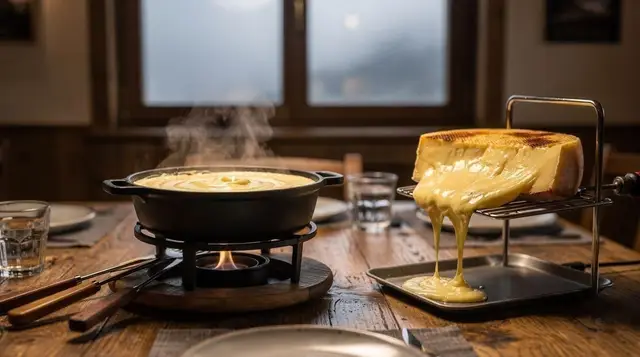
Most of what gets called “Swiss food” in guidebooks — fondue, raclette, rösti — belongs to the whole country, not to Lucerne specifically (for the cheese-heavy versions, see our fondue and raclette guide). Lucerne and central Switzerland do have their own dishes, and they’re easy to miss if you only look at tourist-menu translations.
Chügelipastete is the one to know. It’s a large, deep vol-au-vent — a hollowed-out puff-pastry case — filled with a béchamel-style sauce holding veal, pork sausage meat, mushrooms and small dumplings or meatballs called Chügeli (Lucerne dialect for “little balls”). It’s a heavy, old-fashioned dish, closer to a savoury pie filling than to anything Instagram-friendly, and it’s usually served as a set lunch or dinner main, CHF 28 to CHF 38, at old-town restaurants that still run a proper Swiss-German kitchen: Wirtshaus Galliker on Schützenstrasse and Restaurant Rathaus Brauerei on Unter der Egg both keep it on the menu regularly rather than as a seasonal special.
Birnweggen (also called Birnbrot in other cantons) is the other one — a loaf of dried pears, dried figs, raisins, walnuts, a little kirsch and spices, wrapped thinly in bread dough and baked until dark. It’s traditionally a Christmas bake but bakeries across Lucerne sell it year-round in half or whole loaves, CHF 15 to CHF 25. It’s dense, not very sweet, and polarising — buy a single slice from a bakery counter before committing to a whole loaf to take home.
Beyond those two, central Switzerland’s everyday food is dairy-and-potato heavy: rösti (a large potato-and-butter pancake, often with a fried egg and bacon on top), Älplermagronen (macaroni, potato, cream and cheese, topped with fried onions and served with apple sauce on the side — an Alpine herders’ dish that’s genuinely filling), and lake fish. Féra and eggli from Lake Lucerne appear on menus as pan-fried fillets, usually CHF 32 to CHF 45, and are one of the few dishes here that’s actually local to the water you’re looking at rather than trucked in.
The Tuesday and Saturday markets
Lucerne runs two weekly food markets along the Reuss, on the Old Town embankments at Unter der Egg and Rathausquai, a few minutes’ walk from Chapel Bridge. Tuesday’s market is smaller; Saturday’s is the one worth planning around.
| Market | Day | Hours (approx.) | What’s there |
|---|---|---|---|
| Reuss embankment market | Tuesday | 6am–1pm | Cheese, cured meat, bread, seasonal vegetables, cut flowers |
| Reuss embankment market (bigger) | Saturday | 6am–1pm | Same stalls plus more producers, local honey, some prepared food |
| Christmas market | Late Nov–Dec | Daily, evenings | Mulled wine, roasted chestnuts, Birnweggen, handicrafts (see our Christmas markets guide) |
These are producer markets, not street-food festivals — you’ll find better cheese and bread than you will find hot food to eat on the spot. It’s the right place to build a picnic (there’s grass and lake benches within a ten-minute walk in most directions) or to buy alpine cheese to take home, not the right place to expect a full meal. Stalls thin out by early afternoon, so arrive before 11am if you want the full selection, particularly for cheese, which sells out first.
For produce shopping beyond the two market mornings, our markets and street food guide covers the daily grocery options and where to find takeaway food stalls on non-market days.
Guided food tours: what you’re actually paying for
A guided food tour in Lucerne isn’t unlocking anything you couldn’t order yourself off a menu — the value is in curation and context: a guide who already knows which bakery’s Birnweggen is worth it, who can explain what’s on a set-lunch board in Swiss German, and who books you into small producers that don’t take walk-ins easily.
a Z’Vieri-style Swiss afternoon tea and food tour covers the local snack-and-pastry side of things — bread, cheese, chocolate and a glass of wine, working through several small stops rather than one sit-down meal, which suits people who want to taste widely rather than order a single dish.
For drinks rather than food specifically, a private beer tasting walking tour moves through central Switzerland’s smaller breweries and bars with a guide who does the ordering and translation, useful if German menus and unfamiliar regional beers are the barrier rather than the food itself.
If chocolate is the priority over savoury food, a chocolate-making tour where you create your own bar is a hands-on alternative to a shop visit — see also our dedicated Swiss chocolate experiences guide for shop-only options if you don’t want a class.
Day-trippers based in Zurich who want a taste of Lucerne without staying overnight can combine sightseeing and food stops on a private half-day Lucerne tour with a local guide from Zurich, which typically works a market or bakery stop into the wider Old Town walk.
Expect two to three hours and CHF 90 to CHF 130 per person for a small-group food walk. If you already read a German menu comfortably and just want to eat well, a self-planned route through the restaurants below will cost a fraction of that.
Where to eat: restaurants by type and price
| Type | Example | What to expect | Main course price |
|---|---|---|---|
| Traditional Swiss-German | Wirtshaus Galliker | Chügelipastete, rösti, home cooking, no-frills room | CHF 28–42 |
| Old-town brewery restaurant | Rathaus Brauerei | Own beer, Chügelipastete, central location on Unter der Egg | CHF 25–38 |
| Lake-view terrace | Restaurants on Schwanenplatz/Rathausquai | Same dishes, 15–25% pricier for the view | CHF 32–50 |
| Bakery lunch | Neustadt/Hirschmattquartier bakeries | Sandwiches, quiche, soup, seated or takeaway | CHF 12–18 |
| Lake fish | Various, near the lakefront | Féra or eggli fillets, pan-fried | CHF 32–45 |
The pattern holds across the Old Town: the closer you sit to Chapel Bridge or the water, the more you pay for identical food. Walk two streets back into Neustadt or the Hirschmattquartier near the train station and the same rösti or Chügelipastete drops by roughly a fifth. For a fuller sense of what a day of eating and getting around costs in total, see Lucerne travel costs and, if you’re watching the budget closely, Lucerne on a budget.
Coffee, bakeries and picnic supplies
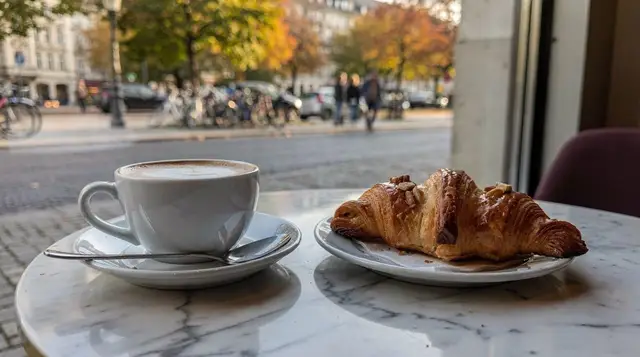
Lucerne’s bakery culture is worth a morning on its own — croissants, Zopf (a braided milk bread eaten at weekend breakfast), and the Birnweggen already mentioned. Our coffee and bakeries guide lists specific addresses; as a rule, bakery-café hybrids in Neustadt charge CHF 4 to CHF 6 for a coffee and pastry combination, well under what a seated café on Schwanenplatz charges for the same order.
If you’re building a picnic for a boat trip or a mountain excursion, buy from the Tuesday or Saturday market or from a Migros or Coop supermarket (both have branches near the station) rather than from Old Town tourist shops, where packaged snacks run noticeably higher. A decent picnic for two — bread, cheese, fruit, a drink — comes to roughly CHF 20 to CHF 30 from a supermarket versus CHF 35 to CHF 45 assembled from Old Town shop prices.
Cheese and chocolate beyond the market stall
Central Switzerland isn’t the country’s main dairy region — that’s further into the Emmental and Gruyère areas — but Lucerne market stalls sell alpine cheese from nearby cantons, and a day trip built around dairy production is straightforward from here. Our Swiss cheese dairies day trip guide covers visitable producers, and the Gruyères and chocolate day trip pairs the two in one outing to Gruyères if you have a full day to spend on it.
Chocolate is easier to cover without leaving the city: Lucerne has several chocolate shops in the Old Town selling Swiss brands and small-batch bars, and the tasting and bar-making tour linked above is the hands-on version. For breweries and Swiss wine rather than chocolate, our Swiss wine and breweries guide covers the drinking side in more detail than fits here.
Planning a food-focused day in Lucerne
If food is the main point of a visit rather than a side activity, aim for a Tuesday or Saturday so the market is running, and pair it with an Old Town walking route that passes both the market and the main bakeries. Our general one-day Lucerne guide and the longer three-day itinerary both leave room to build a market morning in without cutting the main sights. For a full category view of eating, drinking and everything else on offer in the city, browse things to do: food and drink.
Frequently asked questions about eating in Lucerne
What is Chügelipastete and where can I try it?
It’s Lucerne’s signature dish: a puff-pastry vol-au-vent filled with veal, pork sausage meat, mushrooms and a cream sauce, traditionally studded with small meatballs (the Chügeli). It shows up on set-lunch menus at old-town restaurants such as Wirtshaus Galliker and Restaurant Rathaus Brauerei, usually CHF 28 to CHF 38 as a main course.
What is Birnweggen and is it worth buying?
Birnweggen is a dense loaf of dried pears, nuts, dried fruit and a little kirsch wrapped in a thin bread dough, traditionally baked in the run-up to Christmas but sold year-round in bakeries. It’s heavy and not sweet in the way a pastry usually is; buy a slice before committing to a whole loaf, which runs CHF 15 to CHF 25 and keeps for weeks.
When are the food markets in Lucerne and where do they set up?
The Tuesday and Saturday morning markets run roughly 6am to 1pm (Saturday is bigger) along the Reuss river on Unter der Egg and Rathausquai, next to the Old Town side of Chapel Bridge. Expect cheese, cured meat, bread, seasonal produce and cut flowers rather than street food stalls.
Is a guided food tour in Lucerne worth the money?
It’s worth it if you want context on dishes you wouldn’t otherwise order, or a guide who has already picked the good bakeries and cheese counters. A typical small-group walking food tour runs two to three hours and CHF 90 to CHF 130 per person; skip it if you’re comfortable ordering from a menu in German and just want to eat, since a self-guided route costs a fraction of that.
What does a normal meal cost in Lucerne?
A takeaway bratwurst or sandwich runs CHF 8 to CHF 14, a bakery lunch CHF 12 to CHF 18, a mid-range restaurant main CHF 28 to CHF 42, and a three-course dinner with a glass of wine CHF 70 to CHF 100 per person. Lake-view terraces on Schwanenplatz and Rathausquai charge a premium of roughly 15 to 25% over a side-street equivalent for the same dish.
Where do locals actually eat, away from the tourist terraces?
Neustadt (across the river from the Old Town, around Pilatusstrasse and Bruchstrasse) and the Hirschmattquartier near the station have the bulk of Lucerne’s everyday restaurants, bakeries and the weekday lunch-menu culture that keeps prices down. Anything directly on Schwanenplatz or facing Chapel Bridge is priced for the view.
Is Lucerne tap water and street food safe, and is tipping expected?
Tap water is excellent and free to ask for in restaurants (Leitungswasser). Street food and market stalls follow the same food-safety standards as anywhere else in Switzerland. Service is included in the bill by law, but rounding up 5 to 10% for table service is normal and appreciated, not obligatory.
Lucerne food & drink tours on GetYourGuide
Verified deep-linked GetYourGuide tours. Book through these links and we earn a small commission at no cost to you.
GetYourGuide does not provide a product photo for this activity — the image shows the meeting point, photographed by us.