Coffee and bakeries in Lucerne
Where should I get coffee and pastries in Lucerne?
Bachmann and Heini are Lucerne's two historic bakery chains, with branches across the old town and at the train station selling bread, pastries, and coffee. A handful of smaller specialty coffee bars near the old town pull a better espresso. Expect roughly CHF 4.50-6 for a takeaway coffee and CHF 6-9 with table service, more again on a lake-view terrace.
Lucerne is not a coffee city in the way Vienna or Trieste are. What it has instead is two long-running bakery chains that double as the default café, a scattering of newer specialty bars that have picked up the third-wave habit in the last decade, and a lake to sit next to while you drink whatever you ordered. None of it is cheap. All of it is honest about what you are paying for, once you know where to look.
What Lucerne actually does well
The city’s real strength is bread and pastry, not espresso technique. Bachmann and Heini, the two historic Lucerne bakery-confectionery chains, have been baking for the town since well before “specialty coffee” was a phrase anyone used, and their branches function as the default café for most residents - a coffee, a pastry, standing or seated, no ceremony. If you came from Milan or Copenhagen expecting a coffee scene to match, recalibrate: come for the bread, treat the coffee as a reasonable accompaniment rather than the main event, and you will not be disappointed.
For anyone planning a longer walk through the old town first, it is worth pairing this with the old town walking guide or the Chapel Bridge guide - most of what follows sits within ten minutes of both.
Bachmann and Heini: the two institutions
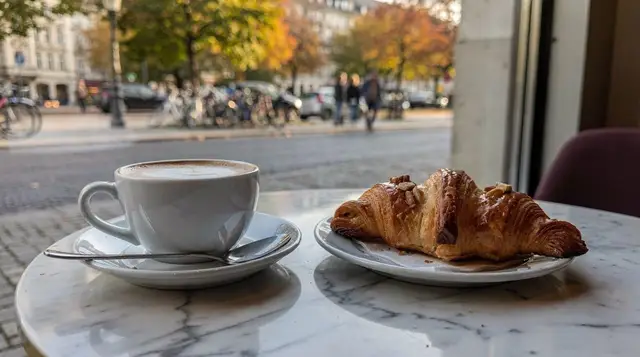
Bachmann is the bigger and more visible of the two, with branches at the train station, on Falkenplatz, on Kapellplatz in the old town, and several more across the wider city. It has been a Lucerne name since 1938 and is best known for Luzerner Lebkuchen, a dense honey-and-almond spiced gingerbread sold year-round in tins that travel far better than most bakery souvenirs. Bachmann’s coffee is unremarkable but perfectly drinkable, and the pastry counter is the real draw: buttery Gipfeli (the Swiss croissant, denser and less laminated than the French version), Nussgipfel filled with hazelnut paste, and a changing range of tarts and cream cakes.
Heini is the other long-established chain, similarly spread across multiple branches including a large one near the station, and locals tend to have a quiet loyalty to one or the other rather than treating them as interchangeable. The bread is the stronger argument for Heini - proper Swiss Zopf (the braided egg bread eaten at weekend breakfast) and a wider range of dark, dense rye and spelt loaves than Bachmann typically carries. Both chains sell coffee to the same basic standard: fine for a quick stop, not what you would travel for.
If bread and pastry more broadly interest you, the markets and street food guide and the food tour guide cover the wider eating scene beyond coffee.
Where to get an actually good coffee
Specialty coffee has arrived in Lucerne later and thinner than in Zurich or Basel, but a handful of smaller independent bars near the old town now roast or source properly and pull espresso with some care - flat whites and batch filter alongside the standard Swiss menu of Kaffee crème and cappuccino. These places are concentrated within a few streets of the Reuss on the old-town side, an easy add-on to a walk between Kapellplatz and the Musegg wall, covered in the Musegg wall and towers guide.
Expect to pay a franc or so more than at Bachmann or Heini for a takeaway coffee, and closer to CHF 6-7 for anything milk-based with table service. The trade-off is real: better beans, more consistent extraction, and staff who can tell you what is in the cup. Whether that is worth the premium depends on how much you care - if you are mainly after a caffeine stop between sights, the bakery-café counters do the job for less.
What a coffee actually costs
| Where | Takeaway coffee | Seated with table service | Notes |
|---|---|---|---|
| Bachmann / Heini counter | CHF 4.20-4.80 | CHF 5.50-6.50 | Fastest option, near station and old town |
| Independent specialty bar | CHF 4.80-5.50 | CHF 6-7.50 | Better espresso, fewer seats |
| Hotel terrace on the quai | Not usually offered | CHF 7-9.50 | Paying largely for the lake view |
| Train station kiosk | CHF 4-4.50 | Standing counter only | Cheapest, no real seating |
| Coop / Migros in-store café | CHF 3.50-4.50 | CHF 4.50-5.50 | Supermarket-chain quality, lowest price |
These are 2026 prices for a standard-size cup and will drift a little year to year, but the relative gaps - takeaway cheaper than seated, supermarket cheapest of all, lake-view terrace most expensive - are stable and worth planning around if you are watching a daily budget. The Lucerne travel costs guide and budget guide go into this in more detail across a full day.
Sitting versus standing: what actually changes the price
Unlike Italy, Switzerland has no formal, printed two-tier pricing where the bar price and table price are listed separately on the same menu. What happens instead is simpler and less transparent: takeaway from a counter is priced lower because it involves no crockery, no table turnover, and no waiting staff, while sitting down - inside or on a terrace - carries the cost of service built into the same drink. At Bachmann and Heini this difference is modest, often under a franc. At a hotel terrace on the quai it is much larger, because you are also paying for the seat and the view rather than the coffee itself.
The practical rule: if you only want caffeine, buy it standing at a counter and walk on. If you want twenty minutes of sitting somewhere pleasant, budget for it as you would a small meal, not a coffee.
The best terraces on the quai
The lakefront promenade between the train station and the Kapellbrücke is lined with hotel and café terraces facing the water, and this is where the real price premium sits. The historic Hotel Schweizerhof and Hotel des Balances both have terraces looking over Lake Lucerne (Vierwaldstättersee) and the paddle-steamer piers, and both charge accordingly - a coffee here is closer to a small ceremony than a quick stop, and the bill reflects that.
For a similar view without the hotel prices, the public benches along the quai and the lakeside stretch near the Nationalquai cost nothing at all; buy a takeaway coffee from Bachmann or a station kiosk first and drink it looking at the same water. Paddle steamers docking and departing add some free entertainment either way - the paddle steamer guide and Lucerne boat trips guide cover the timetables if you want to time a coffee around a departure.
If you would rather turn the coffee stop into part of a guided outing on the water, a regional wine-tasting trip on Lake Lucerne covers a different drink but runs from the same piers and gives a good sense of the shoreline beyond what a terrace coffee shows you.
Bakery counters and the quick, cheap options
For a fast, low-cost coffee and something to eat, the train station concourse is the most practical stop in the city: both Bachmann and Heini have branches there, alongside a Coop and a Migros with in-store cafés that undercut everyone else on price. None of these will be memorable, but they are reliable, fast, and priced for daily use rather than for tourists. If you are catching an early connection - to Zurich, to Weggis and Vitznau, or up to Pilatus or Rigi - this is where locals actually buy their coffee before work, not on the terraces.
Supermarket in-store cafés are worth knowing about specifically for value: a Coop or Migros coffee is routinely a franc or more cheaper than the same drink at a bakery counter, and the seating, while unglamorous, is free of any minimum spend.
Pairing a coffee stop with a walk
The old town rewards treating coffee as a punctuation mark rather than a destination. A reasonable loop: start with a takeaway from Bachmann near Kapellplatz, walk the covered Chapel Bridge while it is still in hand, continue along the Reuss past the guild houses, and finish on a public bench on the quai rather than paying terrace prices for the same water view. This costs a fraction of sitting down twice and covers most of what the one-day guide and free things to do guide list as the essential old-town walk.
If chocolate rather than coffee is the actual draw, Lucerne’s chocolate shops cluster in the same old-town streets as the specialty coffee bars, and a hands-on chocolate-making session is a reasonable way to spend an afternoon that would otherwise go on café-hopping, with the chocolate experiences guide covering the shops themselves.
Beyond coffee: what to eat alongside it
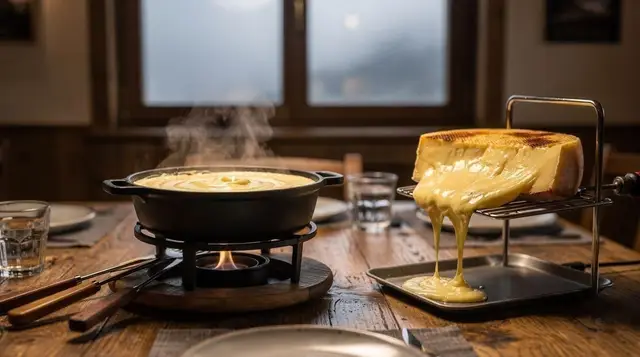
Bachmann and Heini both sell more than pastry - proper bread, quiches, and savoury tarts suitable for a light lunch rather than only a sweet stop. For a heavier, more traditionally Swiss pairing, fondue and raclette are covered separately in the fondue and raclette guide, and cheese more generally in the cheese dairies day trip guide - a farm visit with cheese tasting outside the city is a fair way to see where the cheese on that pastry-counter sandwich actually comes from, if a morning trip out of town appeals.
For gift shopping - Lebkuchen tins, chocolate, packaged pastry - the Lucerne shopping guide lists what travels well and what does not.
Practical notes
Cash is accepted everywhere but increasingly unnecessary; card and mobile payment are standard even at small bakery counters. Bakeries open early, generally 6.30-7am on weekdays, geared toward commuters buying breakfast before the train, and close earlier on Sundays, with some branches shut entirely on Sunday afternoons - check before planning a Sunday coffee stop around a specific branch.
Service is included in the price by Swiss convention, so nothing further is owed; rounding up a franc or two for table service is normal but not expected at a takeaway counter. Portion sizes at Bachmann and Heini are generous relative to the price, which softens the overall cost of a pastry-and-coffee stop compared with buying the two items separately elsewhere.
For where to stay near any of this, the where to stay in Lucerne guide flags which neighbourhoods put you within walking distance of both bakery chains and the old-town specialty bars, which matters more than it sounds for a daily coffee habit on a short trip.
Coffee and bakeries in Lucerne: your questions answered
Is coffee expensive in Lucerne?
By most European standards, yes. A standard-size takeaway coffee runs CHF 4.50-6, and a cappuccino with table service is typically CHF 5.50-7.50. It is not unusually expensive by Swiss standards, though - it broadly matches what you would pay in Zurich or Bern.
Do I pay more to sit down for coffee in Lucerne?
Switzerland does not run the formal two-tier pricing you find in Italy, where standing at the bar is printed as a separate, lower price. In practice you still pay more to sit, because table service, a proper cup, and use of the space are built into the price on the menu - takeaway from the same counter is usually 20-30% cheaper.
What is Luzerner Lebkuchen?
A dense, spiced honey-and-almond gingerbread associated with Lucerne, sold year-round rather than only at Christmas. Bachmann’s is the best-known version and makes a better souvenir than most because it survives a suitcase.
Are Bachmann and Heini the same thing?
No - they are separate, competing family businesses, both long established in Lucerne with several branches each across the old town, the train station, and outlying neighbourhoods. Locals tend to have a preference for one over the other, usually inherited rather than chosen.
Where can I get a decent coffee near the train station?
The station concourse has bakery-café counters good for a fast, average coffee before a train. For something better, walk five minutes into the old town, where the smaller specialty bars near the Reuss put more care into the espresso, at a similar or slightly higher price.
Is tipping expected in Lucerne cafés?
Service is included in the price by law, so nothing is owed. Rounding up to the next franc or two for table service is common and appreciated but not expected for a takeaway coffee at a counter.
What time do bakeries open in Lucerne?
Most Bachmann and Heini branches open around 6.30-7am on weekdays for the commuter trade, with slightly later starts on Sundays and shorter hours or closures on Sunday afternoons. The train station branches keep the longest hours, often open into the evening.
Lucerne food & drink tours on GetYourGuide
Verified deep-linked GetYourGuide tours. Book through these links and we earn a small commission at no cost to you.
GetYourGuide does not provide a product photo for this activity — the image shows the meeting point, photographed by us.