Lucerne vs Interlaken: which should be your base?
Should I base myself in Lucerne or Interlaken?
Lucerne suits a first visit to Switzerland, city sightseeing, and trips to Pilatus, Rigi, Titlis and Zurich. Interlaken suits hikers and adventure travellers heading straight for the Jungfrau region — Grindelwald, Lauterbrunnen, Wengen and Jungfraujoch are 20-40 minutes away rather than the roughly 1 hour 50 minutes it takes from Lucerne.
Two towns, two different trips
Lucerne and Interlaken get lumped together in a lot of itinerary advice, as if they were interchangeable stops on the same conveyor belt. They aren’t. Lucerne is a city of about 82,000 people with a genuine old town, a cathedral, museums, shopping streets and a station that puts Zurich Airport under an hour away. Interlaken is smaller, sits in the flat gap between Lake Thun and Lake Brienz, and exists largely as a gateway to the Jungfrau region — Grindelwald, Lauterbrunnen, Wengen and Mürren all sit within 20-40 minutes of it.
Picking wrong doesn’t ruin a trip, but it does add hours of train time you didn’t plan for. This guide compares what each town puts within day-trip reach, what things actually cost in CHF, what the pace of each place feels like, and which one makes more sense depending on how many days you have.
At a glance
| Lucerne | Interlaken | |
|---|---|---|
| Population | ~82,000 | ~5,700 |
| Character | Old town, lakefront city | Adventure-sports springboard |
| Nearest mountains | Pilatus, Rigi, Stanserhorn | Schilthorn, Jungfraujoch access |
| Zurich Airport | ~1 hour direct | ~2 hours 15 |
| Jungfraujoch | ~3 hours each way | ~1 hour 30-2 hours each way |
| Budget beds | Limited, pricier | Large hostel scene |
| Rainy-day options | Museums, old town, boats | Fewer indoor options |
What’s a day trip from Lucerne
Base yourself in Lucerne and you’re within easy reach of Mount Pilatus (cable car from Kriens year-round, the world’s steepest cogwheel railway from Alpnachstad when it’s running, roughly May to November depending on snow), Mount Rigi via cogwheel trains from Vitznau or Arth-Goldau or the cable car from Weggis, and Engelberg for Titlis, about 45 minutes away. Stanserhorn and its open-top CabriO cable car is closer still.
Beyond the mountains, Zurich is 45 minutes to an hour by train, making it a realistic half-day add-on, and Zug is closer again. Bern is around an hour. For anyone building a longer loop, our day trips from Lucerne guide lays out the full set, and a guided run that also drops you at Interlaken and back is worth checking if you’d rather not manage the connections yourself — a day trip from Lucerne to Interlaken with a guide handling the timetable covers exactly that gap.
What Lucerne does not put within a comfortable single day: the Jungfrau region. Grindelwald, Lauterbrunnen, Wengen and the Schilthorn are roughly 1 hour 50 minutes away on the scenic Brünig line before you’ve even started the local connections up the valley. It’s doable, but it eats the day.
What’s a day trip from Interlaken
Interlaken flips that picture. Grindelwald and Lauterbrunnen are 20-40 minutes away, Wengen and Mürren not much further once you factor in the connecting train or cable car. The Jungfraujoch itself — Europe’s highest railway station — is reachable in roughly 1 hour 30 minutes to 2 hours each way depending on which valley you go up through, against about 3 hours from Lucerne. Our Jungfraujoch guide covers the full route and what it costs.
Lake Thun and Lake Brienz sit either side of the town, both with regular boat services. What Interlaken does not give you easily is Lucerne’s mountains: Pilatus and Rigi are on the wrong side of the Brünig for a same-day round trip, and Lucerne’s old town itself is that same 1 hour 50 minutes away.
Combined day trips exist for travellers who want a taste of both without committing to two bases — a two-day run from Zurich through Lucerne, Interlaken and Jungfraujoch is built for exactly that squeeze, though it’s a fast pace for three destinations in two days.
Prices: rooms, food, transport
Switzerland is expensive everywhere; the difference between the two towns is in degree, not kind.
| Lucerne | Interlaken | |
|---|---|---|
| Hostel dorm bed | CHF 45-60 | CHF 35-50 |
| Budget double room | CHF 150-190 | CHF 110-160 |
| Central 3-star double | CHF 220-320 | CHF 170-250 |
| Restaurant main course | CHF 28-45 | CHF 22-38 |
| Coffee, sit-down | CHF 4.50-6 | CHF 4-5.50 |
| Local bus/tram day ticket | Covered by hotel guest card in central zone | Covered by regional guest card |
Lucerne’s lakefront hotels and old-town addresses command a premium that Interlaken’s more functional, adventure-tourism-oriented lodging doesn’t. If budget is the deciding factor and you’re not fussed about staying in a historic centre, Interlaken’s hostel infrastructure — built up over decades for the paragliding and canyoning crowd — will save real money over several nights. Our Lucerne travel costs guide has the fuller breakdown for that side.
Atmosphere and pace
Lucerne feels like a small city: covered bridges, a cathedral, a proper shopping street, restaurants that don’t shut at 9pm, and enough indoor attractions — the Swiss Museum of Transport, the Rosengart Collection, the Glacier Garden — to fill a rainy day without leaving town. It’s also where the Swiss Travel Pass earns its keep fastest, since the boats, mountain railways and city buses all fall under one ticket.
Interlaken is quieter and more single-purpose. Outside the main street’s outdoor-sports shops and a handful of restaurants, there isn’t a lot to do inside the town itself — its whole reason for existing is the valleys on either side of it. That’s fine if you’re there for hiking, paragliding or the Jungfrau region and plan to be out most of the day; it’s less fine on a wet day with nowhere obvious to go.
The mountains each one owns
This is the real fork in the decision, and it’s worth being blunt about it: you are not choosing a town so much as choosing a mountain region.
Lucerne’s peaks — Pilatus, Rigi, Titlis via Engelberg, Stanserhorn — are lower-key, well-served by cogwheel trains and cable cars, and each doable as a half-day or full-day trip without an overnight. None of them requires a change of base. The trade-off is that Pilatus’s steep cogwheel line typically only runs May to November, closing for winter maintenance, and several of these lifts also close briefly in spring and autumn for scheduled revision — worth checking before you build a day around one specific summit.
Interlaken’s region — Schilthorn, and the Jungfraujoch beyond Grindelwald and Lauterbrunnen — is higher, more dramatic, and considerably more expensive to visit (Jungfraujoch tickets alone run well into three figures in CHF). It rewards staying closer rather than commuting in from Lucerne for a single long day.
Boats and lakes
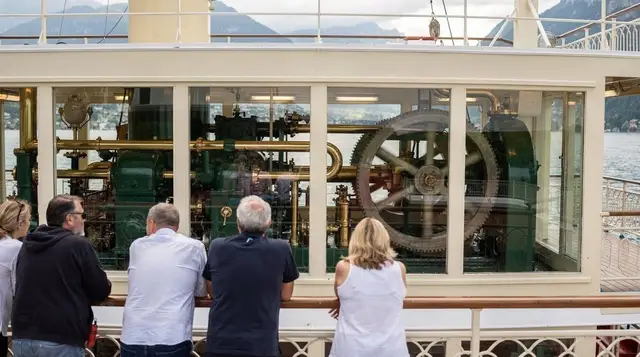
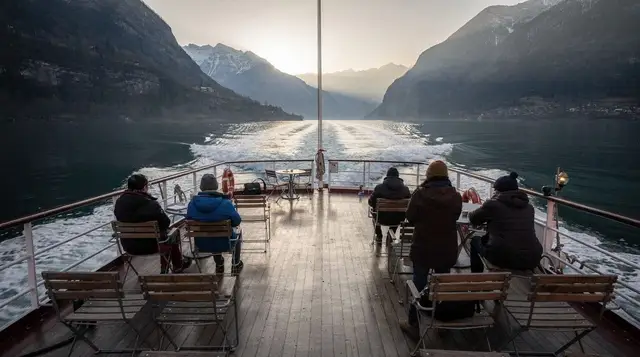
Both towns sit on water, and both are pleasant for it, but the lakes themselves are different experiences. Lake Lucerne is the larger and more scenic of the two for a leisurely cruise, with five historic paddle steamers still running seasonally and covered by the Swiss Travel Pass on regular routes — a private option exists too, if a private boat cruise on Lake Lucerne fits the budget better than a scheduled sailing. Lake Thun and Lake Brienz, either side of Interlaken, are smaller and less built up with lakeside towns, but the Brienz side in particular has a striking turquoise colour that Lake Lucerne doesn’t quite match.
Verdict by trip length
2-3 days: pick one and don’t try to add the other as a day trip unless you’re prepared to lose most of a day to trains. Lucerne suits a first-timer wanting a city plus one or two mountains; Interlaken suits someone who’s already decided the Jungfrau region is the priority. Our Lucerne in 3 days itinerary assumes you’re staying put.
4-5 days: still workable as a single base with a well-chosen day trip. From Lucerne, a full-day loop to Interlaken and back is long but doable if you take an early train; from Interlaken, Lucerne itself becomes the long day. A 5-day Alps-focused itinerary out of Lucerne can fold in Engelberg and Pilatus without touching Interlaken at all.
6 days or more: split it. Two or three nights in Lucerne for the city, Lake Lucerne and Pilatus or Rigi, then relocate — two or three nights in Interlaken or, better, Grindelwald or Lauterbrunnen directly, for the Jungfrau region. This avoids the roughly 1 hour 50 minute Brünig trip becoming a daily commute in either direction. For travellers weighing up whether Lucerne fits better with a different city entirely, our Lucerne vs Zurich comparison covers that separate question.
If a guided link between the two appeals more than managing the Brünig connection solo, a scenic run such as a guided route from Lucerne into the Interlaken region, taking in the lakes along the way turns the transfer day into part of the trip rather than dead time.
FAQ: choosing between Lucerne and Interlaken
Is Lucerne or Interlaken better for a first trip to Switzerland?
Lucerne, for most people. It has a walkable old town, a real city feel, direct trains to Zurich Airport in about an hour, and its own mountains (Pilatus, Rigi, Stanserhorn) without needing a connecting bus. Interlaken is more of a springboard town with less to do on a rainy day inside it.
How long does it take to get from Lucerne to Interlaken?
About 1 hour 50 minutes on the scenic Brünig line, with a change at Meiringen or a direct through-carriage depending on the timetable. It is one of the more attractive rail journeys in central Switzerland, so the trip itself is not wasted time.
Which town is closer to the Jungfraujoch?
Interlaken, by a wide margin. Grindelwald and Lauterbrunnen, the two starting points for the Jungfraujoch train, are 20-40 minutes from Interlaken. From Lucerne the same journey takes roughly 3 hours each way once you add the Brünig connection.
Is Interlaken cheaper than Lucerne?
Generally yes for accommodation. Interlaken has a large hostel and budget-hotel scene built around adventure sports, with dorm beds from around CHF 40. Lucerne’s old town and lakefront hotels sit higher, and a central double room rarely drops below CHF 200 in high season.
Can I do Jungfraujoch as a day trip from Lucerne?
Yes, but it is a long day: around 3 hours each way by train, plus the cogwheel ride up from Kleine Scheidegg. You will spend 6 hours or more in transit for a few hours at altitude. Staying a night in Interlaken or Grindelwald makes far more sense if Jungfraujoch is a priority.
Which is better for families, Lucerne or Interlaken?
Lucerne, mainly because there is more to do within the town itself on a bad-weather day — the Swiss Museum of Transport, the Glacier Garden, boat rides on Lake Lucerne — plus flatter walking routes. Interlaken’s appeal is outdoor and weather-dependent.
Should I split my trip between Lucerne and Interlaken?
If you have five days or more, yes. Two or three nights in Lucerne for the city, Pilatus or Rigi and Lake Lucerne, then two or three nights in Interlaken or Grindelwald for the Jungfrau region, covers both without excessive backtracking.
Lake cruises & boat tours on GetYourGuide
Verified deep-linked GetYourGuide tours. Book through these links and we earn a small commission at no cost to you.
GetYourGuide does not provide a product photo for this activity — the image shows the meeting point, photographed by us.