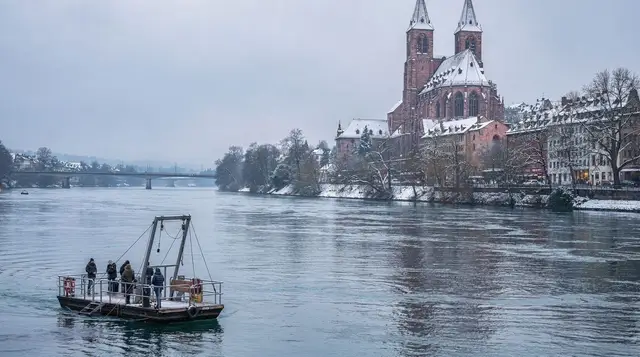
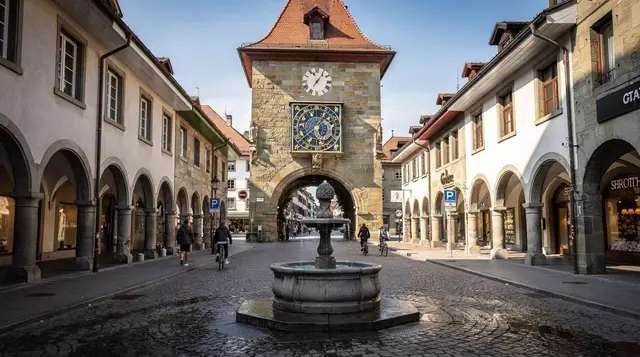
Lucerne vs Zurich: which Swiss city should you visit
Should I visit Lucerne or Zurich?
For a short trip built around lake scenery and mountain excursions, base yourself in Lucerne. For nightlife, shopping and a bigger city feel, choose Zurich. With more than four days, do both — they're 45 minutes apart by direct train.
Two cities, 45 minutes apart, very different trips
Lucerne and Zurich get compared constantly because they’re the two most-flown-into, most-photographed cities in German-speaking Switzerland, and because a direct train links them in as little as 45 minutes. But they’re not competing for the same trip. Lucerne is built around a lake and a ring of mountains; its old town is small enough to cover on foot in an afternoon, and its reason for existing, as far as most visitors are concerned, is what you can reach from it. Zurich is a working financial city with a lake of its own, better museums by volume, a real nightlife scene, and a much bigger footprint that rewards a longer stay.
If you’re choosing where to sleep for a short Switzerland trip, or trying to work out whether one city can substitute for the other, here’s how they actually compare — not in marketing language, but in prices, train times and what you’d spend a day doing in each.
Lucerne in brief
Lucerne (canton of Lucerne, roughly 82,000 residents, German-speaking) sits at the northern tip of Lake Lucerne, and the whole town organises itself around the water. The railway station and the lake steamer pier sit next to each other, which means you can arrive by train and be on a boat within ten minutes. The old town — the Chapel Bridge, the Musegg Wall towers, the painted facades on Hirschenplatz — takes half a day to see properly, less if you’re rushing.
The real draw is what surrounds the city. Mount Pilatus and Mount Rigi are both reachable within an hour including the boat or cogwheel leg, and Engelberg (for Titlis) is about 45 minutes by direct train. This is the single biggest reason people choose Lucerne over Zurich for a short Switzerland trip: you can be on a mountain by mid-morning and back in the old town for dinner.
Lucerne is small. You’ll run out of new things to see in the city itself after a day and a half; after that, everything is a day trip.
Zurich in brief
Zurich is Switzerland’s largest city (canton of Zurich, over 400,000 residents in the city proper), and it doesn’t try to be a postcard the way Lucerne does. The old town along the Limmat river is pleasant but secondary to what the city actually offers: the Kunsthaus and other museums, a genuinely good restaurant scene, department stores and boutiques on Bahnhofstrasse, and — the part Lucerne can’t match — nightlife. Zurich West, the former industrial district around Escher-Wyss-Platz, has bars and clubs that run late; Lucerne’s equivalent shuts down by midnight.
Zurich also has its own lake, Lake Zurich, with its own boat trips, but the lake plays a smaller role in the city’s identity than Lake Lucerne does in Lucerne’s. Zurich is also the better hub for reaching destinations that aren’t in the mountains: the Rhine Falls are 45 minutes away, and Basel or St Gallen are both under an hour.
Prices compared
Switzerland is expensive everywhere; the gap between these two cities is smaller than people expect.
| Lucerne | Zurich | |
|---|---|---|
| Budget double room | CHF 140–180 | CHF 150–200 |
| Mid-range double room | CHF 220–280 | CHF 230–300 |
| Coffee, sit-down cafe | CHF 4.50–5.50 | CHF 4.50–6 |
| Restaurant main course | CHF 28–42 | CHF 30–45 |
| Half-litre beer, bar | CHF 6.50–8 | CHF 7–9 |
| Single city transport ticket | CHF 3.60–4.60 | CHF 4.40 |
| Museum entry (major) | CHF 15–25 | CHF 20–26 |
Neither city is the “cheap” option. Where Lucerne actually saves you money is that its sights are walkable — the old town, the bridges, the lakefront promenade cost nothing and don’t require a transport ticket. Zurich’s attractions are more spread out, so you’ll buy more single tickets or a day pass. For a fuller price breakdown specific to Lucerne, see Lucerne travel costs and Lucerne on a budget.
Getting between them
The train connection is genuinely good, which is why so many visitors don’t choose one city over the other — they use both.
| Route | Journey time | Frequency |
|---|---|---|
| Zurich HB → Lucerne | 45 min–1 h | Every 20–30 min |
| Zurich Airport → Lucerne | About 1 h direct | Every 30–60 min |
| Lucerne → Zurich Airport | About 1 h direct | Every 30–60 min |
A Swiss Travel Pass covers this leg along with most of the mountain excursions on both sides, so if you’re doing a multi-city trip it’s worth pricing against individual tickets before you buy. If you’re landing at Zurich Airport and heading straight to Lucerne, the airport-to-Lucerne guide covers the direct train, luggage options and what to do if you have a long layover instead of an overnight.
For a guided version of that same route, there’s also a direct transfer tour from Zurich Airport to Lucerne that skips the ticket-machine step if you’d rather not deal with it after a flight.
Which city for how many nights
This is really the question underneath “Lucerne or Zurich” — it’s less about which city is “better” and more about how much time you have.
One to two nights, one city only: Lucerne. You can cover the old town and get to one mountain (Pilatus or Rigi) in that window. Zurich needs more time to earn its keep — two nights there mostly means one city day and one museum day, without a mountain excursion attached. See how many days in Lucerne for a fuller breakdown.
Three to four nights, pick a base and day-trip: Base in Lucerne and use Zurich as a single day trip for shopping, a museum, or dinner in a bigger city. This is the more common pattern, since Lucerne’s surrounding mountains need more days than Zurich’s surroundings do. A packaged version of this exists as a day trip from Zurich to Lucerne and Bürgenstock, useful if you’re based in Zurich and want the reverse direction instead.
Five-plus nights, do both properly: Split three nights in Lucerne (old town, Pilatus or Rigi, a lake cruise) and two in Zurich (museums, Zurich West, one Rhine Falls day trip). This is the itinerary most people actually wish they’d planned, according to the complaints in Lucerne’s first-time mistakes guide — rushing one city to squeeze in the other.
If you want a structured version of the Lucerne side, the Lucerne 3-day itinerary and Lucerne 1-day itinerary both assume you’re either based there or day-tripping in from Zurich.
Mountains and day trips: no real contest
This is where Lucerne wins outright. From Lucerne, Pilatus, Rigi, Stanserhorn and Titlis at Engelberg are all under 90 minutes door to door, several under an hour. The full spread of options is on the day trips from Lucerne hub.
Zurich’s day-trip options are flatter: the Rhine Falls, Basel’s museums, St Gallen’s old town and library. Reaching the same mountains from Zurich means routing through Lucerne first, which adds 45 minutes each way — workable as a full day, but it’s the same excursion Lucerne offers directly, with an extra train change bolted on.
If mountains are the point of the trip — and for most first-time Switzerland visitors, they are — book from Lucerne rather than Zurich. A private option covering both the mountain and the lake in one outing is this private Pilatus and Lake Lucerne tour, which is set up to work as a long day whether you’re staying in Zurich or Lucerne.
Food, nightlife and city life
Zurich’s restaurant scene is deeper — more cuisines, more high-end options, more late kitchens. Lucerne’s food is solid but narrower: Swiss classics, lake fish, chocolate shops, and a smaller set of destination restaurants. Neither city is where you go for cheap eating; both reward picking one good meal a day and eating simply the rest of the time, which the Lucerne food tour guide covers in more detail.
Nightlife is not close. Zurich has an actual club scene; Lucerne’s nightlife is a short bar crawl that mostly ends by midnight, earlier midweek. If a late night out matters to your trip, that alone should tip you toward a Zurich base with a Lucerne day trip, not the other way round.
Verdict by traveller type
| Traveller | Better base |
|---|---|
| First-time visitor, under 3 nights | Lucerne |
| Mountain-focused trip | Lucerne |
| Museums, shopping, nightlife | Zurich |
| Flying in/out of Zurich, short layover | Zurich, day trip to Lucerne |
| Combining with Interlaken or the Bernese Oberland | Lucerne (better rail links south) |
| 5+ nights, want both | Split — 3 Lucerne, 2 Zurich |
For a comparison against a third common base, see Lucerne vs Interlaken, which covers the same trade-off against a more mountain-heavy alternative to Zurich.
A relaxed way to combine a lake, a walking tour and a small-group format if you’re staying in Zurich and want to see Lucerne properly rather than rushing it solo is this small-group Lucerne walking tour and lake cruise from Zurich, which covers the old town and a stretch of the water in one outing.
Common questions about choosing between Lucerne and Zurich
Is Lucerne or Zurich better for a first visit to Switzerland?
Lucerne, if you only get one city. It has the compact old town, the lake, and direct access to Pilatus and Rigi within a single day. Zurich is more useful once you’ve already seen the classic postcard version of Switzerland and want a working city instead.
Is Zurich cheaper than Lucerne?
No, they’re close. Hotel rooms average slightly higher in Zurich, and a sit-down dinner runs about the same in both, roughly CHF 30 to 45 for a main course. Lucerne’s advantage is that its sights are walkable, so you spend less on local transport.
Can I see both Lucerne and Zurich in one trip?
Easily. Trains run every 20 to 30 minutes and take 45 minutes to just over an hour depending on the service. Many visitors base in one city and day-trip to the other, which avoids packing and unpacking twice.
Which city is closer to the mountains?
Lucerne. Pilatus and Rigi are reachable in under an hour including the boat or cogwheel train, and Engelberg for Titlis is about 45 minutes by train. From Zurich, add the 45-minute rail leg to Lucerne first, or go directly to destinations like the Rhine Falls instead.
Is Zurich or Lucerne better for nightlife?
Zurich, by a wide margin. Zurich West and the district around Langstrasse have a real late-night scene with clubs and bars open past 2am. Lucerne’s nightlife is modest — a handful of bars in the old town that mostly wind down by midnight.
Where should I stay if I’m flying into Zurich Airport?
Depends on your itinerary length. With three nights or fewer, stay near Zurich Airport or in the city itself and day-trip to Lucerne. With four or more nights, take the direct train to Lucerne (about an hour) and make it your base instead, since it sits closer to the mountain excursions most visitors actually want.
Popular Lucerne experiences on GetYourGuide
Verified deep-linked GetYourGuide tours. Book through these links and we earn a small commission at no cost to you.
GetYourGuide does not provide a product photo for this activity — the image shows the meeting point, photographed by us.