Six days from Lucerne: Pilatus, Rigi, Interlaken and Bern
How this six-day route works
Lucerne is the only hotel you book for this trip. Its train station and boat pier sit next to each other on the lakefront, so every day starts and ends at the same point, and nothing here requires a car. The route works outward in rings: a day to settle into the old town, two mountain days on opposite shores of Lake Lucerne, a long day out to Interlaken and the Bernese Oberland, a shorter day in Bern, and a final day back on the lake itself before you leave. If you’d rather build your own six days from scratch, the 7-day itinerary and the 3-day version show what gets added or cut at each length.
Base costs assume a mid-range 3-star hotel in or near the old town, standard second-class rail fares, and no car rental. Swiss prices are what they are: nothing below is inflated, and nothing is played down either.
Day 1: Lucerne old town on foot
Spend the arrival day entirely on foot. Start at Chapel Bridge and the Water Tower, the covered wooden bridge that’s the city’s actual landmark rather than a photo op invented for tourists, then walk the Musegg Wall and its towers for the best free view over the roofs of the old town. The Lion Monument, a short walk from the centre, is worth the ten minutes it takes rather than a detour that eats an afternoon.
Use the rest of the day loosely with the old town walking guide as a reference rather than a script. Lucerne is compact enough that you’ll cover most of it without trying. If you land jet-lagged, this is also the easiest day to shorten: cut the wall towers and keep the bridge and the lakefront.
Dinner in the old town runs CHF 30 to 45 for a main course at most sit-down restaurants; a fondue set for two is closer to CHF 90. If that’s steep, the Lucerne on a budget guide has real alternatives, not just “eat street food” platitudes.
Day 2: Mount Pilatus, the steepest cogwheel railway in the world
Pilatus is the more dramatic of the two lake mountains, and its cogwheel railway from Alpnachstad climbs a 48 percent gradient, the steepest of any rack railway on earth. It only runs from roughly May to November, weather and snow permitting, so check the season before you plan the day around it.
a round-trip cogwheel ticket up to the Pilatus summit from Alpnachstad gets you to the top in about 30 minutes of climbing. The classic “golden round trip” goes up one way and down the other: cogwheel from Alpnachstad, then the cable car and gondola down into Kriens, which also runs year-round and is the only option outside the cogwheel season. Full details, including how to time the boat connection from Lucerne to Alpnachstad, are in the Mount Pilatus guide.
Budget the better part of a day: boat or train to Alpnachstad, the ascent, an hour or two at the summit for the ridge walk and viewpoints, and the descent into Kriens followed by a bus back into Lucerne. Reckon on CHF 90 to 100 for the full golden round trip if you’re not covered by a pass; the Swiss Travel Pass guide explains what’s included and what isn’t.
Day 3: Mount Rigi and a lake crossing
Rigi sits on the opposite shore from Pilatus and is reached by boat first, which makes it the more scenic approach of the two mountain days. Take a steamer or regular boat from Lucerne to Vitznau, then the Vitznau–Rigi cogwheel railway, Europe’s oldest mountain railway, up to Rigi Kulm. Coming down, the Arth-Goldau line or the Weggis cable car both work, and either lets you loop back to Lucerne a different way than you came.
a classic Rigi round trip from Lucerne that bundles the boat and both cogwheel legs is the simplest way to book this without juggling separate tickets. The Mount Rigi guide covers the walking trails at the summit, which are gentler and better marked than Pilatus’s. If you’re deciding between the two mountains rather than doing both, Pilatus vs Rigi vs Titlis lays out the actual differences instead of recommending both because it’s easier to write.
Rigi’s day pass, covering the boat and both railways, runs close to CHF 90 without a pass. Like Pilatus, both lines close for spring and autumn maintenance windows; check the live status before you leave the hotel, since this is what most often turns a planned mountain day into a rained-out town day.
Day 4: Interlaken and the Bernese Oberland
This is the longest single day of the trip. Take the Luzern–Interlaken Express over the Brünig Pass, roughly 1 hour 50 minutes each way, one of the more scenic standard rail routes in Switzerland rather than a detour taken only for the mountains beyond it. Interlaken itself sits between Lake Thun and Lake Brienz and is more of a transit and activity hub than a destination to linger in for its own sake; the town centre can be walked in under an hour.
If you start early, from-Interlaken excursions to the high Alps are within reach. a day trip from Interlaken up to the Jungfraujoch is the well-known option, but it turns this into a very long day on top of the Brünig journey, so treat it as optional rather than default. The Interlaken day trip guide and the separate Jungfraujoch day trip guide both spell out realistic timings before you commit to it.
Return trains to Lucerne run until the evening; check the last connection before you leave Interlaken, since missing it means an overnight you didn’t plan for and didn’t pack for.
Day 5: Bern, Switzerland’s capital
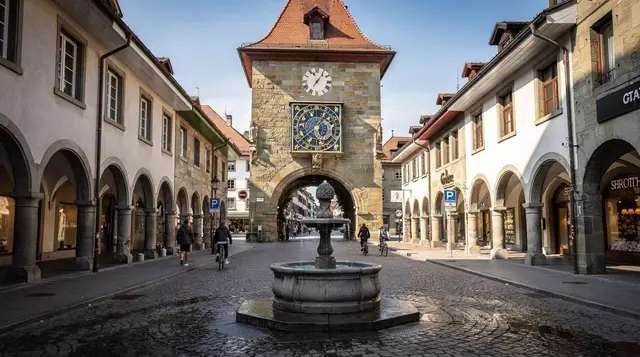
Bern is about an hour from Lucerne by direct train, the shortest excursion of the trip and a easier day after the previous one. Bern’s old town is a UNESCO World Heritage site built almost entirely from grey sandstone, with arcaded streets, the Zytglogge clock tower, and the Aare river looping around three sides of the centre. Locals swim in the Aare in summer, jumping in upstream and floating out near the old town; it’s one of the more genuinely local things visitors can do without booking anything.
The Bern day trip guide has a walking route that covers the old town in half a day, leaving the afternoon free for the Bear Park along the river or one of Bern’s museums. Trains back to Lucerne run roughly hourly, so there’s no need to rush the return.
Lunch in Bern’s old town runs about the same as Lucerne, CHF 25 to 40 for a main course; nothing here is notably cheaper or more expensive than the rest of central Switzerland.
Day 6: Lake Lucerne, before you leave
The last day stays on the water rather than heading to another mountain. Lake Lucerne’s five historic paddle steamers, built between the 1870s and 1920s and still in scheduled service, are covered by the paddle steamer guide and by regular Swiss Travel Pass navigation. A loop out to Weggis and Vitznau and back, or across to Bürgenstock for the Hammetschwand lift, fills a relaxed half-day without the early start the mountain days require.
a private e-bike and boat combination around the lake is a good option if you’d rather cover more shoreline than a single boat loop allows, and it works well as a lower-key finish after two mountain days and two long rail days. The Bürgenstock and Hammetschwand guide and the broader Lucerne boat trips guide cover the other combinations, including shorter one-hour crossings if you have an afternoon flight to catch.
Spend what’s left of the day back in the old town for last-minute souvenirs or a final dinner. If Lucerne to Zurich Airport is your route out, the direct train takes about an hour; build in more buffer than you think you need for the last connection.
Costs and timings at a glance
| Day | Route from Lucerne | One-way / round-trip time | Rough cost without a pass |
|---|---|---|---|
| 2 | Alpnachstad — Mount Pilatus | ~30 min ascent | CHF 90–100 round trip |
| 3 | Vitznau — Mount Rigi | ~35 min ascent | CHF 85–95 round trip |
| 4 | Lucerne — Interlaken (Brünig line) | ~1h 50 each way | CHF 60–70 return, second class |
| 5 | Lucerne — Bern | ~1h each way | CHF 50–60 return, second class |
| 6 | Lake Lucerne boat loop | 2–4 hours, flexible | CHF 30–50 per person |
FAQ: planning a six-day Lucerne and Bernese Oberland trip
Do I need a car for this itinerary?
No. Every leg runs on SBB trains, PostBus, cogwheel railways or lake steamers. A car adds parking costs and no time saving on the mountain lines, which are single-track and rail-only.
Is six days enough to see Lucerne, Pilatus, Rigi, Interlaken and Bern properly?
Yes, but Interlaken becomes a single long day rather than a base of its own. If you want two nights in the Bernese Oberland, drop the Bern day and use the freed day for Interlaken instead.
Which pass should I buy for six days?
A Swiss Travel Pass covering the trip’s core days pays off once you add both mountain excursions and the Bern and Interlaken trips, since it also covers regular lake navigation. Compare it against a Half Fare Card plus single tickets before buying.
Should I do Pilatus or Rigi if I only have time for one?
Pilatus has the steeper, more dramatic cogwheel ride and better close-up cliff views. Rigi is gentler, has more marked walking trails at the top and is easier to combine with a lake crossing. Doing both across two separate days, as in this itinerary, avoids picking.
Can I fit in Jungfraujoch on the Interlaken day?
Only if you start very early and accept a long day, since the return trip from Interlaken to the Jungfraujoch and back already takes most of a day on its own. It is included here as an optional add-on, not the default plan.
What’s the biggest risk of disappointment on this route?
Cable cars and cogwheel railways on Pilatus, Rigi and Titlis close for scheduled maintenance in spring and autumn, and cloud cover hides the view even when everything is running. Check the operator’s live status the morning of each mountain day and keep a lake or town day as a backup.
How much should I budget per day, excluding flights?
Reckon on CHF 180 to 260 per person per day for a mid-range trip, covering a 3-star hotel room, train and mountain tickets, and restaurant meals. Mountain days push the top of that range; the Lucerne-only day sits at the bottom.
tours.6 days
Verified deep-linked GetYourGuide tours. Book through these links and we earn a small commission at no cost to you.
GetYourGuide does not provide a product photo for this activity — the image shows the meeting point, photographed by us.