Seven days in Lucerne: three peaks, the Oberland, Bern and Ticino
Basing a full week in one Lucerne hotel and doing everything as a day trip sounds like it should mean long, tiring travel days. Mostly it doesn’t. Lucerne’s position at the northern tip of Lake Lucerne, with the station and the boat pier next to each other, puts three mountains inside 90 minutes and the rest of central Switzerland inside three hours. The only two days that genuinely eat into your evening are Jungfraujoch and Lugano, and both are called out below so you can plan around them.
This is a mid-range, moderate-effort week: no via ferrata, no overnight huts, mostly cogwheel trains and cable cars rather than hiking boots. Prices are 2026 estimates in Swiss francs for a standard adult fare; always check the current SBB or lift-operator price before booking, since Swiss transport fares are revised each December.
How the week fits together
| Day | Destination | One-way travel time from Lucerne | Type of day |
|---|---|---|---|
| 1 | Lucerne old town | — | Arrival, on foot |
| 2 | Mount Pilatus | 45 min to Alpnachstad | Half-day mountain |
| 3 | Mount Rigi | 1 h by boat to Vitznau | Full-day mountain |
| 4 | Engelberg & Mount Titlis | 45 min | Full-day mountain |
| 5 | Grindelwald & Jungfraujoch | 1 h 50 to Interlaken Ost, + 30-40 min on | Long day |
| 6 | Bern | 1 h | Half-day city |
| 7 | Lugano | 2 h via Gotthard | Long day |
If that pace looks tight, the shorter five-day version drops Bern and Lugano and keeps the three mountains plus Jungfraujoch. A gentler three-day itinerary covers just the old town and one mountain.
Day 1: Settling into Lucerne’s old town
Spend the arrival day on foot rather than on a train. The old town walking route loops past the covered Chapel Bridge and its octagonal water tower, the painted facades of the Weinmarkt, and the Musegg city wall, where several of the nine towers are open and free to climb in summer.
Late afternoon, walk or take a VBL bus to the Lion Monument, the wounded stone lion carved into a sandstone cliff, then loop back along the lakefront for dinner. This is also the day to buy your transport pass: if you’re using a Swiss Travel Pass, an 8-day consecutive pass covers exactly this week. If you’d rather pay only for what you use, look at the regional Tell-Pass, which bundles central Switzerland’s boats and mountains but won’t cover Bern or Lugano.
Total walking: 6-8 km. No tickets needed beyond a possible VBL city fare.
Day 2: Mount Pilatus
Pilatus is the steepest cogwheel railway in the world, climbing 48% gradient from Alpnachstad up to the 2,132 m summit. Take the train from Lucerne to Alpnachstad (45 minutes), then the return cogwheel train from Alpnachstad up Pilatus, which runs from May to November depending on snow.
Outside that window, or if you’d rather stay in Lucerne itself, the year-round cable car from Kriens is the alternative approach; it’s slower but keeps running through winter. Either way, budget CHF 80-95 return without a discount card, half that with the Swiss Travel Pass. The full Pilatus guide covers both routes and the classic “Golden Round Trip” that combines boat, cogwheel and cable car in one loop.
Back in Lucerne by mid-afternoon, this is a good evening for the Swiss Museum of Transport or simply resting before tomorrow’s fuller day.
Day 3: Mount Rigi by boat and cogwheel
Rigi is the gentlest of the three big peaks and the most scenic approach: a lake boat from Lucerne to Vitznau (about an hour), then a boat-and-cogwheel round trip up the Rigi to the 1,798 m summit at Rigi Kulm.
The alternative ascent from Arth-Goldau on the lake’s far side works if you’re coming from Zug or Zurich that day instead. Full fare for the boat-plus-cogwheel combination runs CHF 100-120; the Swiss Travel Pass covers the boat entirely and halves the cogwheel fare. The Rigi guide has both approaches mapped out, along with the easy ridge walk between Rigi Kulm and Rigi Kaltbad if the weather holds.
Rigi’s cogwheel lines close for scheduled maintenance most years, usually a window in spring or late autumn, so confirm the line is running before you commit the day.
Day 4: Engelberg and Mount Titlis
Engelberg is a straightforward 45-minute direct train from Lucerne, no changes. From the station it’s a short walk to the Titlis Xpress cable car, which climbs in three stages to the 3,238 m glacier plateau, the highest point on this itinerary and reliably snow-covered even in August. A guided day trip to Engelberg and the Titlis cable car handles the connections if you’d rather not plan them yourself; independently, the round-trip cable car alone costs around CHF 96, discounted 50% on the Swiss Travel Pass.
Bring a proper jacket: even in summer, the glacier plateau sits well below freezing with wind chill. The Titlis guide covers the rotating cable car, the glacier cave and the cliff walk suspension bridge in more detail, and this comparison is worth reading before day two if you’re deciding which peak to prioritise.
Day 5: Grindelwald and Jungfraujoch
This is the longest day of the week, and it should be said plainly: door to door it runs 11-13 hours. The train from Lucerne to Interlaken Ost via the Brunig line takes about 1 h 50, scenic but slow, then a further 30-40 minutes on to Grindelwald, and from there the Jungfrau railway climbs to Europe’s highest railway station at 3,454 m. A return Jungfraujoch ticket from Interlaken typically costs CHF 210-240 at full fare; the Good Morning ticket for early departures and the Swiss Travel Pass’s 25% discount both bring that down meaningfully, and it’s worth reading the Jungfraujoch guide before deciding which discount applies to you.
If a full glacier-station day feels like too much train for one outing, the gondola up to Grindelwald-First is a shorter, cheaper alternative with its own cliff walk and views back over the Eiger north face, and the five-day itinerary uses exactly this swap. Either way, catch the last direct connection back through Interlaken; missing it adds a change and 20-30 minutes.
Day 6: Bern, the capital nobody visits long enough
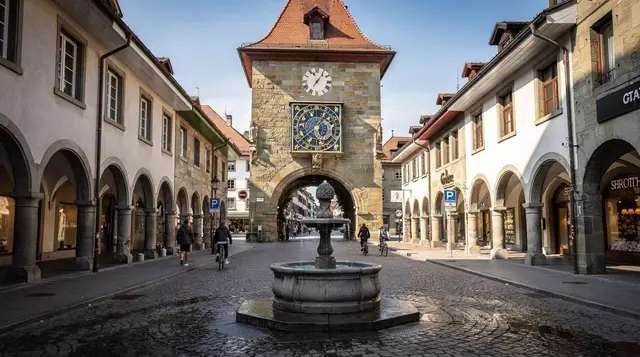
Bern is an easy hour each way with none of the previous two days’ route complexity, which makes it a deliberately lighter day after Jungfraujoch. The Bern day trip guide lays out the UNESCO-listed old town’s arcaded streets, the Zytglogge clock tower and the bear park, all within a compact, walkable core near the station. A standard return second-class fare runs about CHF 50-58 without a pass; it’s fully covered on the Swiss Travel Pass. Budget three to four hours in the city itself, which leaves the afternoon free to get back to Lucerne at a reasonable hour and rest before the longest travel day of the trip.
Day 7: Lugano, on the other side of the Gotthard
The Gotthard Base Tunnel, the world’s longest railway tunnel, cuts the Lucerne-Lugano run to about two hours each way, so a return trip is realistically an 11-hour day including five to six hours in Ticino. It’s worth doing once: the change in architecture, language and climate on the southern side is more dramatic than any other day trip from Lucerne. Lugano and Ticino day trip guide covers the lakefront, the funicular to Monte San Salvatore, and where to eat a proper Ticinese lunch.
If train travel for its own sake appeals, the Gotthard Panorama Express combines a boat leg on Lake Lucerne with the classic pre-tunnel mountain route for the outward journey, adding time but replacing the base tunnel’s speed with scenery. A standard return second-class fare to Lugano is roughly CHF 158 at full price, or free on the Swiss Travel Pass.
What this week actually costs
| Item | Per person, CHF |
|---|---|
| Mid-range hotel, 7 nights | 1,050-1,540 |
| 8-day Swiss Travel Pass, 2nd class | ~500 |
| Mountain top-up fares (with pass) | 60-90 |
| Food, CHF 40-60/day | 280-420 |
| Total, excluding flights | ~1,900-2,550 |
Without the Swiss Travel Pass, expect to pay closer to CHF 700-900 in individual train and lift tickets across the week, which usually lands close to the pass price once Bern and Lugano are included, with less flexibility if plans change. The Lucerne travel costs guide breaks this down further, and the where to stay guide covers neighbourhoods worth booking for a week-long single base.
Planning this trip: frequently asked questions
Do you need to change hotels for this itinerary?
No. Every destination in this plan is reachable from Lucerne within about two hours each way, so you keep one hotel for all seven nights. Only the Lugano and Jungfraujoch days involve more than three hours of one-way travel, and both are still doable as returns.
Is the Swiss Travel Pass worth buying for this week?
For this itinerary, usually yes. An 8-day consecutive pass covers the trains to Bern, Interlaken, Engelberg and Lugano, the regular lake boats, and gives 50% off the Pilatus, Rigi and Titlis ascents, which otherwise cost CHF 80-110 each. Run your own numbers against the day-by-day fares above before buying.
What if a mountain lift is closed for maintenance?
Pilatus and Rigi both close sections for annual revision, typically for two to three weeks in spring and again in autumn. Check the specific lift’s status before booking that day, and keep Titlis or the Stanserhorn as a fallback since their maintenance windows rarely overlap.
Roughly how much does the whole week cost per person?
Budgeting CHF 900-1,300 per person for seven days is realistic on a shared-room basis: a mid-range Lucerne hotel, an 8-day Swiss Travel Pass around CHF 500 in second class, mountain top-up fares, and CHF 40-60 a day for food. Solo travellers should expect the higher end of that range once a full room is on one person.
Is the Lugano day trip actually worth an 11-hour round trip?
It is a long day, roughly two hours each way through the Gotthard Base Tunnel plus five to six hours in Lugano, but the train itself is part of the appeal and the climate and townscape change completely once you’re through the tunnel. If a full day of trains doesn’t appeal, swap it for a second, more relaxed day in the Bernese Oberland instead.
What’s the best order to do Pilatus, Rigi and Titlis?
Do Pilatus first if the weather forecast is clear, since its cable car and cogwheel connection depend more on wind than Rigi’s. Rigi is the gentlest, with the most reliable boat-and-train combination. Titlis, reached via Engelberg, is the highest and coldest, so save it for your most weather-flexible day.
Can this trip be done without a car?
Yes, entirely by train and lake boat, which is how this itinerary is built. A car adds nothing on the mountain days, since the cogwheel railways and cable cars are the only way up, and parking at the valley stations is limited and often pricier than the train fare it would replace.
tours.7 days
Verified deep-linked GetYourGuide tours. Book through these links and we earn a small commission at no cost to you.
GetYourGuide does not provide a product photo for this activity — the image shows the meeting point, photographed by us.