Glacier experiences in Switzerland: what you can actually walk on
Can you actually walk on a glacier near Lucerne without a guide?
Only inside prepared, roped-off attractions: the Titlis Glacier Cave (a tunnel cut into the ice) and the Rhône Glacier ice grotto near Furka Pass. Both are safe, flat, and need no equipment. Stepping onto open glacier ice anywhere else - including near Jungfraujoch - without a certified mountain guide is a real crevasse risk, not a formality.
What “glacier experience” actually means here
Every brochure in central Switzerland uses the phrase “walk on a glacier” loosely, and it covers three very different things. There’s a fixed tunnel cut into real glacier ice that anyone can walk through in trainers. There’s a viewing platform where you look at a glacier from a safe distance without touching it. And there’s genuine glacier trekking, roped to a guide, crossing crevassed ice on foot - which is a mountaineering activity, not a sightseeing stop.
Confusing the three leads to two common disappointments: people who expected a real trek and got an ice tunnel with a gift shop at the end, and people who booked a serious guided hike expecting a leisurely walk and found themselves clipped into a harness on a rope team at 6am. This guide sorts out which is which, what each one costs, and how to get there from Lucerne.
Titlis Glacier Cave: the easiest genuine glacier you’ll touch
The Titlis Glacier Cave (Gletschergrotte) is the most accessible glacier experience within striking distance of Lucerne, and it’s the one most visitors mean when they ask about walking on a glacier. It’s a roughly 150-metre tunnel carved directly into the ice of the Titlis Glacier, at 3,020 metres, reached by the rotating Titlis Rotair cable car from Trübsee.
You are walking through actual glacier ice the entire way - the walls are ice, the temperature hovers close to freezing year-round, and the tunnel is lit and level with duckboard sections over the wetter patches. No equipment beyond a warm jacket and shoes with grip is required, and the whole visit takes 15-20 minutes if you don’t linger. It sits alongside the Cliff Walk suspension bridge and the summit viewing platforms, so most people combine all three in a single visit.
Getting there from Lucerne: train to Engelberg (around 45 minutes), then the cable car sequence up through Trübsee to the Titlis summit station, where the cave sits just below the top. The glacier cave and Cliff Walk combined ticket covers the full ascent and both attractions without you having to work out the connections yourself.
Costs: the standard Engelberg-Titlis return by cable car, which includes cave and Cliff Walk access, runs roughly CHF 96-100 at full price, with a 50% reduction on a Half Fare Card. It is not covered by the Swiss Travel Pass beyond a discount, so budget for it separately.
Jungfraujoch: you see the glacier, you don’t walk on it
Jungfraujoch markets itself as “Top of Europe” and sits beside the Aletsch Glacier, the longest glacier in the Alps, but the visit itself does not put you on open ice. From the station you access the Sphinx Observation Deck, an outdoor terrace looking directly down the length of the Aletsch Glacier, and the Ice Palace, a series of halls and sculptures carved into a glacier beneath the station and kept permanently below freezing.
Both are worth doing for the view and the novelty, but they’re structurally the same idea as the Titlis cave - fixed, safe, no equipment - just on a larger and considerably more expensive scale. The Aletsch Glacier itself, the one everyone photographs from the Sphinx terrace, is not something day visitors walk onto from Jungfraujoch station; the terrain around it is genuinely crevassed high-alpine glacier.
Getting there from Lucerne: it’s a full day. Train via Interlaken (roughly 1 hour 50 minutes to Interlaken Ost by the Brünig line), then onward through Lauterbrunnen or Grindelwald and the cogwheel railway to the summit - allow 2-2.5 hours each way from Interlaken alone. Tickets are the most expensive on this list, commonly CHF 200+ round trip from Interlaken depending on season and discounts, though the Good Morning ticket for early departures and the Swiss Travel Pass’s 25% reduction both help.
If a full Jungfraujoch day feels like a lot for a glacier viewing platform, the Engelberg day tour that pairs Titlis with the Brunni side of the valley covers similar high-alpine scenery, including glacier views, for a fraction of the time and cost - worth weighing against Jungfraujoch if this is your only Alpine day from Lucerne.
Real glacier trekking: the Aletsch, and why it needs a guide
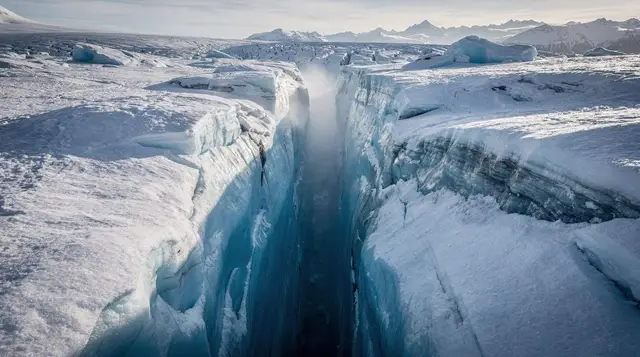
If what you actually want is to walk on open glacier ice - crossing crevassed terrain on foot, roped to a partner, wearing crampons - that’s a different activity entirely from anything above, and it’s only sensibly done with a certified mountain guide (Bergführer). Glaciers look solid from a viewing platform; up close they’re riddled with crevasses that snow bridges can hide completely, and every year climbers underestimate them.
The Aletsch Glacier offers the best-known guided trekking in this part of Switzerland, typically starting from Fiescheralp or the Konkordia hut area in Valais - reached from Lucerne via Brig or Interlaken, so realistically an overnight trip rather than a day excursion. Guides fit crampons and harnesses on site; half-day introductory routes exist for people with no glacier experience and reasonable fitness, alongside multi-day traverses for the more committed.
Closer to Lucerne, the mountains around Engelberg and Uri offer roped alpine hiking and via ferrata rather than true glacier crossings, but they’re the right training ground if you want a taste of exposed alpine terrain before committing to a full glacier trek. The private guided hike above Engelberg into the Furenalp basin and the guided hiking and wild camping trip into the Uri Alps both put you with a professional guide on genuine high-alpine terrain, which is the right way to build up to glacier work rather than turning up at Jungfraujoch expecting to step onto the ice.
Rhône Glacier: the ice grotto that shows its own retreat
The Rhône Glacier ice grotto, near the Furka Pass above Gletsch, is the third accessible option and arguably the most striking, because the shrinkage is visible rather than abstract. Every summer, workers dig a fresh ice cave into the glacier’s tongue and cover exposed sections with white fleece blankets to slow melting - and every summer the glacier has retreated further than the year before. Photographs from the 1990s taken at the same viewpoint show a glacier front hundreds of metres further down the valley than today.
The grotto is a short, flat walk-in cave, no equipment needed, and open roughly June to September only - it closes outside summer because the ice access changes with the season. It sits directly on the Furka Pass road, making it a natural stop if you’re driving the Gotthard-Furka circuit, but a deliberately awkward one by public transport from Lucerne: train to Andermatt, then postbus over the Furka Pass, with the full round trip eating most of a day.
For visitors without a car, this makes the Rhône Glacier a “combine it with something else” stop rather than a standalone day trip. It pairs naturally with a scenic rail day - the full-day Lucerne and Engelberg tour won’t get you there directly, but it’s worth checking whether a guided Gotthard-region itinerary on the day you’re travelling includes a Furka detour, since self-organising the postbus connections from Lucerne in a single day is tight.
Comparing the three
| Site | Time from Lucerne | Typical cost | What you get | Guide needed? |
|---|---|---|---|---|
| Titlis Glacier Cave | ~1 h 15 (train + cable car) | CHF 96-100 return | Walk-through ice tunnel, fixed and lit | No |
| Jungfraujoch (Aletsch view) | ~4 h each way | CHF 200+ | Viewing platform + Ice Palace, no open ice | No |
| Rhône Glacier ice grotto | ~3-4 h (car easiest) | Grotto entry ~CHF 10, plus travel | Seasonal ice cave, visible retreat | No |
| Aletsch glacier trekking | Overnight trip realistic | Guide day rate applies | Real roped glacier crossing | Yes, always |
When the cable cars close
Cable cars and mountain railways across this region close for scheduled maintenance in spring and again in autumn - typically a window in April/May and another in October/November, varying by installation and year. This is the detail that ruins the most itineraries: a family builds a day around Titlis or Jungfraujoch and finds the relevant lift shut for a fortnight. Always check the specific cable car or railway’s maintenance calendar for your travel dates before booking trains or accommodation around it, especially if you’re travelling in the shoulder seasons.
Snow cover also determines which cave sections and viewing platforms are open in winter versus which paths are ice-free in summer - the Titlis Cliff Walk, for instance, can close in high wind regardless of season, independent of the glacier cave itself.
Practical notes for any glacier visit
Altitude matters more than distance suggests. Titlis summit sits at 3,020 metres and Jungfraujoch at 3,454 metres - both well above where most Lucerne-based travellers have spent time, and mild altitude effects (headache, breathlessness on stairs) aren’t unusual on a first visit, especially arriving straight up by cable car rather than acclimatising on foot. Sun exposure at altitude is stronger than it feels; sunglasses and sunscreen are worth packing even on a cool day.
Bring layers regardless of season. Ice caves sit at or near 0°C no matter how warm it is at lake level in Lucerne, and both Titlis and Jungfraujoch can have wind chill well below the valley temperature. A waterproof outer layer earns its space in the bag more often than not.
Booking ahead helps on the busiest routes, particularly Jungfraujoch in July and August, when timed tickets and reserved train slots reduce standing-room train journeys. The Titlis cable car runs frequently enough that walk-up visits are usually fine outside peak Chinese and Indian tour-group season (roughly June-August), when queues at the base station can run long.
If you’re weighing this against Lucerne’s other mountains, a private day trip combining Pilatus with Engelberg is a reasonable way to see both a classic Lucerne-lake mountain and the Titlis glacier side in one arranged day, without juggling train and cable car timings yourself.
For emergencies in the mountains - a fall, someone missing on a marked trail, altitude sickness that isn’t resolving - the number is REGA 1414, Switzerland’s air rescue service, not the general 112 line, though 112 will connect you to it if needed.
Where this fits in a longer Lucerne itinerary
A glacier stop rarely stands alone; most visitors slot it into a wider look at Lucerne’s mountains. If you haven’t settled on which peak deserves the day, the comparison of Pilatus, Rigi and Titlis is worth reading before booking anything, since Titlis is the only one of the three with a genuine glacier component - Pilatus and Rigi are limestone peaks with no ice at all, whatever the marketing photos suggest.
For a first Alpine day from Lucerne without a car, Engelberg and Titlis remain the most efficient route to something that can honestly be called a glacier experience: a single train, a cable car sequence, an ice tunnel you can walk through in your own shoes, and a return to Lucerne the same evening.
Skiing & winter experiences on GetYourGuide
Verified deep-linked GetYourGuide tours. Book through these links and we earn a small commission at no cost to you.
GetYourGuide does not provide a product photo for this activity — the image shows the meeting point, photographed by us.